Finding the right auditory environment can make or break your study session. While some students thrive in complete silence, research increasingly shows that certain types of background noise can actually enhance concentration, improve memory retention, and mask distracting environmental sounds. Understanding which sonic environments support your cognitive performance is essential for optimizing your study routine and building sustainable focus habits in our increasingly noisy world.
Understanding the Science Behind Study Sounds
The relationship between sound and cognitive performance is more nuanced than simply choosing quiet versus noisy environments. Our brains process different frequencies and patterns of sound in distinct ways, with some acoustic profiles supporting attention while others fragment it.
Acoustic masking represents one of the primary mechanisms by which background noise helps studying. When consistent, predictable sounds fill your auditory environment, they create a sonic blanket that masks irregular, unpredictable noises like conversations, traffic, or sudden door slams. These unpredictable sounds trigger our brain's orienting response, automatically pulling attention away from the task at hand.
Different sound frequencies interact with our cognitive processes in specific ways:
- Lower frequencies tend to promote relaxation and reduce cortisol levels
- Mid-range frequencies can enhance focus without causing drowsiness
- Consistent patterns allow the brain to filter them into background awareness
- Random or varying sounds continuously re-engage attention circuits
Research from cognitive neuroscience labs demonstrates that the best noise for studying often depends on the type of cognitive work you're performing. Tasks requiring verbal processing respond differently to background sounds than spatial reasoning or mathematical problem-solving.
White Noise: The Classic Study Companion
White noise contains all audible frequencies at equal intensity, creating a consistent "shhhh" sound that many associate with television static or air conditioning units. This broad-spectrum approach makes it effective at masking environmental distractions across multiple frequency ranges.
Benefits of White Noise for Students
White noise has been studied extensively in educational and clinical settings. Its primary advantage lies in creating a predictable acoustic environment that reduces the cognitive load of processing unexpected sounds. Studies suggest that white noise can improve attention in individuals who struggle with focus, though responses vary significantly between individuals.
The effectiveness of white noise appears particularly pronounced for:
- Environments with frequent interruptions or variable background sounds
- Students with attention difficulties or ADHD
- Tasks requiring sustained attention over extended periods
- Blocking out speech and conversation in shared spaces
However, research on white noise for studying indicates that pure white noise may feel harsh or fatiguing to some listeners due to its equal emphasis on higher frequencies. This has led many researchers and practitioners to explore alternative noise colors.
Pink Noise: The Balanced Alternative
Pink noise represents a modified version of white noise, with reduced intensity at higher frequencies. This creates a deeper, more balanced sound often compared to steady rainfall or wind rustling through leaves. The spectral distribution of pink noise more closely matches natural acoustic environments our brains evolved to process.
| Characteristic | White Noise | Pink Noise | Brown Noise |
|---|---|---|---|
| Frequency Distribution | Equal across all frequencies | Decreases with higher frequencies | Significant decrease at higher frequencies |
| Sound Quality | Hissing, static-like | Balanced, rain-like | Deep, rumbling |
| Perceived Harshness | Can be harsh | Softer, more natural | Very gentle |
| Energy Level | High across spectrum | Moderate | Concentrated in low frequencies |
Why Pink Noise May Be Optimal
Multiple studies position pink noise as potentially the best noise for studying for most people. Comparisons between different noise colors suggest that pink noise strikes an effective balance between masking distractions and avoiding auditory fatigue.
Pink noise offers several advantages over white noise:
Reduced ear fatigue during extended listening sessions makes it suitable for marathon study periods. The decreased high-frequency content prevents the harshness that can develop with prolonged white noise exposure.
Enhanced memory consolidation has been observed in some research contexts. Studies examining pink noise during sleep show improvements in memory retention, suggesting potential benefits during active study as well.
Natural sound profile means our auditory systems process it with less effort, leaving more cognitive resources available for actual studying. This efficiency matters during demanding academic work.
Research comparing noise types for studying indicates that pink noise at moderate volumes consistently performs well across different study tasks and individual preferences.
Brown Noise: Deep Focus Support
Brown noise, also called Brownian noise or red noise, emphasizes even lower frequencies than pink noise. The result is a deep, rumbling sound similar to heavy rainfall, ocean waves, or distant thunder. This low-frequency emphasis creates a profoundly calming acoustic environment.
When Brown Noise Excels
Brown noise has gained popularity among students seeking deep concentration states. Insights on sounds for deep work suggest that brown noise's steady, bass-heavy character makes it particularly effective for tasks requiring sustained, uninterrupted focus.
Consider brown noise when:
- Working on complex problems that demand extended concentration periods
- Blocking low-frequency distractions like traffic rumble or building vibrations
- Managing stress and anxiety alongside studying, as low frequencies promote relaxation
- Engaging in creative thinking where a calming environment supports ideation
The deeply grounding quality of brown noise can induce drowsiness in some individuals, making it less suitable for study sessions when you're already fighting fatigue. Experimenting with volume levels and combining brown noise with good posture and lighting helps maintain alertness.
Nature Sounds and Environmental Audio
Beyond colored noise, natural soundscapes offer another category worth exploring for study support. Recordings of rain, ocean waves, forest ambiance, and flowing streams provide acoustic masking with the added benefit of biophilic connection.
The Psychological Benefits of Natural Sounds
Natural sounds engage our attention differently than synthetic noise generators. Our evolutionary history means we process environmental sounds with a sense of safety and calm rather than alertness to potential threats. This psychological framing can reduce stress hormones that interfere with learning.
Rain sounds combine multiple beneficial elements: consistent rhythm, broad frequency spectrum, and associations with cozy, productive indoor environments. The varying intensity of rainfall creates gentle acoustic dynamics without the jarring unpredictability of human-generated noise.
Ocean waves provide rhythmic low-frequency content similar to brown noise, with natural variations that many find more engaging than pure synthetic tones. The periodic nature of waves creates a gentle temporal structure that can support task rhythm.
Forest ambiance typically includes subtle bird calls, wind, and rustling leaves. This complexity offers masking properties while maintaining a sense of spaciousness. Different sounds support various study scenarios depending on personal preference and task requirements.
Binaural Beats and Frequency Entrainment
Binaural beats represent a different approach to acoustic study support. By playing slightly different frequencies in each ear, binaural beats create the perception of a third tone through neurological processing. Proponents suggest this can influence brainwave patterns.
Different frequency ranges target specific mental states:
- Delta waves (1-4 Hz): Deep relaxation and sleep
- Theta waves (4-8 Hz): Meditation and creativity
- Alpha waves (8-14 Hz): Relaxed focus and stress reduction
- Beta waves (14-30 Hz): Active concentration and alertness
- Gamma waves (30-100 Hz): Peak cognitive performance
Research on binaural beats for studying shows mixed results, with some studies demonstrating attention improvements while others find minimal effects. Individual responses vary considerably, making personal experimentation necessary.
Music Versus Pure Noise: What Works Better?
The debate between music and pure noise as the best noise for studying continues across educational research. The answer depends significantly on the type of cognitive work and individual processing styles.
When Music Helps and When It Hinders
Studies examining background noise effects reveal that music with lyrics consistently impairs verbal memory and reading comprehension. The linguistic content competes with language-based study material for processing resources.
However, certain musical genres show promise:
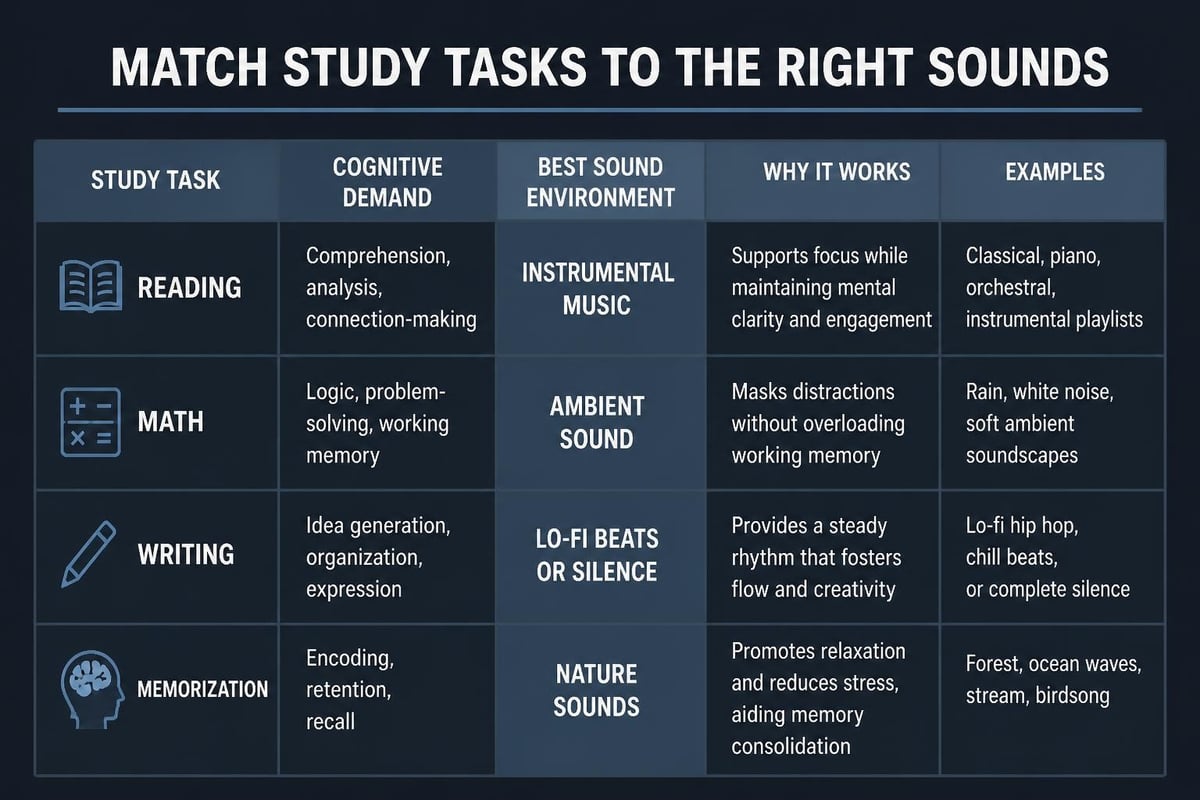
Instrumental music without vocals removes the primary interference concern. Classical, jazz, and ambient electronic genres can provide acoustic masking while adding emotional resonance that some students find motivating.
Lo-fi hip hop has become synonymous with study sessions for many students. The repetitive beats, mellow tones, and absence of lyrics create a productive middle ground. Research on music for studying suggests the predictable structure supports focus without demanding attention.
Video game soundtracks are explicitly designed to support concentration during complex tasks, making them unexpectedly effective study companions. Games requiring focus feature music that maintains engagement without distraction.
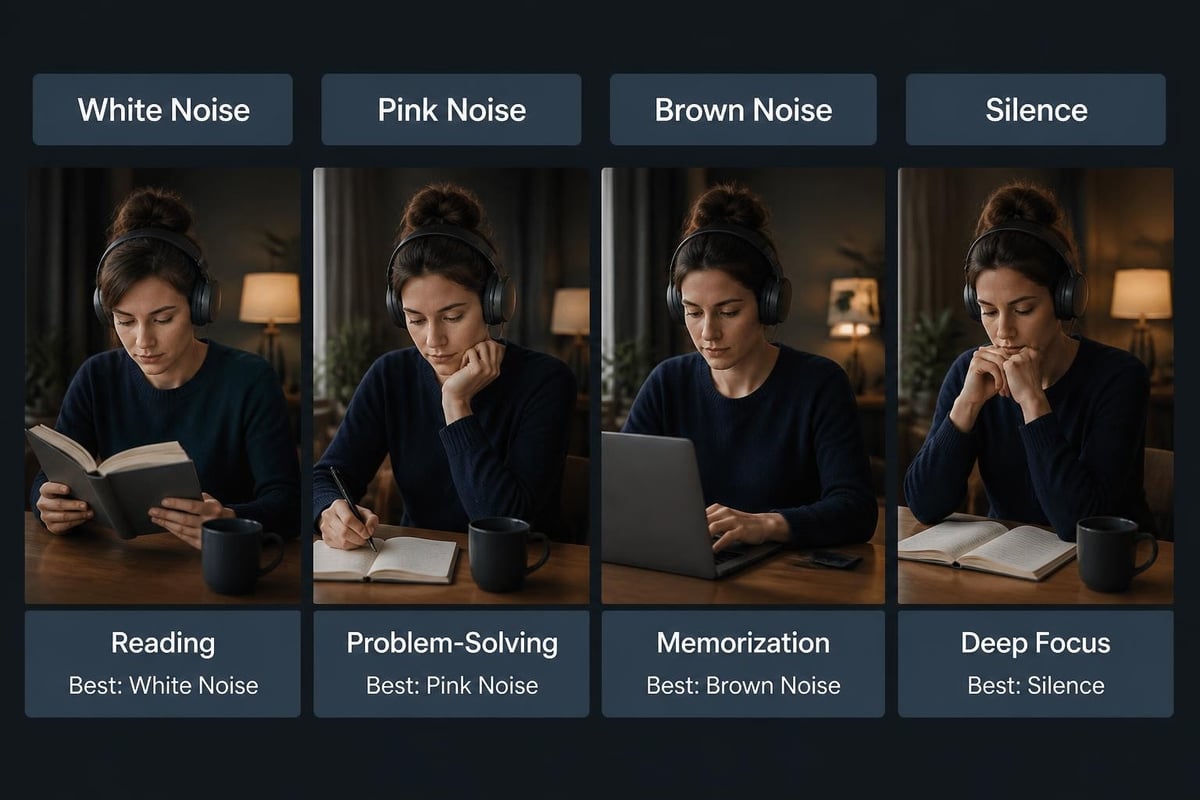
Pure noise generally outperforms music for tasks requiring verbal processing, reading comprehension, or memorization. Music may excel during creative brainstorming, problem-solving, or tasks where emotional engagement enhances motivation.
Optimizing Volume and Duration
Even the best noise for studying becomes counterproductive at inappropriate volumes or with excessive exposure. Sound levels significantly impact both masking effectiveness and cognitive comfort.
Finding Your Optimal Volume
Research suggests maintaining background study sounds at 50-60 decibels, roughly equivalent to moderate rainfall or quiet conversation. This level provides effective masking without requiring your brain to actively filter out the background noise itself.
Consider these volume guidelines:
| Environment | Recommended Volume | Notes |
|---|---|---|
| Quiet library | 40-50 dB | Lower masking needs |
| Home office | 50-60 dB | Moderate masking |
| Coffee shop | 60-70 dB | Higher masking required |
| Very noisy space | 65-75 dB | Maximum before fatigue risk |
Avoiding auditory fatigue requires periodic breaks from background noise. The continuous processing of any sound, even beneficial ones, creates cognitive load over time. Taking 5-10 minute silent breaks every 60-90 minutes helps reset your auditory system.
Personalizing Your Acoustic Environment
Individual differences in auditory processing mean no single sound works universally. Factors like age, hearing sensitivity, attention style, and even personality traits influence which sounds support your studying best.
Systematic Experimentation
Rather than accepting generic recommendations, develop a personal understanding through structured testing:
- Select three different sound types from those discussed (white noise, pink noise, brown noise, nature sounds)
- Use each exclusively for one week during regular study sessions
- Track subjective focus quality and objective performance on similar tasks
- Note energy levels and mental fatigue at session end
- Identify patterns in which sounds work best for different task types
Many students discover they prefer different sounds for different activities. Reading comprehension might work best with pink noise, while mathematical problem-solving benefits from brown noise or silence.
Creating Sustainable Sound Habits
Integrating acoustic support into your study routine requires more than finding the right sound. Building sustainable habits around sound use prevents dependence while maximizing benefits.
Consistency matters more than perfection. Understanding various soundscapes for different needs helps you develop a toolkit rather than relying on a single solution. Having multiple effective options prevents over-reliance on any particular sound.
Gradual introduction works better than immediate immersion. If you're accustomed to silence, start with 15-20 minute sessions of gentle pink noise or nature sounds, progressively extending duration as your brain adapts.
Strategic application means using sounds purposefully rather than constantly. Reserve background noise for tasks where it demonstrably helps, allowing your brain to experience varied acoustic environments throughout your day.
Practical Implementation Tips
Translating knowledge about the best noise for studying into consistent practice requires addressing common obstacles and building systems that support regular use.
Technology and Tools
Modern apps and platforms make accessing various study sounds simpler than ever. Look for features that support effective implementation:
- Customizable timers that align sound sessions with study blocks
- Gradual fade-in and fade-out to avoid jarring transitions
- Offline capability for consistent access regardless of connectivity
- Mix and layering options to create personalized soundscapes
- Evidence-based sound design developed with acoustic research
Quality matters in sound files. Low-bitrate recordings introduce artifacts and compression noise that undermine the benefits. Professional sound therapy applications invest in high-fidelity recordings that maintain their effectiveness during extended listening.
Environmental Integration
Combining the best noise for studying with other environmental optimizations multiplies effectiveness:
Lighting quality significantly impacts how sounds affect your focus. Harsh fluorescent lights combined with any background noise creates sensory overload, while natural or warm lighting complements acoustic support.
Physical comfort prevents competing sensory inputs. Uncomfortable seating or poor ergonomics create bodily distractions that even the best acoustic environment cannot overcome.
Temperature regulation matters more than many realize. Rooms that are too warm induce drowsiness that brown noise may amplify, while cold environments create tension that even calming sounds struggle to address.
Common Mistakes to Avoid
Understanding what doesn't work proves as valuable as knowing what does. Students frequently make predictable errors when implementing background noise for studying.
Volume creep represents a common trap. As you adapt to a particular sound level, there's temptation to gradually increase volume to maintain the same masking effect. This leads to auditory fatigue and potential hearing damage over time. If masking seems less effective, the issue likely lies elsewhere in your environment or focus strategy.
Constant novelty seeking prevents discovering what actually works for you. Switching sounds every few days based on trending recommendations creates inconsistency that obscures genuine effectiveness. Commit to testing periods long enough to move past the novelty phase.
Using sounds as procrastination happens when selecting and adjusting background noise becomes an excuse to delay actual studying. Spend 5 minutes maximum choosing and starting your sound, then begin working.
Adapting to Different Study Contexts
The best noise for studying varies not just by person but by context. Different environments, times of day, and social situations call for adjusted approaches.
Shared Spaces and Headphone Etiquette
When studying in libraries, coffee shops, or shared living spaces, headphones become necessary. This introduces considerations beyond sound selection:
Open versus closed headphones affect both isolation and sound leakage. Closed-back headphones provide better isolation and prevent your sounds from disturbing others, essential in quiet libraries.
Volume with headphones should remain lower than speakers require. The direct sound path means you need less volume for effective masking, reducing fatigue risk.
Situational awareness matters for safety and social consideration. Maintain awareness of your surroundings, particularly in public spaces, rather than completely isolating yourself.
Time of Day Considerations
Your optimal study sounds may shift throughout the day as energy levels and environmental factors change:
Morning sessions often benefit from slightly more energizing sounds. White noise or nature sounds with subtle dynamics can support alertness as you transition into focused work.
Afternoon energy dips might call for either very calming sounds that embrace the natural lull or more dynamic options that provide gentle stimulation.
Evening studying generally works well with deeper, more relaxing sounds like brown noise or gentle rain, supporting focus without interfering with later sleep.
Finding the best noise for studying is a personal journey that combines scientific understanding with individual experimentation. The evidence points toward pink noise and brown noise as optimal starting points for most students, with white noise and nature sounds offering valuable alternatives depending on your environment and task type. Rather than seeking a perfect universal solution, build a flexible toolkit of sounds that support different contexts and cognitive demands. Freshhh.app helps you go beyond simply finding background noise by combining scientifically-designed soundscapes with practical focus techniques and micro-habits, training your mind for deeper concentration and mental clarity whether you're studying, working, or seeking calm.