Students and professionals searching for better concentration often turn to white sounds for studying, hoping to block out distractions and enhance their productivity. The steady, consistent hum of white noise has become a popular backdrop for study sessions, but understanding the science behind it and implementing it effectively requires more than simply pressing play. This comprehensive guide explores the mechanisms, benefits, and practical strategies for leveraging white noise to create optimal study conditions while avoiding common pitfalls that can undermine your focus efforts.
Understanding White Noise and Its Acoustic Properties
White noise represents a specific type of sound containing all audible frequencies at equal intensity. Unlike music or speech, which features varying pitches and patterns, white noise creates a uniform acoustic blanket that masks environmental disturbances.
The term "white" draws an analogy to white light, which contains all visible wavelengths combined. Similarly, white noise combines frequencies from 20 Hz to 20,000 Hz at consistent power levels. This creates the familiar static-like sound many associate with untuned radios or air conditioning systems.
How White Noise Differs from Other Sound Colors
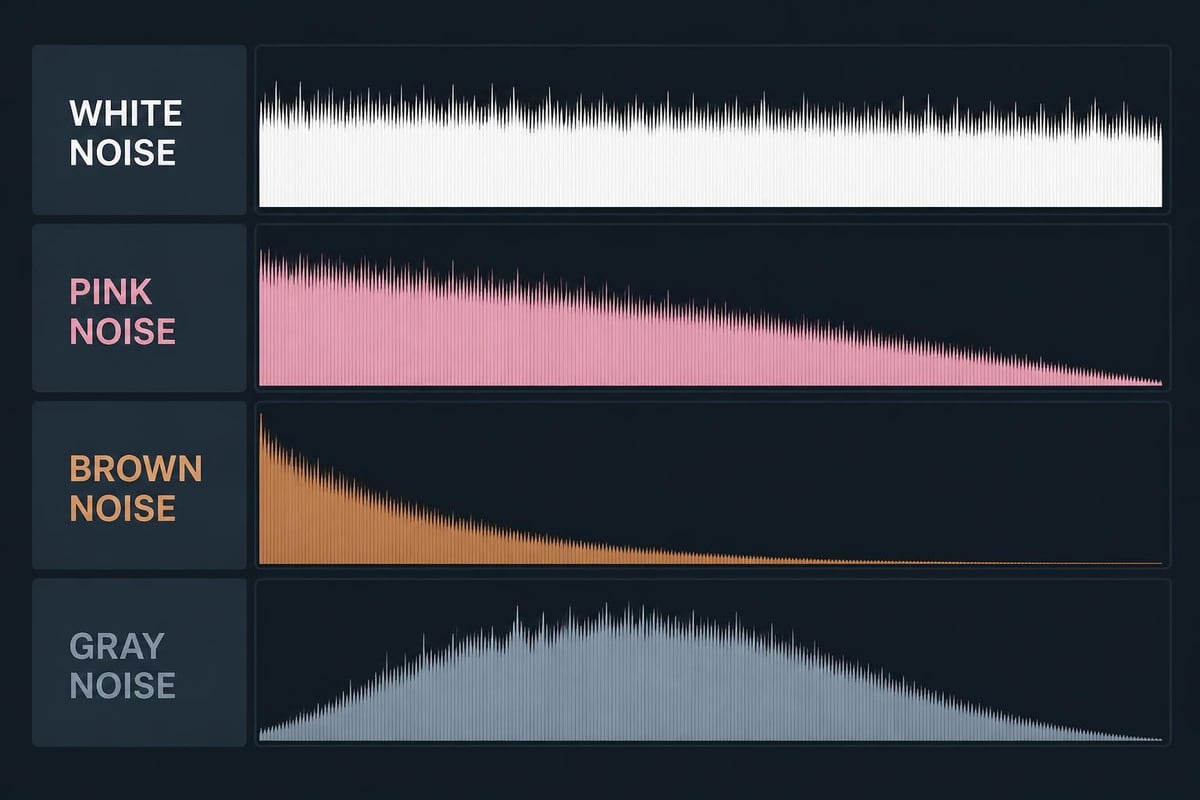
Sound masking comes in multiple varieties, each with distinct frequency distributions:
- White noise: Equal energy across all frequencies, creating a bright, hissing quality
- Pink noise: More emphasis on lower frequencies, producing a softer, rain-like quality
- Brown noise: Even stronger low-frequency emphasis, resembling deep rumbling or ocean waves
- Gray noise: Psychoacoustically flattened to sound equally loud across frequencies to human ears
Understanding these distinctions helps when selecting white sounds for studying, as different people respond better to different spectral profiles. Research examining white noise effects on sustained attention demonstrates that individual responses vary based on cognitive style and environmental context.
The Neuroscience Behind White Noise and Concentration
White sounds for studying work through several neurological mechanisms that influence attention, memory consolidation, and cognitive performance. The brain constantly filters sensory input, prioritizing novel or changing stimuli over steady background information.
Environmental sounds like conversations, traffic, or door slams create unpredictable acoustic patterns that trigger automatic attention shifts. Your brain evolved to notice these changes as potential threats or opportunities. White noise masks these irregular sounds with a consistent acoustic layer, reducing the frequency of involuntary attention captures.
Stochastic Resonance and Cognitive Enhancement
One compelling theory explains how moderate noise enhances neural processing through stochastic resonance. This phenomenon occurs when random noise actually improves signal detection in certain systems. For some individuals, particularly those with attention differences, a moderate level of white noise may optimize neural firing patterns and improve focus.
A systematic review and meta-analysis evaluating white noise benefits for youth with ADHD found mixed but promising results, suggesting that white noise may help specific populations maintain attention during cognitive tasks. The effect appears strongest for individuals with lower baseline arousal levels or attention regulation challenges.
| Population | White Noise Effect | Optimal Volume Range |
|---|---|---|
| Neurotypical adults | Modest improvement in some tasks | 45-55 dB |
| ADHD/attention challenges | Moderate to strong benefit | 50-60 dB |
| High baseline focus | Minimal or negative effect | N/A |
| Noise-sensitive individuals | Often counterproductive | Avoid or use very low |
Practical Implementation Strategies for Study Sessions
Successfully incorporating white sounds for studying requires more than ambient background noise. Strategic implementation considers volume levels, duration, task type, and individual response patterns.
Start with moderate volume levels between 45 and 55 decibels, roughly equivalent to gentle rainfall or quiet conversation in an adjacent room. Studies examining white noise levels and cognitive performance indicate that excessive volume can impair performance and increase stress, while very low levels may not provide sufficient masking.
Matching Sound to Task Complexity
Different study activities benefit from different acoustic environments:
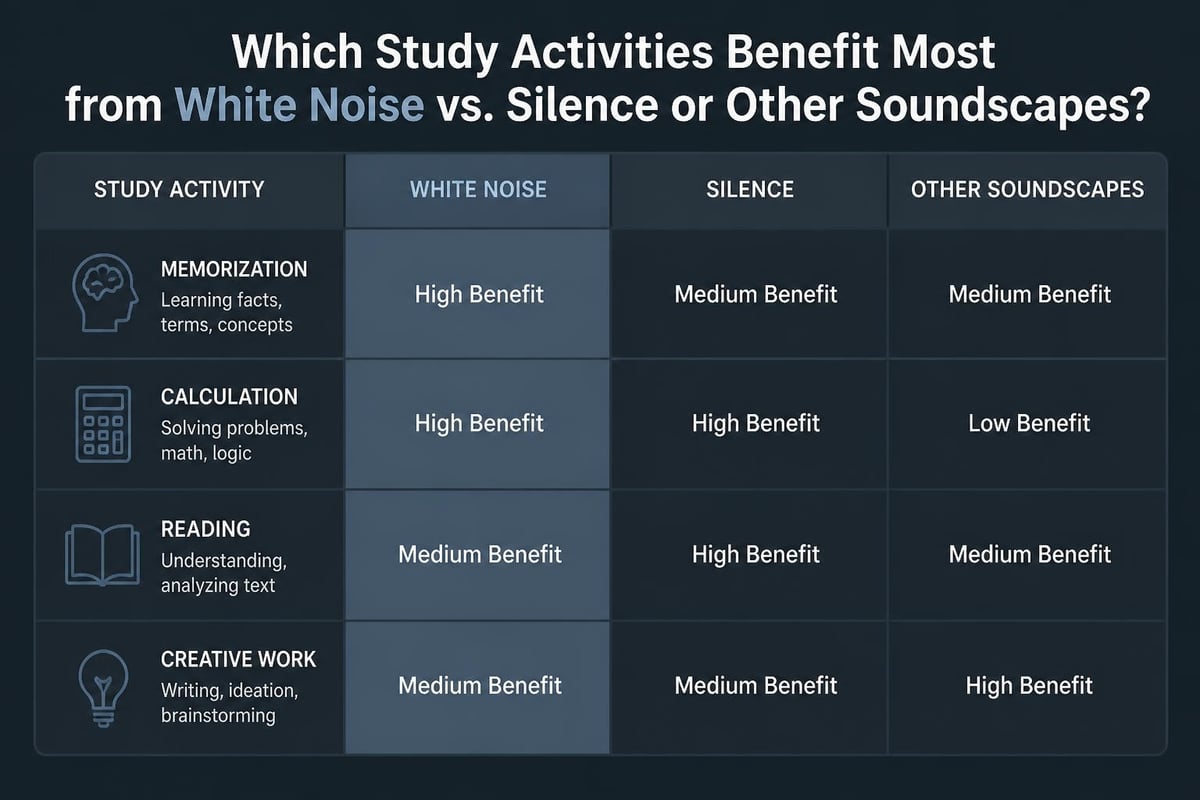
- Reading comprehension: Lower volume white or pink noise to minimize distraction without adding cognitive load
- Mathematical problem-solving: Moderate white noise may enhance focus for some learners
- Creative brainstorming: Many people prefer silence or natural soundscapes over mechanical white noise
- Memorization and recall: Test whether white noise helps or hinders, as research shows individual variation
- Writing and composition: Personal preference strongly influences effectiveness
Trial periods of 25-30 minutes help you assess whether white sounds for studying genuinely improve your concentration or simply create the illusion of productivity. Track objective metrics like pages read, problems solved, or words written rather than relying solely on subjective feelings.
Building Healthy Sound Habits and Avoiding Dependency
While white noise can be a valuable study tool, developing an exclusive reliance on specific acoustic conditions creates vulnerability. Your brain adapts to consistent environmental cues, potentially making it harder to focus in their absence.
Progressive Variation Training
Gradually varying your study soundscape prevents acoustic dependency while maintaining benefits:
- Begin sessions with white noise at moderate volume
- After 45 minutes, reduce volume by 25%
- In final 15 minutes, work in complete silence
- Alternate sound-supported and silent study days
- Practice focusing in various acoustic environments
This approach, similar to the micro-habit training philosophy at Freshhh.app, builds cognitive flexibility rather than rigid dependencies. You're training your attention system to function across diverse conditions, not just optimal ones.
Volume Guidelines and Hearing Health Considerations
The enthusiasm for white sounds for studying sometimes leads people to overlook critical hearing health principles. Prolonged exposure to moderate or loud sounds, even non-impulsive white noise, can contribute to hearing fatigue and long-term damage.
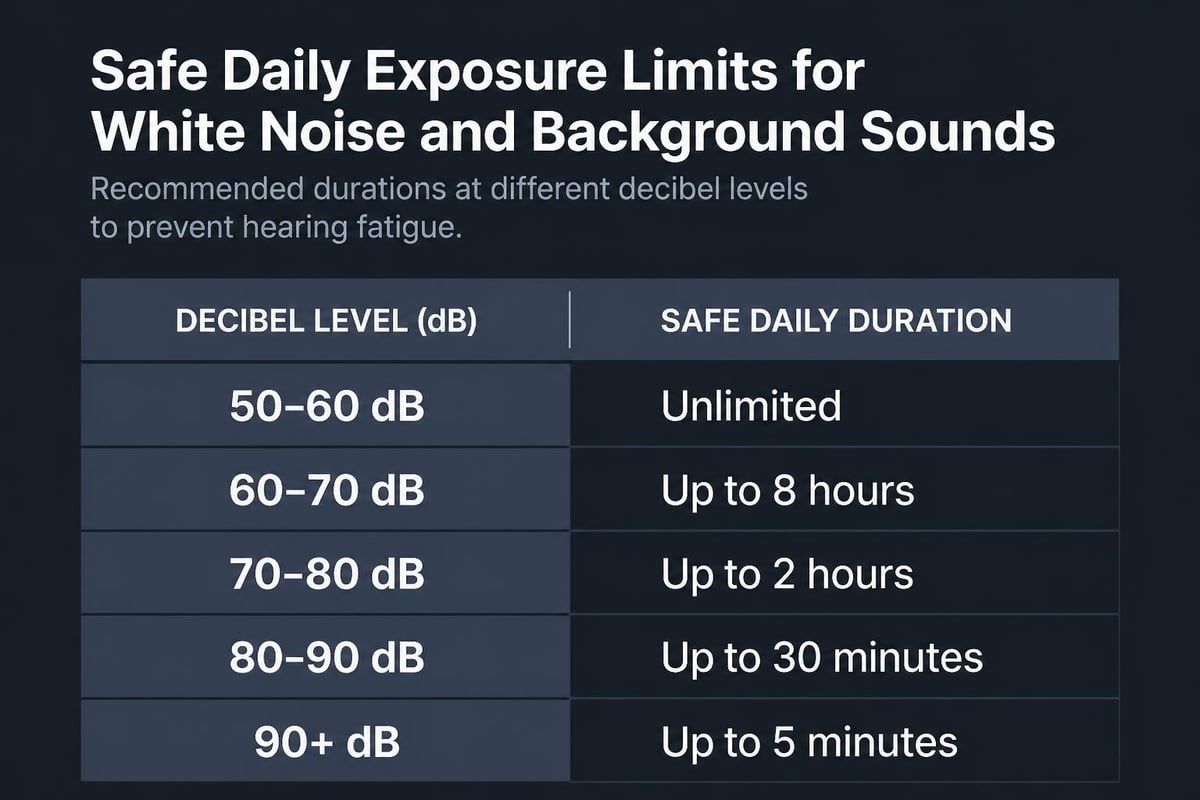
WHO and ITU guidance on safe listening practices establishes clear exposure limits for personal audio devices. For sounds at 75 dB, safe exposure drops to approximately 8 hours daily. At 80 dB, the safe window shrinks to less than 90 minutes. Most white noise apps and systems don't require these higher volumes to be effective.
Setting Up Safe Sound Systems
- Use device volume limiters: Enable maximum volume restrictions at 60-70% of device capacity
- Prefer speakers over headphones: Open-air playback reduces direct ear canal exposure
- Take acoustic breaks: Follow 60/60 rule (60% volume maximum, 60-minute listening blocks with breaks)
- Monitor for warning signs: Temporary hearing changes, ringing, or muffled perception indicate excessive exposure
- Annual hearing checks: Baseline audiometry helps detect early changes
| Volume Level (dB) | Example Sound | Safe Exposure Duration | Appropriate for Study? |
|---|---|---|---|
| 40-45 | Whisper, quiet library | Unlimited | Yes, but may lack masking |
| 50-55 | Moderate rainfall, quiet office | Unlimited | Optimal for most |
| 60-65 | Normal conversation, air conditioner | 8+ hours | Upper limit for comfort |
| 70-75 | Vacuum cleaner, busy restaurant | 8 hours maximum | Generally too loud |
| 80+ | Heavy traffic, alarm clock | <90 minutes | Avoid for study use |
Cognitive Load Considerations and Task-Specific Effectiveness
Not all study tasks benefit equally from white sounds for studying. Cognitive load theory suggests that working memory has limited capacity, and any additional sensory processing competes for these resources.
Simple, repetitive tasks with low cognitive demands often show the greatest improvement with white noise. The acoustic masking prevents mind-wandering triggered by environmental sounds without demanding significant processing resources. Complex tasks requiring deep analytical thinking may see diminished returns or even impairment.
When White Noise May Hinder Performance
Research participants in systematic reviews of broadband noise effects on cognition sometimes showed performance decrements, particularly on verbal tasks and complex problem-solving. Consider reducing or eliminating white sounds for studying during:
- Language learning and pronunciation practice
- Verbal reasoning and reading comprehension tests
- Creative writing requiring "inner voice" awareness
- Tasks demanding phonological processing
- Activities where you need to hear your own thought process
The key is treating white noise as one tool in a broader focus toolkit rather than a universal solution. Developing awareness of when it helps versus hinders allows for intelligent, context-appropriate application.
Environmental Context and Sound Masking Effectiveness
The effectiveness of white sounds for studying depends heavily on your baseline acoustic environment. White noise works primarily through masking, so understanding what you're trying to mask determines optimal implementation.
In consistently quiet environments like dedicated libraries or isolated home offices, adding white noise may introduce unnecessary auditory stimulation. The brain already enjoys low distraction conditions, and additional sound might add cognitive load without corresponding benefits.
Conversely, unpredictable, variable environments (coffee shops, shared workspaces, dormitories) present irregular acoustic disturbances that white noise effectively masks. The consistent sound layer prevents attention hijacking from sudden noises while allowing you to maintain focus on study materials.
Adapting to Different Study Locations
Quiet, controlled spaces: Use white noise sparingly or not at all; focus on other concentration techniques
Moderate activity environments: Implement white sounds for studying at 50-55 dB to mask conversation and movement
High-noise environments: Consider noise-canceling headphones with low-volume white noise rather than competing with loud ambient sounds
Outdoor settings: Natural ambient sounds (wind, water) often provide similar benefits without requiring artificial noise generation
Individual Differences and Personalization Strategies
Response to white sounds for studying varies significantly across individuals due to neurological differences, personality traits, and learned preferences. Introversion-extraversion dimensions, sensory processing sensitivity, and attention regulation style all influence optimal acoustic conditions.
Systematic self-experimentation provides more reliable guidance than generic recommendations. Design controlled trials comparing your performance across different sound conditions:
- Baseline measurement: Complete similar tasks in silence, recording completion time and accuracy
- White noise condition: Repeat with white noise at 50 dB, maintaining all other variables
- Alternative sounds: Test pink noise, brown noise, or nature sounds for comparison
- Volume variation: Explore 40 dB, 50 dB, and 60 dB levels of your preferred sound type
- Analysis and iteration: Identify patterns and optimize based on objective outcomes
This evidence-based approach aligns with the philosophy behind platforms that help you develop personalized focus strategies rather than one-size-fits-all solutions.
Combining White Noise with Other Focus Techniques
White sounds for studying work most effectively when integrated into comprehensive concentration systems rather than used in isolation. Pairing acoustic management with attention training, environmental design, and behavioral techniques multiplies effectiveness.
Complementary focus strategies include:
- Pomodoro technique timing structures (25-minute focused blocks)
- Mindful transition rituals before study sessions
- Physical workspace optimization (lighting, ergonomics, visual clarity)
- Pre-study mental priming and intention-setting
- Strategic break scheduling with genuine cognitive rest
WHO environmental noise guidelines emphasize that acoustic interventions should complement, not replace, fundamental environmental health principles. White noise addresses one dimension of the study environment, but nutrition, sleep, physical activity, and stress management remain equally critical for sustained cognitive performance.
Micro-Habits That Amplify White Noise Benefits
Building small, consistent behaviors around your white noise practice enhances long-term effectiveness:
- Start white noise simultaneously with study timer to create associative cues
- Use identical sound profile across sessions to build consistency
- Gradually reduce volume over study session to practice increasing focus depth
- End sessions with 5 minutes of silence to practice attention without support
- Track which combinations of sound, time-of-day, and task type yield best results
Technology Tools and Platform Considerations
Numerous applications and devices deliver white sounds for studying, ranging from simple noise generators to sophisticated sound therapy platforms. Selection criteria should emphasize acoustic quality, volume control precision, and features supporting healthy listening habits.
Basic white noise generators provide consistent sound output without additional features or complexity. These suit users who simply want acoustic masking without device interaction or customization options.
Advanced platforms offer spectrum customization, volume automation, session tracking, and integration with broader focus-building systems. The most effective tools combine sound delivery with evidence-based attention training, helping users develop intrinsic focus capacity rather than external dependency.
When evaluating white noise tools, prioritize:
- Precise volume control: Fine adjustments in 1-2 dB increments
- Timer functions: Automatic shutoff prevents extended exposure
- Offline capability: Reduces data usage and works without connectivity
- No advertisements: Interruptions defeat the purpose entirely
- Research-backed sound design: Collaboration with acoustic specialists ensures effective frequency profiles
The difference between passive listening and active skill-building distinguishes basic noise apps from comprehensive focus development platforms.
Scientific Limitations and Ongoing Research
Despite growing interest in white sounds for studying, scientific understanding remains incomplete. Meta-analyses reveal significant heterogeneity across studies, with effect sizes ranging from modest benefits to no impact or slight detriments.
Publication bias may inflate perceived effectiveness, as positive findings achieve publication more readily than null results. Individual difference factors often go unmeasured, making it difficult to predict who will benefit most from white noise interventions.
Future research directions include:
- Neuroimaging studies identifying neural mechanisms underlying individual response variation
- Long-term investigations of whether white noise benefits persist, diminish, or strengthen with extended use
- Dose-response curves establishing optimal volume and duration parameters
- Comparative effectiveness trials between white noise and alternative soundscapes
- Interaction studies exploring how white noise combines with other cognitive enhancement techniques
This evolving evidence base means recommendations should remain tentative and personalized rather than prescriptive and universal.
White sounds for studying offer legitimate benefits for many learners, but effectiveness depends on proper implementation, individual response patterns, and integration with broader focus-building strategies. Rather than simply masking distractions, the goal is developing stronger attention control that functions across diverse acoustic environments. Freshhh.app combines research-backed soundscapes with practical micro-habits and focus training techniques, helping you build sustainable concentration skills while leveraging acoustic support strategically. Start developing a personalized focus system that goes beyond passive listening to active skill development today.