Anxiety affects millions of people worldwide, manifesting as persistent worry, racing thoughts, and physical tension that disrupts daily life. While traditional interventions remain important, emerging auditory technologies offer complementary pathways to relief. Binaural beats for anxiety have gained significant attention as a non-invasive tool that uses sound frequency differences to influence brainwave activity, creating measurable shifts in mental states that may support emotional regulation and stress reduction.
Understanding How Binaural Beats Work
Binaural beats emerge from a fascinating quirk of auditory processing. When you listen through headphones and receive slightly different frequencies in each ear (for example, 300 Hz in the left and 310 Hz in the right), your brain perceives a third tone pulsing at the difference between them (10 Hz in this case). This perceptual phenomenon doesn't exist in the environment but rather forms through neural processing in the brainstem and auditory cortex.
The mechanism underlying potential anxiety relief involves neural entrainment, where rhythmic sensory stimulation encourages brainwave patterns to synchronize with external frequencies. Your brain naturally produces electrical oscillations at various rates throughout the day. Beta waves (13-30 Hz) dominate during alert, focused states, alpha waves (8-13 Hz) emerge during relaxation, and theta waves (4-8 Hz) characterize meditation and light sleep.
The Neural Entrainment Process
When exposed to binaural beats, specific neural populations may begin firing in sync with the perceived frequency. Research examining brain oscillatory activity has documented measurable EEG changes during binaural beat exposure, though the strength and consistency of entrainment varies considerably across individuals and frequency ranges.
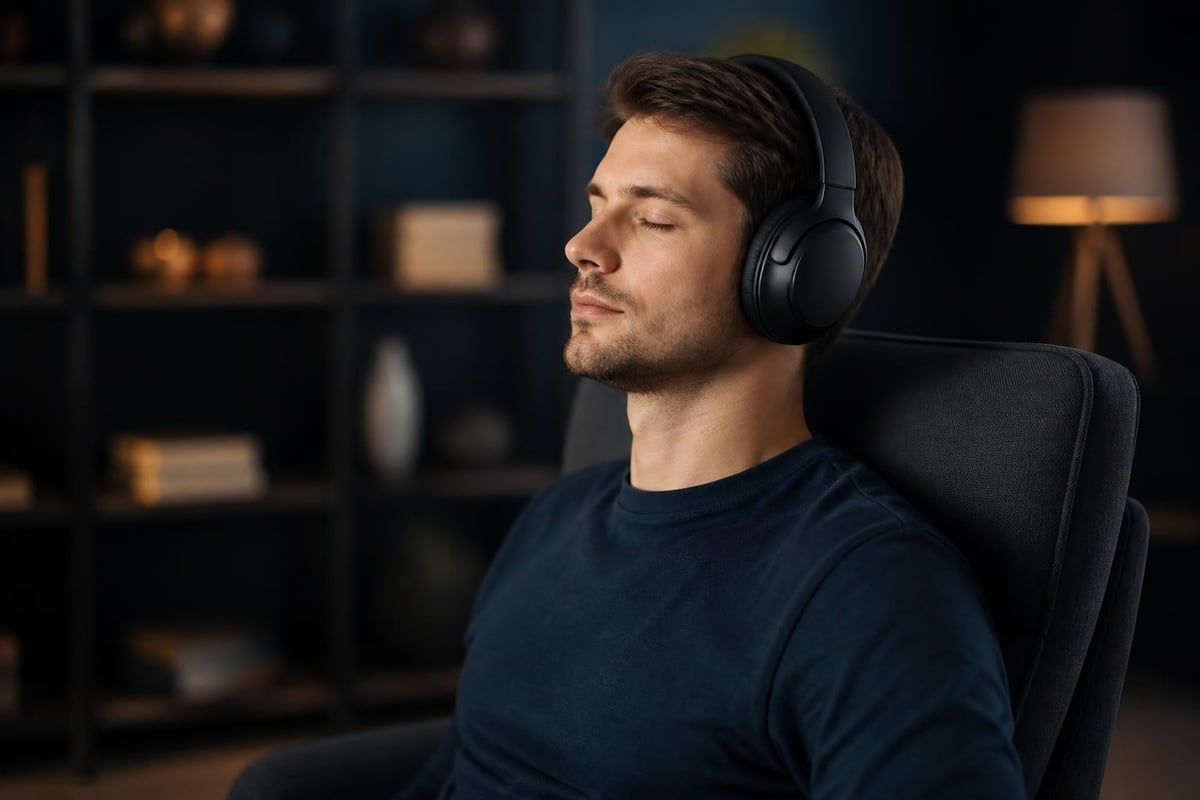
Several factors influence entrainment effectiveness:
- Frequency selection matching the desired brainwave state
- Exposure duration allowing sufficient time for synchronization
- Individual differences in baseline brain activity patterns
- Carrier tone frequencies that deliver the binaural effect
- Volume levels and listening environment quality
Frequency Ranges for Anxiety Management
Different binaural beat frequencies target distinct mental states relevant to anxiety reduction. Understanding these ranges helps optimize your listening strategy for specific needs and times of day.
| Frequency Range | Brainwave Type | Primary Effects | Best Used For |
|---|---|---|---|
| 0.5-4 Hz | Delta | Deep relaxation, restorative rest | Sleep preparation, severe tension |
| 4-8 Hz | Theta | Meditation, creativity, emotional processing | Deep relaxation, mindfulness |
| 8-13 Hz | Alpha | Calm alertness, stress reduction | Daily anxiety, general relaxation |
| 13-15 Hz | Low Beta | Focused relaxation, mental clarity | Work stress, mild anxiety |
Alpha frequency binaural beats (particularly around 10 Hz) represent the most commonly researched range for anxiety applications. This frequency range promotes a relaxed yet aware state, reducing physiological stress markers while maintaining cognitive function. Many practitioners report alpha frequencies create an ideal balance for daytime anxiety management without inducing drowsiness.
Theta frequencies offer deeper relaxation and may prove particularly valuable for anxiety rooted in repetitive thought patterns or emotional dysregulation. A 2026 study examining emotional self-regulation in individuals with Generalized Anxiety Disorder demonstrated significant improvements using 15-Hz beta-range stimulation, suggesting that slightly higher frequencies can also support anxiety management through enhanced cognitive control.
Contextual Applications
The optimal frequency often depends on your specific anxiety presentation and daily context. Morning anxiety accompanied by sluggish thinking may respond better to low-beta frequencies (13-15 Hz) that promote calm alertness. Evening rumination might benefit from theta ranges (4-8 Hz) that facilitate the transition toward rest. Physical tension and racing heart rate often improve with alpha frequencies (8-12 Hz) that encourage parasympathetic nervous system activation.
Scientific Evidence and Research Findings
The evidence base for binaural beats for anxiety continues expanding, with recent studies providing nuanced insights into effectiveness, mechanisms, and optimal implementation approaches. While not all research shows uniform benefits, patterns emerge suggesting genuine therapeutic potential when applied appropriately.
A compelling randomized trial comparing music-embedded binaural beats found that participants listening to monaural beats (a related auditory phenomenon) embedded in music experienced greater anxiety reduction compared to beats alone or control tones. This suggests that musical context may enhance the therapeutic impact through additional emotional engagement and listening compliance.
Clinical Population Studies
Research extends beyond general stress reduction into clinical anxiety populations. Studies examining binaural beats for dental anxiety have documented significant anxiety reduction in both children and adults, with practical implementations showing feasibility in real-world settings. These findings prove particularly valuable because dental anxiety represents a specific, measurable form of anticipatory stress that parallels other anxiety-provoking situations.
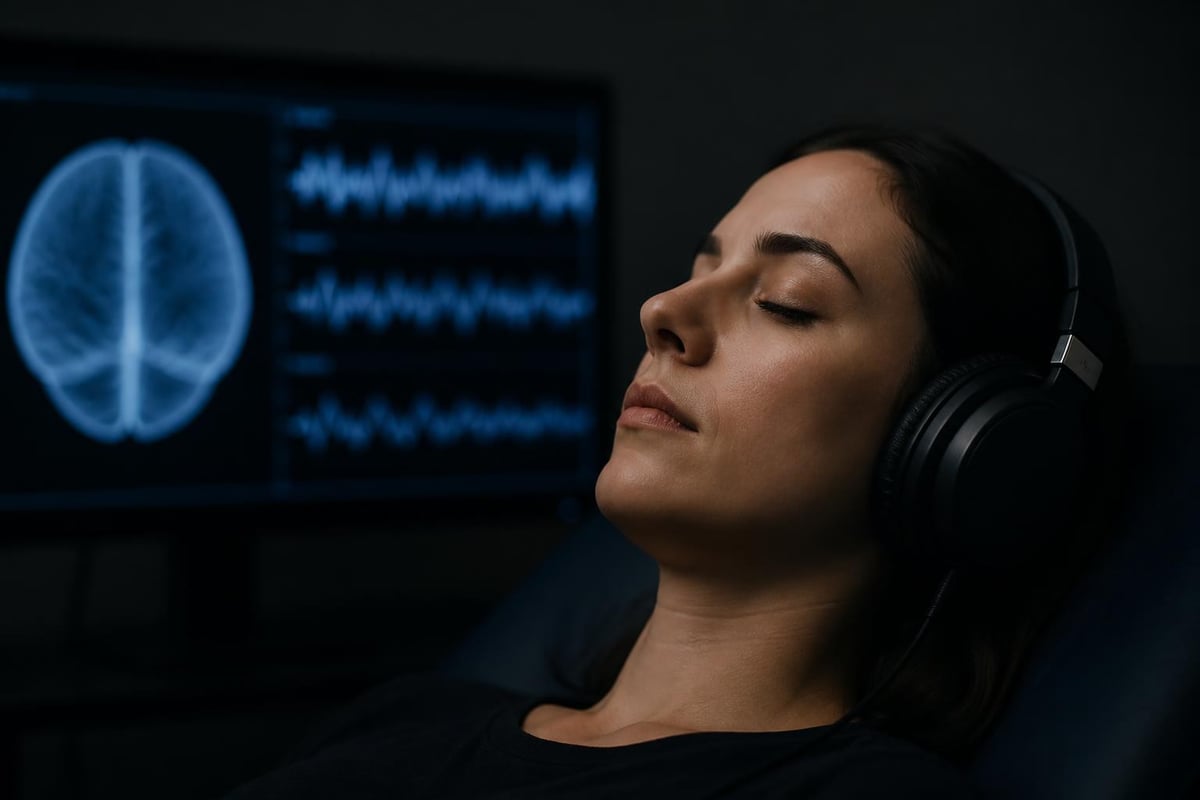
The physiological mechanisms remain an active area of investigation. Beyond subjective self-reports, researchers measure:
- Heart rate variability changes indicating autonomic balance
- Cortisol level reductions reflecting stress hormone regulation
- EEG power spectral shifts confirming brainwave entrainment
- Galvanic skin response alterations showing arousal modulation
- Self-report measures tracking subjective anxiety levels
Individual response variability represents both a challenge and an opportunity. Some people experience pronounced effects within minutes, while others require consistent practice over weeks. This heterogeneity likely reflects differences in baseline neural flexibility, anxiety etiology, listening habits, and placebo responsiveness.
Practical Implementation Strategies
Translating research findings into daily practice requires thoughtful integration that respects your unique schedule, preferences, and anxiety patterns. Effective use of binaural beats for anxiety involves more than passive listening.
Session Structure and Timing
Duration matters more than most realize. While some users report benefits from 10-minute sessions, research protocols typically employ 20-30 minute exposures to allow sufficient time for neural entrainment. Starting with shorter sessions (15 minutes) helps establish the habit without overwhelming your schedule.
Optimal timing aligns with your anxiety patterns:
- Morning sessions (alpha or low-beta frequencies) set a calm tone before daily stressors accumulate
- Midday breaks (alpha frequencies) interrupt escalating tension during work or caregiving
- Evening wind-down (theta or delta frequencies) facilitate the mental shift toward rest
- Pre-event preparation (alpha frequencies) reduce anticipatory anxiety before presentations, appointments, or social situations
Creating Supportive Listening Conditions
The listening environment significantly influences effectiveness. Unlike background music, binaural beats require stereo headphones or earbuds to deliver different frequencies to each ear. Over-ear headphones often provide better isolation from environmental noise, though comfort during extended sessions should guide your choice.
Combine auditory stimulation with complementary practices:
- Controlled breathing synchronized with the beat pulse enhances physiological calming
- Progressive muscle relaxation addresses physical tension while neural entrainment occurs
- Mindfulness observation of thoughts and sensations deepens the meditative quality
- Consistent timing builds neural associations between listening and relaxation responses
Building Long-Term Anxiety Resilience
While immediate anxiety reduction holds value, the greatest potential lies in developing sustained emotional regulation capacity. Think of binaural beats for anxiety as a training tool rather than a quick fix, similar to how strength training builds muscle over repeated sessions rather than instantly.
Neuroplasticity principles suggest that regular exposure to specific brainwave patterns may gradually strengthen your brain's ability to access those states independently. After weeks of consistent practice, many users report enhanced ability to self-regulate anxiety even without audio support, as if the training wheels eventually come off.
| Implementation Phase | Duration | Primary Focus | Expected Outcomes |
|---|---|---|---|
| Foundation | Weeks 1-2 | Habit formation, frequency exploration | Immediate session relief, preference identification |
| Development | Weeks 3-6 | Consistent practice, context expansion | Faster entrainment, emerging patterns |
| Integration | Weeks 7-12 | Autonomous regulation, selective use | Independent calming skills, reduced frequency |
| Maintenance | Ongoing | As-needed support, periodic refresh | Sustained resilience, strategic application |
Combining with Other Evidence-Based Approaches
Binaural beats work best as part of a comprehensive anxiety management strategy. They complement rather than replace cognitive-behavioral techniques, lifestyle modifications, and professional support when needed.
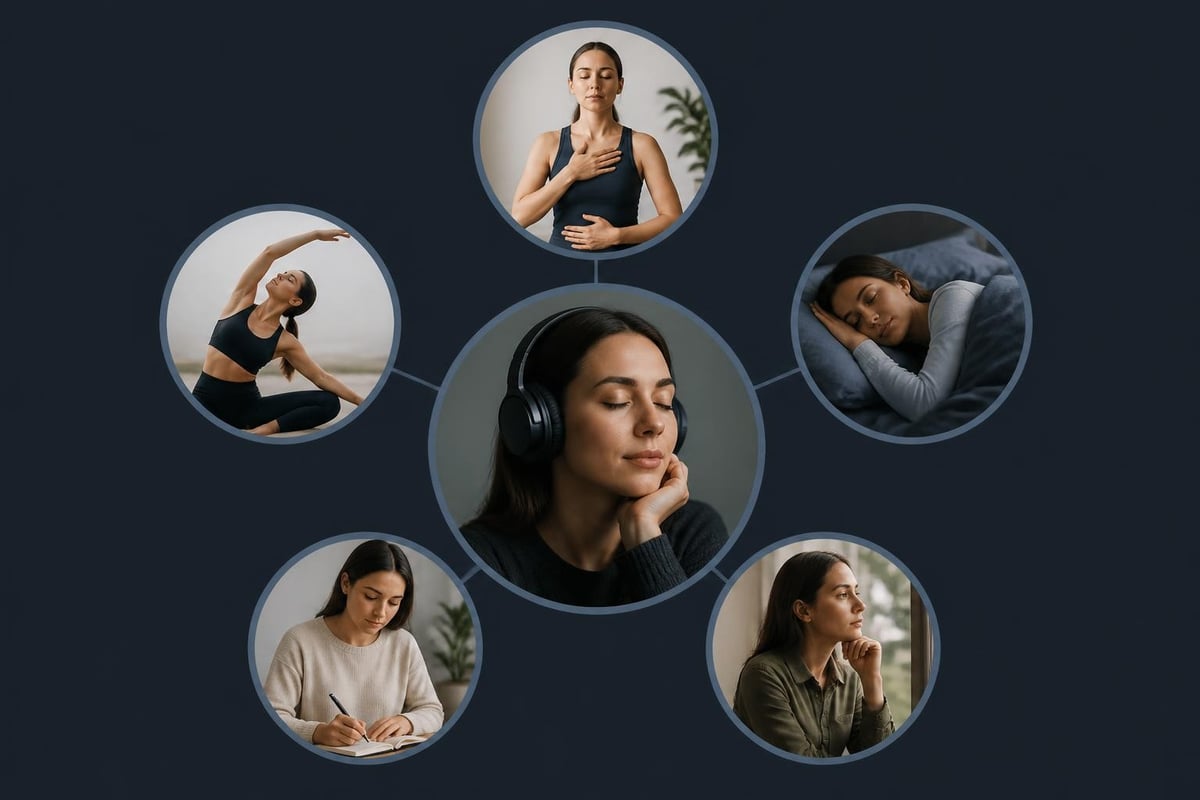
Micro-habits that enhance effectiveness include:
- Sleep hygiene improvements that stabilize baseline arousal levels
- Regular movement that discharges physical tension
- Nutritional awareness addressing blood sugar fluctuations that mimic anxiety
- Social connection providing emotional co-regulation
- Cognitive reframing addressing thought patterns underlying worry
The science-backed approach combines understanding the mechanism (neural entrainment), selecting appropriate parameters (frequency and duration), creating supportive conditions (environment and habits), and maintaining realistic expectations about timeline and outcomes.
Optimizing Your Personal Protocol
Individual optimization requires systematic experimentation guided by self-observation. What reduces anxiety for one person may prove neutral or even agitating for another, reflecting diverse neural baselines and anxiety presentations.
Track your responses across several dimensions:
- Which frequencies produce the most noticeable calming effect?
- What session duration feels sufficient without becoming tedious?
- Does morning or evening timing yield better results?
- Do certain anxiety triggers respond more favorably?
- How quickly do you notice entrainment beginning?
Consider starting with alpha-range frequencies (9-11 Hz) as a baseline, then experiment with slightly lower (theta) or higher (low-beta) ranges based on initial responses. Some platforms offer science-backed soundscapes developed with acoustic researchers that layer binaural beats within broader sound environments designed for focus and calm.
Advanced Considerations
As you develop familiarity with basic protocols, several refinements may enhance effectiveness. Carrier frequency selection (the base tones that create the binaural effect) varies across applications, with some research suggesting frequencies in the 200-400 Hz range optimize neural processing, while others use lower or higher carriers.
Progressive frequency shifting involves gradually transitioning from one brainwave range to another during a session. For example, starting at 12 Hz (alpha-beta border) and gradually descending to 8 Hz (alpha-theta border) may guide your nervous system through a controlled relaxation trajectory.
Volume calibration requires balance. Too quiet prevents adequate neural stimulation; too loud causes tension rather than relief. Most experts recommend comfortable listening levels where you clearly perceive the pulsing effect without strain, typically around 60-70 decibels.
Addressing Common Challenges and Misconceptions
Despite growing research support, misconceptions about binaural beats for anxiety persist, while real challenges sometimes discourage consistent practice. Understanding both helps maintain realistic expectations and troubleshoot effectively.
Misconception: Immediate transformation. While some users experience rapid relief, binaural beats typically work progressively rather than instantly. Neural entrainment strengthens with repeated exposure as your brain develops familiarity with shifting between states.
Misconception: Universal effectiveness. Response variability is normal and expected. Approximately 20-30% of users report minimal effects regardless of protocol, likely reflecting individual differences in auditory processing, baseline brainwave patterns, or anxiety etiology.
Challenge: Restlessness during listening. High anxiety states sometimes make sitting still for 20 minutes feel impossible. Start with shorter sessions (5-10 minutes) or combine listening with gentle movement like walking or stretching, gradually extending duration as tolerance builds.
Challenge: Difficulty perceiving the beat. Not everyone consciously hears the pulsing effect, which doesn't necessarily indicate ineffectiveness. Neural entrainment can occur below conscious awareness. Focus on overall experience rather than trying to isolate the beat.
Safety and Contraindications
Binaural beats for anxiety prove remarkably safe for most users, with minimal reported adverse effects in research literature. However, certain populations should exercise caution:
- Individuals with seizure disorders should consult healthcare providers, as rhythmic stimulation theoretically carries risks
- Those with severe mental health conditions should use beats as complementary rather than primary treatment
- Hearing impairments affecting stereo perception may limit effectiveness
- Very young children lack the auditory development for optimal entrainment
Discontinue use if you experience headaches, dizziness, increased anxiety, or other concerning symptoms. These reactions, while uncommon, suggest the particular frequency or implementation doesn't suit your neurology.
Future Directions and Emerging Applications
The field continues evolving as researchers refine understanding of mechanisms, optimal parameters, and potential applications. Emerging trends for 2026 and beyond include personalized frequency recommendations based on EEG baselines, integration with neurofeedback protocols, and exploration of binaural beats for specific anxiety subtypes like social anxiety or health anxiety.
Technological advances enable increasingly sophisticated delivery methods. Adaptive algorithms may eventually adjust frequencies in real-time based on physiological feedback like heart rate variability, creating responsive rather than static protocols. Spatial audio technologies could enhance the immersive quality while maintaining the stereo separation necessary for binaural effects.
Research priorities include larger randomized controlled trials, longer-term follow-up studies examining sustained benefits, head-to-head comparisons with established anxiety interventions, and investigation of mechanisms underlying individual differences in response. As the evidence base matures, clinical applications may expand into integrated treatment protocols for anxiety disorders.
Binaural beats for anxiety offer a scientifically grounded, accessible tool for supporting emotional regulation and stress reduction when implemented thoughtfully. The research demonstrates measurable effects on both brain activity and subjective anxiety, though individual responses vary considerably. By understanding the mechanisms, selecting appropriate frequencies, and integrating listening sessions into comprehensive wellness practices, you can harness this technology as part of your anxiety management toolkit. Ready to experience science-backed soundscapes designed specifically for calm and focus? Explore how Freshhh.app combines binaural technology with practical micro-habits and research-based guidance to help you train your mind for lasting resilience and mental clarity.