
Your brain processes approximately 11 million bits of information every second, yet your conscious mind can handle only about 40 to 50 bits at a time. This massive gap between potential and actual performance highlights why brain optimization has become essential for professionals, students, and anyone seeking to maximize their cognitive capabilities. In 2026, the intersection of neuroscience, sound therapy, and behavioral science offers unprecedented opportunities to enhance mental performance through evidence-based techniques that go far beyond traditional productivity hacks.
Understanding the Science Behind Brain Optimization
Brain optimization refers to the systematic improvement of cognitive functions through targeted interventions, lifestyle modifications, and environmental adjustments. Unlike quick fixes or unproven supplements, genuine optimization relies on understanding how your brain allocates resources and responds to different stimuli.
Recent research has revealed fascinating insights into how the brain manages energy across functional networks, demonstrating that cognitive control isn't just about willpower but about metabolic efficiency. Your brain represents only 2% of your body weight yet consumes roughly 20% of your total energy expenditure.

The Role of Neural Network Flexibility
One of the most significant discoveries in cognitive neuroscience involves the adaptability of task-positive brain networks. Studies show that efficient evidence accumulation depends on network flexibility, meaning your brain's ability to reconfigure itself based on task demands directly impacts performance.
This neural plasticity forms the foundation of sustainable brain optimization. Rather than pushing harder with static approaches, you can train your brain to become more efficient at switching between focused and diffuse modes of thinking.
Key factors in neural flexibility:
- Rest-activity cycles that support network reorganization
- Novel stimuli that challenge existing patterns
- Deliberate practice in varied contexts
- Recovery periods that allow consolidation
Sound Therapy as a Brain Optimization Tool
Environmental acoustics profoundly influence cognitive performance. Your auditory system connects directly to attention networks, making sound one of the most accessible yet underutilized optimization tools available.
How Acoustic Environments Shape Focus
Unlike visual distractions that you can close your eyes to avoid, sound penetrates your awareness continuously. This makes the acoustic environment either a significant liability or a powerful asset for brain optimization.
Research-backed soundscapes work by providing consistent auditory input that your brain can filter into the background, freeing up attentional resources for demanding tasks. This differs fundamentally from silence, which can actually increase distraction sensitivity in some individuals.
| Sound Type | Cognitive Impact | Best Use Case |
|---|---|---|
| White/Pink Noise | Masks environmental distractions | Open office environments |
| Binaural Beats | May support specific brainwave states | Deep focus sessions |
| Nature Sounds | Reduces stress markers | Cognitive recovery |
| Structured Ambience | Maintains alertness without distraction | Extended work periods |
The key lies in matching the acoustic profile to your current cognitive state and task requirements. Freshhh.app approaches this through collaboration with acoustic researchers, ensuring soundscapes align with the latest understanding of auditory processing and attention.
Practical Strategies for Daily Brain Optimization
Implementing brain optimization requires more than understanding the science. You need actionable strategies that integrate seamlessly into your existing routines.
Micro-Habits That Compound Over Time
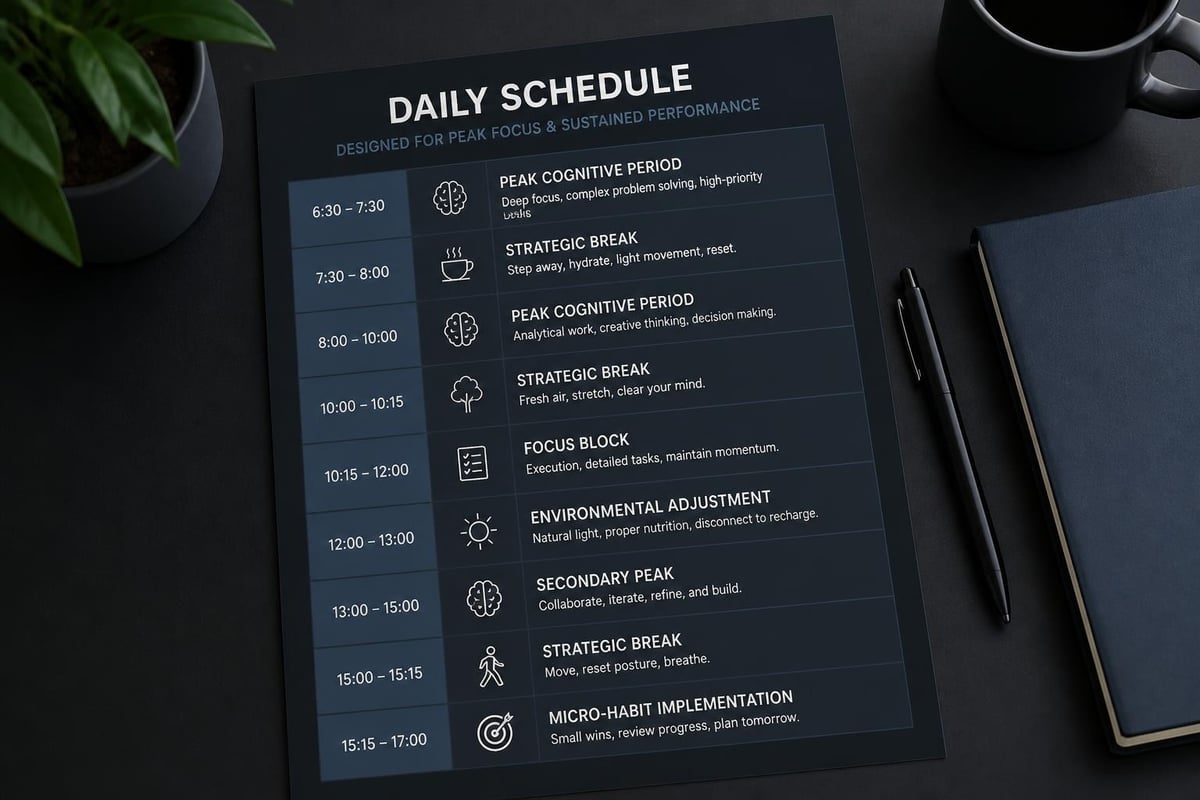
The most effective brain optimization techniques involve small, consistent actions rather than dramatic overhauls. These micro-habits create cumulative benefits without overwhelming your existing schedule.
Morning optimization sequence:
- Begin with 2-3 minutes of deliberate breathing to increase cerebral blood flow
- Set one clear intention for your peak cognitive period
- Minimize decision fatigue by preparing your environment the night before
- Start with your most demanding cognitive task during your biological prime time
Throughout the day:
- Take strategic breaks every 52 minutes to prevent mental fatigue
- Shift your auditory environment based on task complexity
- Practice single-tasking during high-priority work blocks
- Use environmental cues to trigger focus states
These approaches align with research on brain differences between high and low performers, which emphasizes that optimization often comes down to how you structure your study or work time rather than raw intellectual capacity.
Environmental Design for Cognitive Enhancement
Your physical environment constantly signals your brain about what mode to enter. Intentional design transforms passive spaces into active optimization tools.
Consider these evidence-based modifications:
- Lighting: Bright, blue-enriched light during peak hours; warmer tones for creative or recovery work
- Temperature: Slightly cool (68-70°F) for analytical tasks; neutral for creative work
- Acoustics: Controlled sound environments that match cognitive demands
- Visual complexity: Minimal for focus work; moderate natural elements for sustained attention
The goal isn't perfection but rather creating distinct environments that help your brain recognize which networks to activate.
Advanced Brain Optimization Techniques
Beyond foundational practices, emerging research points to sophisticated approaches that may enhance cognitive performance for those ready to experiment.
Personalized Neurostimulation Approaches
Innovation in personalized neurostimulation optimized through artificial intelligence shows promise for enhancing sustained attention through non-invasive methods. While these technologies continue to develop, they illustrate how brain optimization is becoming increasingly individualized.
Current accessible applications include:
- Transcranial photobiomodulation (still experimental)
- Vagus nerve stimulation through breathing techniques
- Targeted auditory stimulation at specific frequencies
- Rhythmic sensory input to influence neural oscillations
Leveraging Spontaneous Strategy Shifts
Your brain naturally experiments with different approaches to solving problems. Research on spontaneous strategy shifts reveals that optimization often involves recognizing and supporting these natural tendencies rather than forcing rigid systems.
This means building flexibility into your optimization protocols. If a focus technique stops working, your brain may be signaling the need for adaptation rather than discipline failure.
Strategic flexibility framework:
| Signal | Interpretation | Adjustment |
|---|---|---|
| Persistent distraction despite technique | Strategy mismatch or cognitive fatigue | Switch method or take recovery break |
| Easy flow state entry | Optimal alignment | Note conditions for replication |
| Physical restlessness | Need for movement or environment change | Brief activity or location shift |
| Mental fog despite rest | Possible nutritional or hydration issue | Address physiological needs first |
The Metabolism-Cognition Connection
Brain optimization cannot be separated from whole-body health. Your cognitive performance depends on the continuous supply of glucose, oxygen, and other nutrients while efficiently removing metabolic waste.
Optimizing for Cognitive Energy
Every thought requires energy. Making sure your brain has adequate fuel without the crashes that come from poor metabolic management is crucial for sustained optimization.
Nutritional considerations:
- Stable blood glucose through balanced macronutrients
- Adequate hydration (even mild dehydration impairs cognition)
- Strategic caffeine use (timed for peak effect without interference with sleep)
- Omega-3 fatty acids for neural membrane health
Physical activity integration:
- Brief movement breaks to increase cerebral circulation
- Regular cardiovascular exercise for long-term brain health
- Resistance training for metabolic optimization
- Balance and coordination work for cerebellar stimulation
The relationship between physical and mental optimization is bidirectional. Improving one domain creates positive effects in the other.

Training Your Mind, Not Just Your Environment
While environmental optimization provides crucial support, sustainable brain optimization ultimately involves training your attention and cognitive control systems. This distinguishes temporary performance boosts from lasting improvements in mental capacity.
Building Attentional Stamina
Like physical endurance, your ability to sustain focus improves with progressive training. This doesn't mean longer hours but rather deliberate practice at the edge of your current capacity.
Start with your current sustainable focus duration. If you can maintain deep concentration for 15 minutes before drift occurs, begin there. Add 2-3 minutes each week while maintaining quality. This gradual progression allows neural networks to adapt without triggering resistance.
Combine this with recovery protocols. Just as muscles need rest to grow stronger, attention networks require downtime to consolidate improvements and restore capacity.
Metacognitive Awareness Development
One of the most powerful brain optimization skills involves recognizing your own cognitive states in real-time. This metacognitive awareness allows you to adjust strategies before performance degrades significantly.
Practice labeling your mental state every hour:
- Sharp and focused
- Engaged but requiring effort
- Drifting but recoverable
- Diminished capacity needing break
This simple classification helps you make better decisions about when to push forward, when to switch tasks, and when to recover.
Integration and Systematic Improvement
Brain optimization works best as an integrated system rather than isolated techniques. The synergy between sound environment, behavioral habits, physical health, and metacognitive training creates results greater than the sum of individual parts.
Creating Your Personal Optimization Protocol
Assessment phase (Week 1-2):
- Track your natural energy and focus patterns
- Identify your primary cognitive challenges
- Note environmental factors that help or hinder performance
- Establish baseline metrics for key tasks
Implementation phase (Week 3-8):
- Introduce one new technique per week
- Maintain previous successful additions
- Document what works in your specific context
- Adjust based on actual results, not theory
Refinement phase (Ongoing):
- Optimize timing of interventions
- Eliminate techniques that don't serve your goals
- Deepen practices that show clear benefits
- Adapt to changing demands and circumstances
The goal isn't perfection but rather continuous improvement aligned with your actual needs and lifestyle. Brain optimization should make your life easier, not add another source of stress.
Measuring Progress Without Obsession
Effective brain optimization requires some measurement to guide adjustments, but excessive tracking can become counterproductive. Focus on meaningful indicators rather than vanity metrics.
Useful progress markers:
- Time to enter flow state for familiar tasks
- Subjective energy levels at key points throughout the day
- Quality of work output (measured by revision needs or error rates)
- Recovery speed after demanding cognitive work
- Consistency in maintaining desired habits
Avoid getting caught in the trap of optimizing the optimization. The purpose is improved cognitive performance in service of your actual goals, not perfect adherence to protocols.
Brain optimization in 2026 combines cutting-edge neuroscience with practical, sustainable techniques that enhance your cognitive performance without requiring dramatic lifestyle changes. By understanding how your brain allocates energy, leveraging sound therapy strategically, and building micro-habits that compound over time, you create a foundation for lasting mental clarity and focus. If you're ready to move beyond passive listening and actively train your mind for better concentration and reduced stress, Freshhh.app provides a science-backed platform that integrates research-based techniques with acoustically engineered soundscapes designed to support your brain optimization journey.