
Modern life demands constant attention, rapid decision-making, and relentless multitasking. Your brain processes thousands of thoughts daily while managing stress signals, environmental stimuli, and emotional responses. Learning effective strategies for calming brain activity has become essential for maintaining mental health, improving productivity, and achieving sustainable well-being. This comprehensive guide explores evidence-based approaches to quieting mental noise and cultivating lasting mental clarity.
Understanding Neural Overstimulation
Your brain operates through complex networks of neurons firing electrical signals continuously. When overwhelmed by stressors, these neural pathways become hyperactive, triggering the release of cortisol and adrenaline. This physiological response, while useful in genuine emergencies, becomes problematic when activated chronically.
The Science Behind Mental Agitation
Neurological research reveals that prolonged stress physically alters brain structure. The amygdala, responsible for processing fear and emotional responses, enlarges with chronic stress exposure. Meanwhile, the prefrontal cortex, which governs rational thinking and decision-making, experiences reduced connectivity.
Key indicators of neural overstimulation include:
- Racing thoughts that prevent mental rest
- Difficulty concentrating on single tasks
- Physical tension in jaw, shoulders, or neck
- Sleep disruption despite physical exhaustion
- Heightened emotional reactivity to minor stressors
The parasympathetic nervous system serves as your body's natural calming mechanism. Activating this system through specific techniques creates measurable changes in brain wave patterns, shifting from high-frequency beta waves associated with active thinking to slower alpha and theta waves characteristic of relaxation.

Breathwork as a Foundation for Mental Calm
Controlled breathing represents one of the most accessible and scientifically validated methods for calming brain function. Research published in Scientific Reports demonstrates breathwork’s significant impact on stress reduction and mental health improvement.
Implementing Effective Breathing Protocols
The 4-7-8 breathing technique offers immediate neurological benefits. Inhale through your nose for four counts, hold for seven counts, and exhale completely through your mouth for eight counts. This pattern triggers the vagus nerve, which signals your brain to reduce stress hormone production.
Box breathing, utilized by high-performance professionals under pressure, provides another powerful tool. Inhale for four counts, hold for four, exhale for four, and hold empty for four. This symmetrical pattern creates predictable neural rhythm that naturally calms brain wave activity.
Breathing practice progression:
- Begin with two minutes of simple awareness of natural breath
- Progress to five-minute sessions of controlled breathing
- Integrate breathing breaks during stressful moments
- Establish morning and evening breathing rituals
- Combine breathwork with other calming brain techniques
The National Center for Complementary and Integrative Health outlines key considerations when implementing relaxation techniques for stress management, emphasizing consistency over intensity.
Sound Therapy and Acoustic Regulation
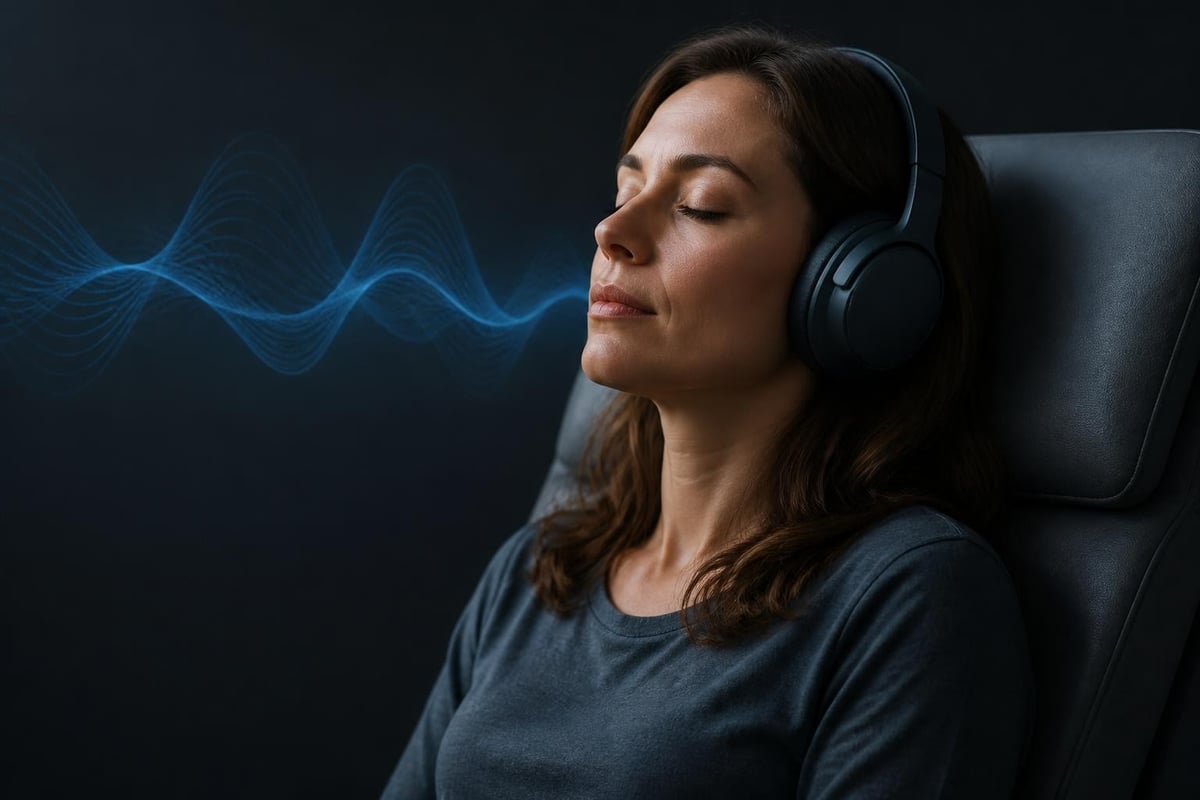
Specific sound frequencies demonstrably influence brain wave patterns and neurological activity. Binaural beats, isochronic tones, and carefully designed soundscapes activate targeted brain regions associated with relaxation and focus.
How Acoustic Stimulation Affects Neural Function
When you hear two slightly different frequencies in each ear, your brain processes the mathematical difference as a third tone. A 300 Hz tone in one ear and 310 Hz in the other creates a 10 Hz binaural beat, corresponding to alpha brain waves associated with relaxed alertness.
| Frequency Range | Brain Wave Type | Mental State | Primary Benefits |
|---|---|---|---|
| 0.5-4 Hz | Delta | Deep sleep | Physical restoration, healing |
| 4-8 Hz | Theta | Deep meditation | Creative insight, memory consolidation |
| 8-13 Hz | Alpha | Relaxed focus | Stress reduction, learning enhancement |
| 13-30 Hz | Beta | Active thinking | Problem-solving, concentration |
Research-backed soundscapes for calming brain activity incorporate nature sounds, ambient textures, and harmonic frequencies. White noise, pink noise, and brown noise each offer distinct benefits depending on individual neurological responses and environmental contexts.
Physical Movement for Cognitive Calm
Exercise profoundly impacts neurological function beyond physical fitness benefits. Harvard Health Publishing details how physical exercise serves as a relaxation technique by reducing stress hormones and stimulating endorphin production.
Movement Protocols for Mental Clarity
Moderate aerobic exercise increases blood flow to the brain, delivering oxygen and nutrients essential for optimal neural function. Twenty to thirty minutes of walking, cycling, or swimming triggers neurochemical changes that persist for hours afterward.
Yoga combines physical movement with controlled breathing, creating dual pathways for calming brain activity. The practice activates the parasympathetic nervous system while building body awareness that helps identify tension patterns before they escalate.
Effective movement practices include:
- Morning stretching routines to establish mental clarity
- Midday walking breaks to reset cognitive function
- Evening yoga sessions to transition toward rest
- Tai chi for cultivating sustained mental calm
- Dance or rhythmic movement for emotional regulation
The key lies in consistency rather than intensity. Brief, regular movement sessions produce more lasting neurological benefits than sporadic intense workouts.
Cognitive Training and Mental Hygiene
Just as physical exercise strengthens muscles, specific mental exercises enhance your brain's capacity for self-regulation and calm. Medical News Today presents 22 brain exercises designed to improve memory and cognitive function.
Building Mental Resilience Through Practice
Meditation trains the brain to observe thoughts without engagement, gradually reducing the automatic stress response to mental activity. Even five minutes daily produces measurable changes in brain structure, particularly in regions governing emotional regulation and self-awareness.
Mindfulness practices teach present-moment awareness, interrupting the default mode network responsible for rumination and anxiety. This neural network activates during mind-wandering, often generating stress through repetitive negative thinking patterns.
Progressive mental training approach:
- Start with guided meditation using audio support
- Practice body scan techniques to build awareness
- Implement mindful breathing during routine activities
- Develop observation skills for thought patterns
- Cultivate meta-awareness of mental states
The NCBI provides comprehensive information on relaxation techniques and their therapeutic applications, offering evidence-based protocols for mental health improvement.
Environmental Optimization for Neural Calm
Your physical environment directly influences brain activity through sensory input, lighting conditions, temperature, and spatial organization. Strategic environmental design supports calming brain function throughout your day.
Creating Supportive Spaces
Lighting significantly affects circadian rhythms and mental state. Blue-spectrum light suppresses melatonin production, increasing alertness, while warm amber tones promote relaxation. Adjusting light temperature throughout the day aligns environmental cues with desired mental states.
Temperature regulation impacts cognitive performance and stress levels. Research indicates that slightly cool environments, around 68-72°F, optimize mental clarity for most individuals. Personal comfort varies, making awareness of your optimal temperature range valuable.
| Environmental Factor | Activation Setting | Calming Setting |
|---|---|---|
| Lighting | Bright, blue-white (5000K+) | Warm, dim (2700-3000K) |
| Sound | Moderate ambient noise | Quiet or nature sounds |
| Temperature | Cooler (65-68°F) | Comfortable (70-72°F) |
| Organization | Visible projects, tools | Minimal visual clutter |
| Scent | Citrus, peppermint | Lavender, vanilla |
Decluttering reduces cognitive load by minimizing visual processing demands. Your brain automatically catalogs and processes everything within your field of vision, consuming mental resources that could support focused attention.

Sleep Hygiene and Cognitive Recovery
Quality sleep provides essential restoration for calming brain function during waking hours. The Sleep Foundation outlines relaxation exercises specifically designed to improve sleep onset and quality.
Establishing Restorative Sleep Patterns
Sleep architecture includes distinct stages, each serving specific neurological functions. Deep sleep facilitates physical restoration and memory consolidation, while REM sleep processes emotional experiences and supports creative problem-solving.
Pre-sleep routines signal your brain to begin transitioning toward rest. Consistent timing, reduced screen exposure, and calming activities create reliable cues that optimize natural sleep-wake cycles.
Essential sleep hygiene practices:
- Maintain consistent sleep and wake times, including weekends
- Limit blue light exposure two hours before bedtime
- Create cool, dark, quiet sleeping environments
- Avoid caffeine after 2 PM and alcohol near bedtime
- Implement relaxing pre-sleep rituals
Progressive muscle relaxation, where you systematically tense and release muscle groups, combines physical and mental calming techniques. This practice increases body awareness while signaling the nervous system to reduce arousal.
Nutritional Support for Neural Function
Brain chemistry depends on specific nutrients obtained through diet. Strategic nutritional choices support neurotransmitter production, reduce inflammation, and stabilize blood sugar levels that affect mental state.
Foods That Support Mental Calm
Omega-3 fatty acids, particularly EPA and DHA found in fatty fish, directly influence brain cell membrane fluidity and neurotransmitter function. These essential fats reduce neuroinflammation associated with anxiety and cognitive decline.
Magnesium regulates neurotransmitter activity and supports parasympathetic nervous system function. Many individuals experience deficiency due to soil depletion and dietary patterns, making supplementation or increased intake through leafy greens, nuts, and seeds valuable.
Calming brain nutrients and sources:
- Omega-3s: Salmon, sardines, walnuts, flaxseeds
- Magnesium: Spinach, almonds, dark chocolate, avocados
- B vitamins: Eggs, legumes, whole grains, nutritional yeast
- L-theanine: Green tea, black tea, certain mushrooms
- Tryptophan: Turkey, chicken, cheese, pumpkin seeds
Blood sugar stability prevents energy crashes and cortisol spikes that trigger stress responses. Combining protein, healthy fats, and complex carbohydrates creates sustained energy release that supports consistent mental states.
Technology and Digital Boundaries
Digital devices provide unprecedented connectivity while creating constant interruption that fragments attention and elevates stress. Establishing intentional boundaries with technology serves as essential practice for calming brain activity in modern life.
Strategic Technology Management
Notification management reduces the average person's exposure to dozens or hundreds of daily interruptions. Each notification triggers a cortisol micro-spike and diverts attention, creating cumulative stress throughout the day.
Designated focus periods with devices in airplane mode or do-not-disturb mode allow sustained attention that deepens cognitive calm. The brain requires approximately 23 minutes to return to deep focus after interruption, making protection of uninterrupted time crucial.
Digital boundary strategies:
- Establish phone-free morning and evening hours
- Use website blockers during focus sessions
- Schedule specific times for email and message checking
- Create physical distance from devices during meals
- Implement weekly digital detox periods
The mind and body approaches outlined by NCCIH demonstrate how integrating multiple strategies creates synergistic benefits greater than individual techniques alone.
Developing Personalized Calming Practices
Individual neurological differences mean that calming brain techniques affect each person uniquely. Experimentation and self-observation help identify which approaches produce the strongest results for your specific physiology and circumstances.
Building Your Mental Calm Toolkit
Track your responses to different techniques using a simple journal or app. Note the method used, duration, time of day, and resulting mental state. Patterns emerge within weeks, revealing your most effective approaches.
Combine complementary techniques for enhanced benefits. Breathwork paired with sound therapy, movement followed by meditation, or environmental optimization integrated with nutritional support creates multi-modal interventions that address calming brain function from various angles.
Start with one foundational practice, establishing consistency before adding complexity. Many individuals benefit from beginning with basic breathing exercises or brief meditation sessions, gradually expanding their toolkit as initial practices become habitual.
Micro-Habits for Sustainable Mental Calm
Large-scale lifestyle changes often prove unsustainable, while small, repeated actions create lasting neural pathways. Micro-habits require minimal willpower while accumulating significant benefits over time.
Implementing Incremental Changes
The two-minute rule suggests starting new habits in versions requiring two minutes or less. Two minutes of breathing practice, one minute of stretching, or thirty seconds of intentional sound exposure creates entry points that naturally expand with consistency.
Habit stacking links new calming practices to existing routines. Breathing exercises after your morning coffee, stretching before lunch, or sound therapy during your commute leverages established patterns to support new behaviors.
Effective micro-habits for calming brain:
- Three deep breaths before checking email
- One-minute body scan upon sitting at desk
- Five-minute sound therapy session during breaks
- Brief stretching between meetings or tasks
- Gratitude reflection before meals
MedlinePlus provides an overview of relaxation techniques suitable for various contexts and time constraints, supporting practical implementation in daily life.
Calming brain activity requires understanding neurological function, implementing evidence-based techniques, and developing sustainable practices tailored to your individual needs. The strategies outlined here provide multiple pathways for reducing mental agitation, improving focus, and cultivating lasting mental clarity. Freshhh.app combines these science-backed approaches into a comprehensive platform that guides you through practical micro-habits and research-based soundscapes designed specifically for training your mind toward deeper calm and sustained focus. Start building your personalized mental calm toolkit today with tools that support both immediate relief and long-term cognitive resilience.