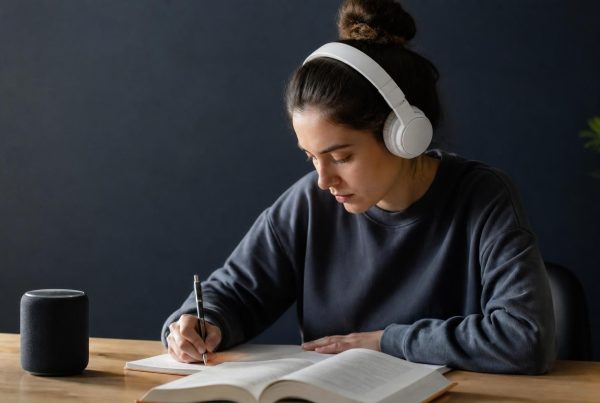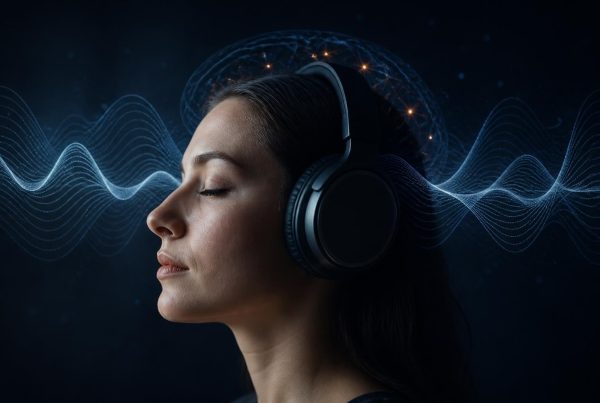
The modern workplace demands sustained concentration, yet achieving genuine deep focus remains elusive for most professionals. Research reveals that employees spend only 39% of their time in meaningful deep work, with constant interruptions fragmenting attention throughout the day. Sound therapy emerges as a scientifically validated method to activate and sustain the neural states necessary for profound concentration, offering a practical bridge between intention and execution.
The Neuroscience Behind Sound-Activated Focus
Understanding how sound therapy triggers deep focus requires examining the brain's attention networks. Neuroscience research on brain network patterns during sustained attention demonstrates that specific acoustic frequencies can influence neural oscillations, creating conditions favorable for extended concentration periods.
The brain operates through synchronized electrical patterns called oscillations or brainwaves. When you enter deep focus, your brain shifts into particular frequency ranges-primarily alpha (8-12 Hz) for relaxed alertness and theta (4-8 Hz) for creative problem-solving. Sound therapy works by introducing external auditory stimuli that encourage the brain to match these beneficial frequencies through a process called entrainment.
Acoustic Frequencies and Attention Networks
Different sound frequencies activate distinct neural pathways. Low-frequency sounds (40-60 Hz) can enhance gamma wave production, associated with higher-level cognitive processing. Mid-range frequencies (200-400 Hz) support alpha wave generation, creating the relaxed yet alert state optimal for sustained work.
Key acoustic mechanisms include:
- Binaural beats: Playing slightly different frequencies in each ear to create a third perceived frequency
- Isochronic tones: Regular, pulsed sounds that directly stimulate brainwave patterns
- White and pink noise: Broadband frequencies that mask distractions and create acoustic consistency
- Nature soundscapes: Organic patterns that reduce cortical arousal while maintaining alertness
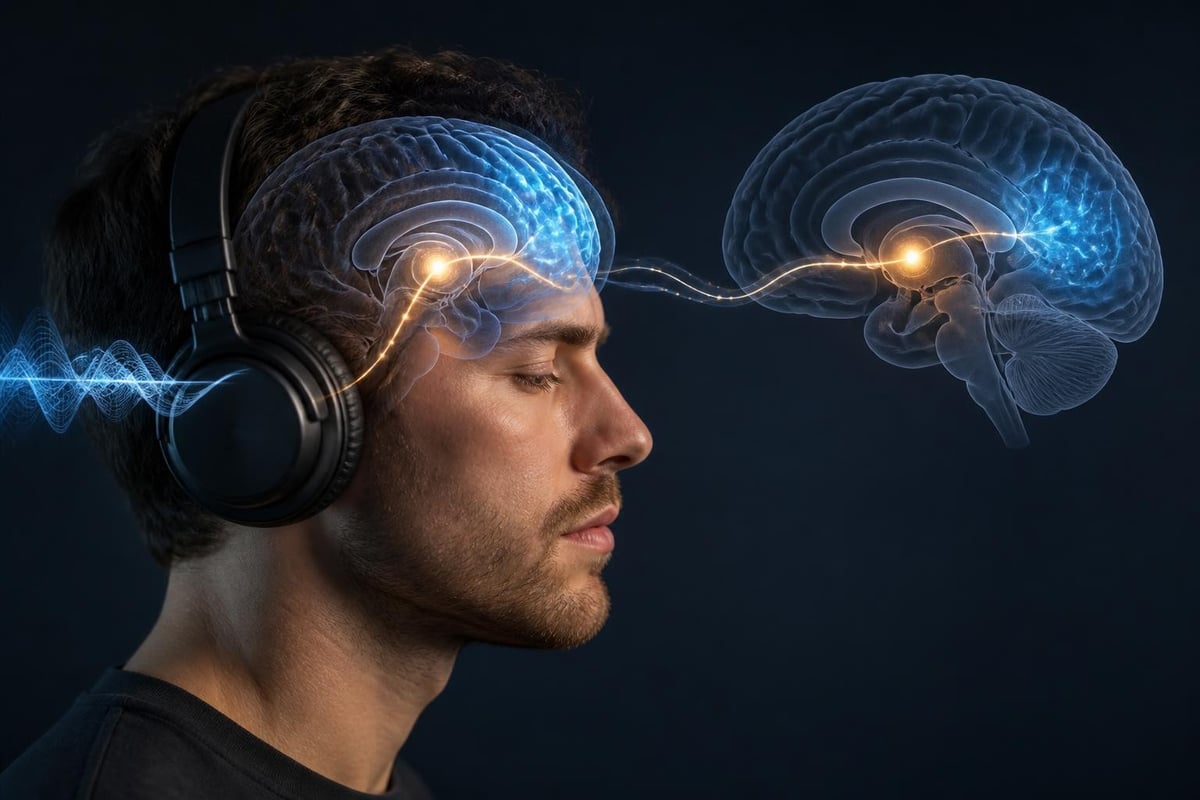
The prefrontal cortex, responsible for executive function and sustained attention, responds particularly well to consistent acoustic environments. By providing a stable auditory backdrop, sound therapy reduces the cognitive load associated with processing environmental noise variations, freeing mental resources for focused work.
Building Your Sound Therapy Practice for Sustained Concentration
Creating an effective sound therapy routine requires more than playing background music. The process involves training your brain to associate specific acoustic environments with focused work states, gradually strengthening neural pathways that support deep focus.
Establishing Acoustic Anchors
Begin by selecting consistent sound profiles for different work types. Your brain learns through repetition, so using the same soundscape for similar tasks creates neural associations that accelerate entry into focused states.
- Choose task-specific soundscapes: Match acoustic profiles to cognitive demands (analytical work versus creative tasks)
- Maintain volume consistency: Keep sounds at 50-60 decibels, roughly equivalent to moderate rainfall
- Establish temporal patterns: Use sound therapy during the same daily windows to leverage circadian rhythms
- Create transition rituals: Start sessions with 2-3 minutes of intentional breathing while sounds begin
- Track response patterns: Monitor which frequencies enhance your personal concentration over 2-3 weeks
The neurochemical basis of concentration relies on dopamine and norepinephrine, neurotransmitters that regulate sustained attention and cognitive persistence. Sound therapy can influence these systems by reducing stress-related cortisol while supporting neurotransmitter balance through acoustic stimulation.
Optimizing Session Structure
Deep focus capacity is finite. Most people can sustain genuine concentration for approximately 2-3 hours daily, making strategic session design critical for maximizing this limited resource.
| Session Length | Focus Intensity | Sound Type | Best For |
|---|---|---|---|
| 25-30 minutes | High intensity | Isochronic tones, binaural beats | Complex problem-solving |
| 45-60 minutes | Moderate intensity | Pink noise, gentle nature sounds | Writing, analysis |
| 90 minutes | Variable with breaks | Layered soundscapes | Creative work, deep learning |
Implementing 90-minute protected focus blocks aligns with the brain's natural ultradian rhythms, alternating between higher and lower arousal states throughout each cycle. Sound therapy supports these rhythms by providing consistent sensory input that prevents external disruptions from breaking concentration.
Advanced Techniques for Deepening Focus States
Once you've established basic sound therapy practices, advanced techniques can further enhance your capacity for sustained attention and mental clarity.
Frequency Layering and Progressive Entrainment
Rather than using single-frequency sounds, layering multiple acoustic elements creates richer entrainment opportunities. This approach mirrors how synchronized neural patterns contribute to collective focus states, though applied individually.
Effective layering strategies include:
- Base layer: Consistent low-frequency foundation (40-80 Hz)
- Middle layer: Rhythmic elements supporting target brainwave states
- Top layer: Subtle textural sounds preventing monotony without causing distraction
- Dynamic adjustment: Gradual frequency shifts maintaining engagement across extended sessions

The progressive approach begins with sounds that match your current mental state, then gradually shifts toward frequencies associated with deeper concentration. This prevents the jarring disconnect that occurs when attempting to force immediate focus through willpower alone.
Integrating Micro-Habits with Acoustic Environments
Sound therapy achieves maximum effectiveness when combined with complementary micro-habits that support neural preparation for focused work. These small behavioral adjustments create synergistic effects with acoustic stimulation.
Begin each sound therapy session by:
- Clearing your workspace of visual distractions
- Placing devices in airplane mode or using dedicated focus apps
- Taking three deep breaths to activate parasympathetic response
- Setting explicit intention for what you'll accomplish
- Hydrating adequately, as dehydration impairs cognitive function
Research on practical deep work strategies emphasizes that environmental design significantly impacts focus quality. Sound therapy operates as one element within a broader attention architecture, most powerful when supporting rather than compensating for poor foundational habits.
Measuring and Refining Your Sound Therapy Practice
Developing deep focus through sound therapy requires iteration based on personal response patterns. What works for one individual may not suit another, making measurement and adjustment essential components of effective practice.
Tracking Focus Metrics
Quantifying focus quality helps identify which acoustic approaches yield the best results for your specific neural patterns and work demands.
| Metric | Measurement Method | Target Range |
|---|---|---|
| Session duration | Time spent without task-switching | 45-90 minutes |
| Output quality | Work product assessment (errors, creativity) | Subjective improvement |
| Mental fatigue | Post-session energy self-rating (1-10) | 6-8 (energized but not depleted) |
| Distraction resistance | Number of attention breaks | <3 per hour |
| Flow state frequency | Sessions where time perception altered | >50% of sessions |
These metrics provide objective feedback about how different sound profiles affect your concentration capacity. After two weeks of consistent practice, patterns emerge indicating which frequencies, volumes, and session structures optimize your personal deep focus activation.
Adapting Acoustic Environments to Cognitive Demands
Different tasks require distinct mental states, suggesting that sound therapy should vary based on work type rather than using identical approaches universally.
Analytical tasks benefit from steady, predictable soundscapes with minimal variation. Consistent white noise or low-frequency tones support the sustained attention and working memory required for data analysis, coding, or financial modeling.
Creative work often responds better to more dynamic acoustic environments. Nature soundscapes with organic variation or layered frequencies that subtly shift maintain engagement without imposing rigid mental frameworks that might constrain creative exploration.
Learning and comprehension typically work well with pink noise or gentle background sounds that mask distractions without competing for auditory processing resources. Since comprehension requires integrating new information with existing knowledge, overly complex soundscapes can interfere with this integration process.

Overcoming Common Sound Therapy Challenges
Even with understanding the neuroscience and techniques, practitioners encounter obstacles when implementing sound therapy for deep focus activation. Addressing these challenges systematically improves long-term success.
Managing Adaptation and Habituation
The brain naturally adapts to consistent stimuli, potentially reducing sound therapy effectiveness over time. This habituation represents the same neural plasticity that makes the technique effective initially, requiring strategic variation to maintain benefits.
Counter habituation by:
- Rotating between 3-4 different soundscapes weekly rather than using identical sounds daily
- Adjusting volume by 5-10 decibels periodically to refresh neural response
- Incorporating silence periods between sessions to reset auditory baseline
- Combining sound therapy with other focus techniques like time blocking or environmental changes
Addressing Individual Sound Sensitivities
Some individuals experience heightened sensitivity to particular frequencies or sound types, making certain common recommendations counterproductive. Tinnitus sufferers, for example, may find certain frequencies exacerbate symptoms rather than supporting focus.
Testing different acoustic profiles systematically helps identify personal tolerance ranges. Start with lower volumes and simpler sound patterns, gradually introducing complexity as comfort increases. The goal involves finding sounds your nervous system perceives as neutral or calming rather than forcing yourself to tolerate irritating stimuli.
Integrating Sound Therapy into Collaborative Environments
While individual practice allows complete control over acoustic environments, many professionals work in shared spaces where implementing sound therapy presents logistical challenges. Headphones provide the obvious solution, though selecting appropriate styles matters for sustained use.
Over-ear headphones offer superior noise isolation and frequency reproduction but may cause physical discomfort during extended sessions. In-ear monitors provide portability and discretion though potentially causing ear canal fatigue. Bone conduction devices eliminate internal ear contact entirely while allowing ambient awareness, beneficial in environments requiring occasional verbal communication.
Sound Therapy Within Comprehensive Focus Training
Ultimately, acoustic techniques represent one element within broader attention development. Understanding deep work neuroscience reveals that multiple factors influence concentration capacity, from sleep quality and nutrition to stress management and physical movement patterns.
Sound therapy excels at creating favorable conditions for deep focus while providing sensory anchors that signal your brain to enter concentrated states. However, these benefits compound when combined with complementary practices addressing other aspects of cognitive function.
Physical exercise, particularly aerobic activity, increases BDNF (brain-derived neurotrophic factor) production, supporting the neuroplasticity that makes sound therapy training effective. Quality sleep consolidates the neural patterns strengthened during focused work sessions. Stress reduction practices prevent cortisol from interfering with the neurotransmitter systems sound therapy aims to optimize.
Building Sustainable Focus Capacity
Rather than viewing sound therapy as a quick fix for attention challenges, approach it as a training method that gradually enhances your brain's natural capacity for sustained concentration. Like physical conditioning, cognitive development requires consistent practice with appropriate recovery periods.
Expect gradual improvement over 4-8 weeks rather than immediate transformation. Initial sessions might yield only 20-30 minutes of genuine deep focus, with that capacity expanding as neural pathways strengthen. Patience during this development phase determines long-term success more than any specific technique selection.
The acoustic environments you create serve as scaffolding supporting attention while underlying neural structures grow stronger. Eventually, you may find you can achieve deep focus with minimal external support, having trained the fundamental attention networks through repeated sound-assisted practice. This independence represents the ultimate goal, with sound therapy remaining available as needed for particularly challenging focus demands.
Sound therapy offers a scientifically grounded pathway to activating and sustaining deep focus states, working with your brain's natural rhythms rather than forcing concentration through willpower alone. By understanding how acoustic frequencies influence neural patterns and implementing progressive training techniques, you can systematically develop greater capacity for the sustained attention modern knowledge work demands. Freshhh.app combines these principles with research-based soundscapes and practical micro-habits, creating a comprehensive focus companion that helps you train your mind for deeper concentration and mental clarity over time.