The pursuit of inner tranquility has become more challenging than ever in 2026. Between constant notifications, demanding work schedules, and the relentless pace of modern life, many people struggle to quiet their minds and bodies. Sound therapy offers a scientifically validated pathway to help you find peace through intentional listening practices that rewire your nervous system and create sustainable calm. Unlike passive background music, therapeutic soundscapes work with your brain's natural frequencies to promote genuine relaxation and mental clarity.
The Science Behind Sound Therapy and Inner Peace
Sound therapy operates on principles of neuroacoustics, the study of how sound affects brain function and emotional states. When you expose your brain to specific frequencies and patterns, you trigger measurable physiological responses that help you find peace at a biological level.
Research demonstrates that certain sound frequencies influence brainwave activity. Alpha waves (8-12 Hz) promote relaxed alertness, while theta waves (4-8 Hz) facilitate deep meditation and emotional processing. Sound therapy designed around these frequencies helps your brain shift from stressed beta-wave dominance to calmer states.
The mechanism works through several pathways:
- Entrainment: Your brainwaves synchronize with external rhythmic stimuli
- Autonomic regulation: Specific sounds activate the parasympathetic nervous system
- Cortisol reduction: Therapeutic soundscapes lower stress hormone production
- Neurotransmitter modulation: Sound patterns influence serotonin and dopamine release
| Brainwave Type | Frequency Range | Associated State | Sound Therapy Application |
|---|---|---|---|
| Beta | 13-30 Hz | Active thinking, stress | Baseline state to shift from |
| Alpha | 8-12 Hz | Relaxed awareness | Focus and calm induction |
| Theta | 4-8 Hz | Deep meditation | Emotional processing |
| Delta | 0.5-4 Hz | Deep sleep | Restorative rest |
Understanding these biological mechanisms helps you approach sound therapy as a tool for genuine neurological change rather than simple distraction.
Building Your Daily Sound Therapy Routine
Consistency transforms sound therapy from a pleasant experience into a powerful practice that helps you find peace sustainably. The key lies in developing micro-habits that integrate therapeutic listening into your existing schedule without overwhelming your routine.
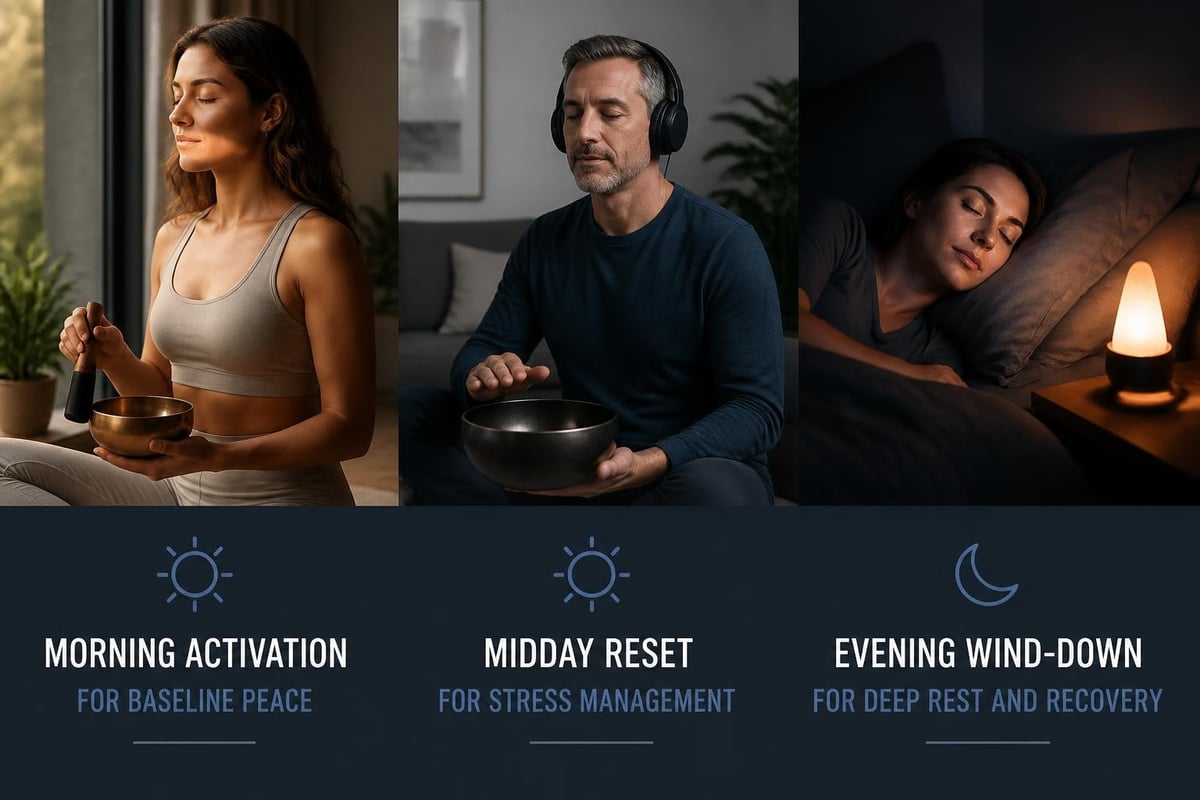
Morning Peace Activation
Start your day with a 5-10 minute sound therapy session before checking your phone. This establishes a peaceful baseline for your nervous system that persists throughout the morning.
Morning routine framework:
- Set your alarm 10 minutes earlier than usual
- Keep headphones beside your bed for immediate access
- Begin with gentle nature sounds or low-frequency tones
- Pair listening with simple breathing exercises
- Gradually increase session length as the habit solidifies
Character strengths like hope, zest, and gratitude contribute significantly to inner peace, and morning sound therapy creates mental space to cultivate these qualities.
Midday Mental Reset
Work stress accumulates throughout the day, making midday intervention critical. A brief sound therapy break helps you find peace when cortisol levels typically peak.
Position your midday session between 11 AM and 2 PM for optimal impact. Even three minutes of focused listening can recalibrate your nervous system. Use this time to step away from screens, close your eyes, and allow therapeutic frequencies to dissolve accumulated tension.
Evening Wind-Down Protocol
Your pre-sleep routine determines sleep quality and next-day mental clarity. Sound therapy in the evening signals your body that it's time to transition from doing to being.
- Dim lights 30 minutes before your session
- Choose slower, deeper frequency soundscapes
- Avoid stimulating content after listening
- Maintain consistent timing to strengthen circadian rhythms
Sound Therapy Techniques That Calm Body and Mind
Different sound therapy approaches target specific aspects of peace. Understanding these techniques allows you to customize your practice for your unique stress patterns and peace requirements.
Binaural Beats for Deep Relaxation
Binaural beats present slightly different frequencies to each ear, creating a perceived third frequency that your brain processes. When the frequency difference falls in the alpha or theta range, your brain entrains to that peaceful state.
Optimal binaural beat applications:
- 10 Hz difference for light meditation and creative thinking
- 6 Hz difference for emotional release and deeper meditation
- 4 Hz difference for profound relaxation and sleep preparation
The technique requires stereo headphones to deliver different frequencies to each ear accurately. Quality matters-poor audio equipment diminishes the entrainment effect.
Nature Soundscapes for Nervous System Regulation
Natural sounds evolved alongside human neurology, creating inherent compatibility between environmental audio and our stress-response systems. Ocean waves, rainfall, and forest ambience activate ancient calming mechanisms.
Research shows that practicing mindfulness and engaging with nature are powerful methods to achieve inner peace. Sound therapy that incorporates natural elements combines both approaches.
| Nature Sound | Primary Benefit | Best Used For |
|---|---|---|
| Ocean waves | Rhythmic breathing regulation | Anxiety reduction |
| Rain | White noise masking | Focus and concentration |
| Forest sounds | Parasympathetic activation | General stress relief |
| Birdsong | Mood elevation | Morning energy |
Frequency-Specific Sound Therapy
Certain frequencies produce documented effects on consciousness and physiology. 528 Hz, often called the "love frequency," appears in studies examining stress reduction and DNA repair. 432 Hz tuning creates a sense of calm centeredness that many practitioners find helps them find peace more readily than standard tuning.
While research continues to explore these specific frequencies, empirical evidence from practitioners suggests measurable benefits. The key is personal experimentation to discover which frequencies resonate with your unique nervous system.
Integrating Sound Therapy With Complementary Practices
Sound therapy's effectiveness multiplies when combined with other evidence-based peace practices. This integration creates multiple pathways to calm, reinforcing your nervous system's capacity for sustained tranquility.
Breathwork and Sonic Entrainment
Coordinate your breathing with rhythmic elements in therapeutic soundscapes. When inhale-exhale cycles match the tempo of waves, tones, or ambient pulses, you achieve deeper physiological coherence.
Simple 4-7-8 breathing (inhale for 4 counts, hold for 7, exhale for 8) pairs exceptionally well with slow-tempo sound therapy. This combination activates the vagus nerve, your body's primary peace-signaling pathway.
Movement Meditation With Background Soundscapes
Gentle movement practices like yoga, tai chi, or simple stretching become more effective when accompanied by appropriate sound therapy. The combination addresses peace from both physical and auditory angles simultaneously.
Choose soundscapes without dramatic shifts or surprises. Consistent, flowing audio supports flowing movement and prevents jarring transitions that disrupt the peaceful state you're cultivating.
Journaling for Integration
After sound therapy sessions, spend 2-3 minutes noting what you experienced. This practice strengthens the neural pathways between therapeutic listening and conscious awareness of peace.
Effective journaling prompts:
- What physical sensations did you notice?
- How did your mental chatter change?
- What emotions arose and shifted?
- Where do you feel peace in your body?

Overcoming Common Sound Therapy Obstacles
Many people abandon their sound therapy practice before experiencing cumulative benefits. Understanding and addressing common challenges helps you find peace consistently rather than sporadically.
Managing Restless Mind Syndrome
When you first begin sound therapy, your mind may seem more agitated rather than less. This paradox occurs because you're finally paying attention to mental activity that normally runs unnoticed in the background.
Instead of fighting thoughts, use them as feedback. Notice when your mind wanders, then gently return attention to the soundscape without judgment. Each redirection strengthens your attention muscles and deepens your capacity to find peace.
Setting boundaries and managing expectations proves essential when establishing any new wellness practice, including sound therapy routines.
Addressing Physical Discomfort
Sitting still triggers discomfort in bodies accustomed to constant movement. Rather than viewing this as failure, recognize it as valuable information about where you hold tension.
Comfort optimization strategies:
- Experiment with different positions (sitting, lying down, reclining)
- Use supportive cushions or props
- Allow gentle position adjustments during sessions
- Start with shorter durations and gradually extend
Physical discomfort often masks as resistance to peace. Your body may have grown so accustomed to stress that relaxation feels threatening. Patience and persistence help you find peace despite this initial awkwardness.
Navigating Acoustic Preferences
Not all therapeutic sounds work for all nervous systems. Some people find peace through rain sounds while others experience them as irritating. This variability reflects individual differences in acoustic processing and personal associations with different sound environments.
Dedicate time to exploring various sound categories:
- Natural environments (water, weather, wildlife)
- Tonal frequencies (pure tones, singing bowls, gongs)
- Ambient music (drones, minimalist compositions)
- White/pink/brown noise variations
- Binaural beats at different frequency differentials
Track which categories feel genuinely calming versus which ones you think should feel calming. Trust your direct experience over theoretical expectations.
Measuring Your Progress Toward Inner Peace
Tracking changes in your peace capacity provides motivation and helps you identify which sound therapy approaches deliver the strongest results for your particular nervous system.
Subjective Peace Indicators
Before each session, rate your current state on a simple 1-10 scale across these dimensions:
| Dimension | Pre-Session Rating | Post-Session Rating | Change |
|---|---|---|---|
| Mental calm | |||
| Physical relaxation | |||
| Emotional equilibrium | |||
| Overall peace |
Over weeks and months, these ratings reveal patterns about which times of day, sound types, and session lengths most effectively help you find peace.
Behavioral and Lifestyle Markers
Beyond subjective ratings, observe concrete life changes that indicate deepening peace:
- Sleep quality: Are you falling asleep faster and waking more refreshed?
- Reactivity reduction: Do minor frustrations trigger smaller responses?
- Relationship quality: Are interactions with others becoming smoother?
- Decision clarity: Can you think through choices with less mental fog?
- Physical symptoms: Have stress-related issues (headaches, digestive problems, muscle tension) decreased?
These objective markers often change before you consciously recognize that you've begun to find peace more readily than before. The benefits of surrounding yourself with positive reminders and being self-aware manifest through these observable life improvements.
Neurological Adaptation Timeline
Understanding the typical progression helps you maintain realistic expectations:
Week 1-2: Initial novelty and experimentation phase. Peace may feel inconsistent.
Week 3-4: Habit formation begins. You notice clearer shifts from pre-session to post-session states.
Week 5-8: Baseline peace level starts elevating. You find peace not just during sessions but more easily throughout the day.
Month 3+: Sustained neurological changes become evident. Your nervous system's default state shifts toward greater calm.
Patience during early weeks prevents premature abandonment of a practice that requires time to reshape neural pathways.
Advanced Sound Therapy Strategies for Deepening Peace
Once you've established a foundational practice, advanced techniques can help you find peace at progressively deeper levels.
Layered Soundscape Construction
Combine multiple sound elements intentionally rather than listening to pre-mixed tracks. Start with a base layer (ocean waves, brown noise), add a mid-layer (gentle rain, wind), then introduce a foreground element (occasional birdsong, distant bells).
This layered approach engages your auditory processing system more actively, preventing habitation while maintaining therapeutic benefits. The slight variability keeps your attention engaged without becoming stimulating.
Silence Integration
Paradoxically, strategic silence within your sound therapy practice deepens the impact of the sounds themselves. Use a ratio like 10 minutes of sound therapy followed by 2 minutes of complete silence.
The silence allows your nervous system to integrate the acoustic input. You'll often find peace settling more deeply during these quiet intervals as your brain processes the therapeutic frequencies you've absorbed.
Personalized Frequency Protocols
As your practice matures, develop customized frequency sequences that address your specific peace requirements:
- Morning protocol: Start at 10 Hz (alert relaxation), gradually decrease to 8 Hz (calm focus)
- Stress recovery protocol: Begin at 12 Hz (transition state), drop to 6 Hz (deep letting go)
- Sleep preparation protocol: Start at 8 Hz (initial unwinding), descend to 4 Hz (sleep readiness)
These progressive sequences guide your nervous system through intentional state changes rather than attempting abrupt shifts that your body may resist.
Acoustic Environment Optimization
The space where you practice influences effectiveness. Sound therapy works best in environments with minimal acoustic interference and comfortable ambient conditions.
Environment enhancement checklist:
- Minimize background noise (close windows, silence devices)
- Control temperature for physical comfort
- Adjust lighting to support relaxation (dimmer for evening, natural for morning)
- Remove visual clutter that triggers mental activation
- Use quality headphones or speakers with accurate frequency reproduction
These environmental factors might seem minor individually but collectively create conditions where you can find peace more effortlessly.
Sound Therapy Across Life Circumstances
Different life situations require adapted approaches to sound therapy. Flexibility in your practice ensures you maintain access to peace regardless of external circumstances.
Travel and Disrupted Routines
Maintaining your sound therapy practice while traveling prevents peace regression during disrupted schedules. Download several hours of varied soundscapes before trips to ensure offline access.
Hotel rooms, airports, and unfamiliar environments often increase stress. Brief 5-minute sound therapy sessions provide nervous system anchoring when everything else feels unsettled. These micro-sessions help you find peace even in challenging circumstances.
High-Stress Periods
During particularly demanding times, you might be tempted to abandon your practice precisely when you need it most. Instead of expecting long sessions, shift to "peace touchpoints" scattered throughout your day.
Three 3-minute sessions often prove more sustainable than one 15-minute session during overwhelmed periods. Each brief encounter with therapeutic sound reminds your nervous system that peace remains available even amid chaos.
Relationship and Family Integration
Sound therapy doesn't require solitude. Shared listening experiences with partners or family members can help everyone find peace simultaneously while strengthening relational bonds.
Fostering positive relationships represents one of the simple habits that cultivate inner peace. When sound therapy becomes a shared practice, it creates regular opportunities for peaceful co-presence without requiring conversation or activity.
Create household "sound sanctuaries" where family members can retreat for therapeutic listening without interruption. This establishes peace as a valued priority within your home culture.
The Neuroscience of Long-Term Peace Development
Understanding how sound therapy creates lasting changes in your brain motivates continued practice and helps you recognize subtle progress that might otherwise go unnoticed.
Neuroplasticity and Acoustic Conditioning
Your brain physically reorganizes based on repeated experiences, a property called neuroplasticity. Regular sound therapy sessions strengthen neural pathways associated with calm while weakening stress-response circuits.
Each session is like depositing small amounts into a peace account. Individual deposits seem insignificant, but compounded over months, they create substantial neurological wealth. This is why people who consistently practice sound therapy report that they find peace more automatically than when they first began.
Default Mode Network Reorganization
The default mode network (DMN) is a brain system active during rest and self-referential thinking. In many people, DMN activity involves rumination and worry rather than genuine rest.
Sound therapy, particularly when combined with mindfulness, reconditions the DMN to settle into authentic rest rather than anxious mental chatter. Over time, your brain's "idle state" shifts from stress to peace as the natural baseline.
Amygdala Downregulation
The amygdala processes threat detection and emotional intensity. Chronic stress keeps this brain region hyperactive, constantly scanning for danger even when safe.
Therapeutic sound frequencies help downregulate amygdala activity. Research demonstrates that regular exposure to calming acoustic environments reduces amygdala reactivity, allowing you to find peace more readily because your brain becomes less prone to false alarm activations.
These neurological changes aren't immediate, but they're cumulative and potentially permanent with sustained practice. You're not just feeling temporary calm-you're rebuilding your brain's relationship with peace itself.
Developing a consistent sound therapy routine offers a scientifically grounded pathway to calm your body and mind while building sustainable habits that compound over time. The integration of therapeutic soundscapes with intentional listening practices creates neurological changes that make inner tranquility increasingly accessible. Freshhh.app combines research-based sound therapy with practical micro-habits and expert guidance to help you find peace not just through passive listening, but through active mind training that creates lasting transformation in how you experience calm and focus.