
In an increasingly distracted world, the ability to cultivate focus and calm has become one of the most valuable skills for personal and professional success. These two states, while distinct, work synergistically to enhance cognitive performance, emotional resilience, and overall well-being. Understanding how to intentionally develop both capabilities can transform your productivity, reduce chronic stress, and help you navigate daily challenges with greater clarity and composure.
The Neuroscience Behind Mental Clarity
The brain's capacity for sustained attention relies on the prefrontal cortex, which regulates executive function and decision-making. When you achieve focus and calm simultaneously, your neural networks operate more efficiently, allowing for deeper cognitive processing and creative problem-solving. Research from 2024 and 2025 has demonstrated that individuals who practice regular mental training exercises show increased gray matter density in regions associated with attention control and emotional regulation.
How Stress Disrupts Concentration
Chronic stress triggers a cascade of physiological responses that directly interfere with your ability to maintain attention. Elevated cortisol levels impair working memory, while the amygdala's hyperactivity can hijack rational thinking processes. This biological response, designed for short-term survival, becomes counterproductive when activated repeatedly throughout the workday.
Common stress-related concentration barriers include:
- Racing thoughts that pull attention away from primary tasks
- Physical tension that creates discomfort and distraction
- Emotional reactivity that consumes mental resources
- Sleep disruption that degrades next-day cognitive performance
The key to overcoming these barriers lies in addressing both the sympathetic nervous system activation and the underlying thought patterns that perpetuate the stress cycle. Multiple relaxation techniques can help restore your nervous system balance and create the foundation for sustained attention.

Building Your Focus and Calm Foundation
Developing sustainable mental clarity requires more than occasional interventions. It demands a systematic approach that addresses environmental factors, behavioral patterns, and physiological states. The most effective strategies combine immediate techniques for acute situations with long-term practices that rewire your default responses.
Environmental Design for Concentration
Your physical surroundings significantly influence your capacity for focus and calm. Research published in early 2026 confirms that workspace design impacts both attention span and stress hormone levels. Strategic modifications to your environment can reduce cognitive load and create conditions that naturally support sustained concentration.
| Environmental Factor | Impact on Focus | Implementation Strategy |
|---|---|---|
| Visual clutter | Increases cortisol by 12-15% | Maintain clean desk with only current task items |
| Noise levels | Reduces productivity by 20-30% | Use acoustic management or purpose-designed soundscapes |
| Lighting quality | Affects circadian rhythm and alertness | Maximize natural light; use 5000K bulbs for task work |
| Air quality | Improves cognitive function by 15% | Ensure proper ventilation; consider air purification |
The workspace you design should minimize decision fatigue while maximizing sensory support for the mental state you're cultivating. This includes considering temperature regulation, ergonomic positioning, and strategic use of visual cues that reinforce your intentions.
Breathing Techniques for Immediate State Change
Controlled breathing serves as the fastest pathway to achieving focus and calm because it directly influences autonomic nervous system activity. Unlike other interventions that require time to take effect, specific breathing exercises can shift your physiological state within 60 to 90 seconds.
The Box Breathing Protocol:
- Inhale through your nose for four counts
- Hold your breath for four counts
- Exhale through your mouth for four counts
- Hold empty for four counts
- Repeat for five complete cycles
This technique, widely used by high-performance professionals, activates the parasympathetic nervous system while maintaining alertness. The equal-ratio pattern creates a sense of control and predictability that helps quiet mental chatter.
Another powerful method is the physiological sigh, which involves two quick inhales through the nose followed by a long exhale through the mouth. This pattern rapidly reduces carbon dioxide levels and has been shown to decrease stress markers more effectively than meditation for acute anxiety episodes.
Cognitive Training Strategies
Beyond environmental and physiological interventions, deliberate cognitive practices can strengthen your capacity for sustained attention and emotional equilibrium. These mental exercises function like strength training for your brain, progressively building your ability to maintain focus and calm under increasingly challenging conditions.
Attention Management Systems
The quality of your focus depends not just on effort but on how you structure your attention throughout the day. Modern productivity research emphasizes working with your brain's natural rhythms rather than against them. This means recognizing that different types of tasks require different cognitive resources and planning accordingly.
Strategic focus techniques include time-blocking for deep work, protecting your peak cognitive hours for complex tasks, and building in transition periods between different types of activities. The transition periods are particularly important for maintaining focus and calm across multiple work sessions.
Implementing the ultradian rhythm approach:
- Identify your 90-minute performance cycles
- Schedule demanding cognitive work during peak periods
- Include 15-20 minute recovery breaks between cycles
- Use breaks for physical movement or relaxation practices
This rhythm-based approach prevents the accumulation of mental fatigue that gradually erodes both concentration quality and emotional stability. By working in alignment with your biological patterns, you can maintain higher performance levels with less perceived effort.

Micro-Habits That Compound Over Time
Sustainable focus and calm emerge from consistent small actions rather than occasional heroic efforts. Micro-habits, practiced daily, create neural pathways that make desired mental states increasingly accessible. These behaviors require minimal willpower because they're designed to be frictionless and immediately rewarding.
Morning Anchoring Practices
How you begin your day sets the neurochemical baseline for your subsequent hours. A strategic morning routine that incorporates focus and calm elements creates momentum that carries through challenging moments. Research from late 2025 indicates that individuals with consistent morning practices show 40% better stress resilience throughout the day.
Your morning anchor might include three to five minutes of controlled breathing, a brief mindfulness check-in, or reviewing your daily intentions. The specific content matters less than the consistency and the conscious decision to prioritize mental state before engaging with external demands.
Transition Rituals Between Tasks
Most people underestimate the cognitive cost of task-switching. Each transition requires your brain to disengage from one context and reload another, consuming attention resources and creating opportunities for distraction. Intentional strategies to maintain focus include creating brief rituals that mark the end of one activity and the beginning of another.
A simple transition ritual might involve:
- Standing and taking three deep breaths
- Physically clearing your workspace
- Writing one sentence about what you accomplished
- Setting a clear intention for the next task
- Adjusting your environment for the new work type
These micro-transitions take less than two minutes but preserve the quality of your attention by preventing the residue from previous tasks from contaminating your current focus.
Sound and Acoustic Environment
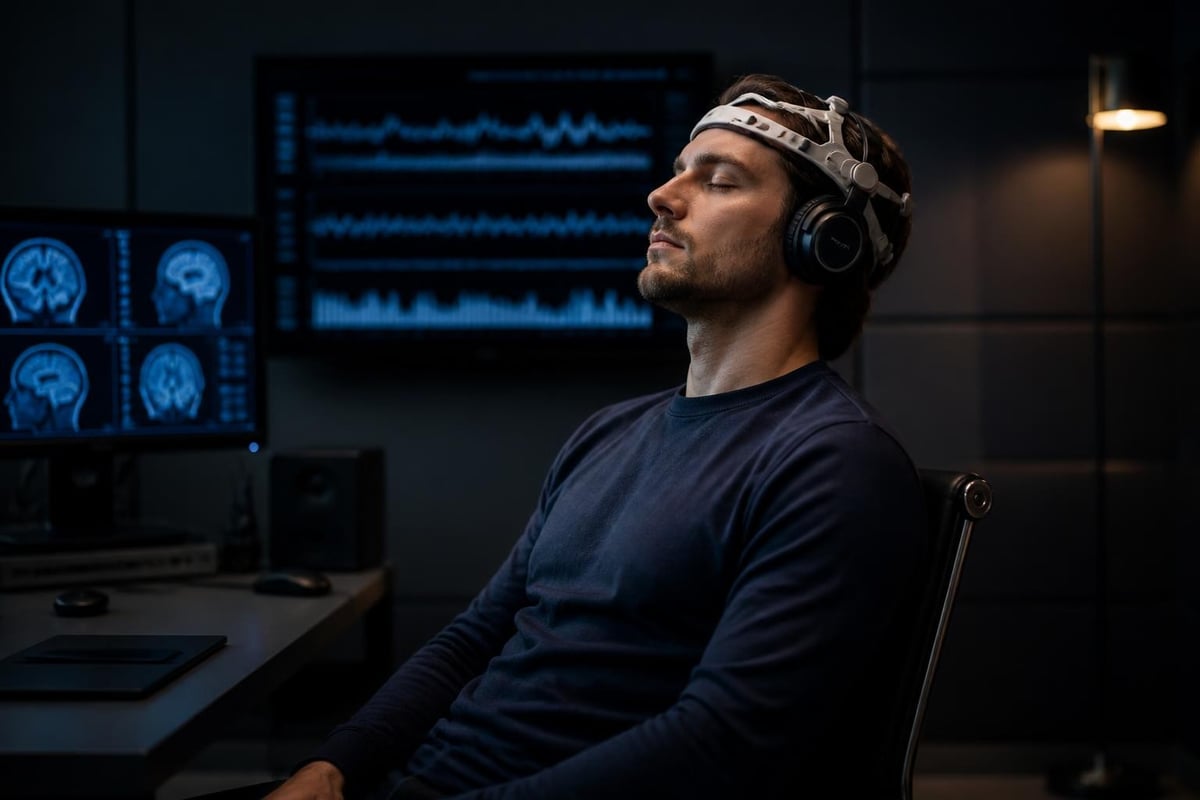
The auditory landscape significantly influences both concentration depth and emotional state. While silence works for some individuals, many people find that purposefully designed soundscapes support better focus and calm than either silence or random ambient noise. This represents a shift from passive listening to active acoustic environmental design.
Frequency and Focus Relationships
Different sound frequencies interact with brain wave patterns in measurable ways. Research conducted in partnership with acoustic scientists has identified specific frequency ranges that support various cognitive states without creating habituation or distraction. These aren't random nature sounds or simple white noise, but carefully constructed acoustic environments that evolve subtly over time.
| Frequency Range | Primary Effect | Best Use Case |
|---|---|---|
| 40-60 Hz | Reduces anxiety, promotes calm | High-stress periods or anxiety management |
| 100-150 Hz | Supports sustained attention | Deep work requiring extended concentration |
| 200-400 Hz | Enhances creativity | Brainstorming or problem-solving sessions |
| Pink noise spectrum | Improves sleep quality | Recovery periods or end-of-day wind-down |
The most effective acoustic environments layer multiple elements that mask distracting environmental noise while providing gentle structure for your attention. This approach recognizes that focus and calm often require external support, particularly in less-than-ideal work environments.
Integration With Physical Wellness
Mental clarity cannot be separated from physical health. The same biological systems that regulate stress response also control inflammation, immune function, and metabolic processes. A holistic approach to achieving focus and calm must address sleep quality, movement patterns, and nutritional factors that influence brain function.
Sleep Architecture and Cognitive Performance
Sleep deprivation undermines both focus capacity and emotional regulation more severely than most people recognize. Even modest sleep restriction, losing just one hour per night, accumulates cognitive deficits equivalent to being legally intoxicated after several days. Prioritizing sleep quality represents one of the highest-leverage interventions for sustainable mental performance.
Sleep hygiene essentials for better focus:
- Maintain consistent sleep and wake times, even on weekends
- Reduce blue light exposure 90 minutes before bed
- Keep bedroom temperature between 65-68°F
- Avoid caffeine after 2 PM
- Use relaxation techniques if falling asleep takes longer than 20 minutes
Quality sleep strengthens memory consolidation, clears metabolic waste from brain tissue, and resets stress response systems. These overnight processes directly determine your next-day capacity for focus and calm.
Movement as Mental State Management
Physical activity serves multiple functions in supporting cognitive performance. Beyond cardiovascular benefits, movement regulates neurotransmitter production, reduces stress hormones, and provides a natural break from sustained mental effort. The relationship between physical activity and stress reduction has been well-documented, with even brief movement sessions showing measurable effects.
You don't need intense exercise to gain cognitive benefits. A ten-minute walk, five minutes of stretching, or brief bodyweight exercises between work sessions can reset attention capacity and reduce accumulated tension. The key is regularity rather than intensity, building movement into your daily rhythm as a mental performance tool rather than viewing it solely as physical fitness.
Practical Implementation Framework
Knowing effective strategies differs substantially from implementing them consistently. The gap between knowledge and action represents the primary barrier most people face when attempting to improve their focus and calm. A structured implementation framework transforms abstract principles into concrete daily behaviors.
The Three-Layer Approach
Effective mental state management operates on three timescales: immediate interventions for acute situations, daily practices that build baseline capacity, and weekly reviews that ensure sustainable progress. This multi-layer system creates redundancy and addresses both urgent needs and long-term development.
Immediate interventions include breathing techniques, brief movement breaks, or environmental adjustments you can deploy within moments when you notice declining focus or rising stress. These are your first-line tools for state management.
Daily practices encompass morning routines, planned work-rest cycles, evening wind-down protocols, and any micro-habits you've committed to performing consistently. These create the foundation that makes acute interventions more effective.
Weekly reviews provide the reflective space to assess what's working, identify patterns in your focus and calm challenges, and adjust your approach based on actual results rather than assumptions. This metacognitive layer prevents you from continuing ineffective practices out of habit.
Measuring Progress and Adaptation
Subjective experience provides valuable information, but quantifiable metrics help you distinguish actual improvement from placebo effects or temporary fluctuations. Tracking specific indicators related to focus and calm allows for data-informed adjustments to your practices.
Key Performance Indicators
Rather than tracking everything, select three to five metrics that meaningfully represent your priorities. These might include deep work hours per day, subjective stress ratings on a consistent scale, sleep quality scores, number of completed priority tasks, or time between distraction and attention recovery.
| Metric | Measurement Method | Target Range |
|---|---|---|
| Deep work duration | Time tracking by task type | 3-4 hours daily |
| Stress level (1-10 scale) | Morning and evening ratings | Average below 5 |
| Distraction frequency | Count per work session | Fewer than 5 per hour |
| Recovery time | Minutes to regain focus after interruption | Under 3 minutes |
The act of measurement itself often improves performance by increasing awareness and creating accountability. However, avoid becoming obsessive about tracking, which can generate additional stress and undermine the very states you're trying to cultivate.
Iterative Refinement Process
Your optimal approach to focus and calm will differ from anyone else's because it must account for your unique neurology, lifestyle constraints, and specific challenges. What works for one person may prove ineffective or even counterproductive for another. This reality necessitates an experimental mindset and willingness to adapt based on your individual results.
Begin with evidence-based practices that have broad applicability, implement them consistently for at least two weeks, assess their impact using your chosen metrics, then refine or replace based on outcomes. This cycle of hypothesis, implementation, measurement, and adjustment creates a personalized system that evolves with your changing needs and circumstances.
Advanced Considerations for Sustained Practice
As your capacity for focus and calm develops, you may encounter plateaus or diminishing returns from practices that initially proved highly effective. This represents a natural progression that requires introducing new challenges or variations to continue advancing your capabilities.
Building Resilience Through Controlled Challenge
Mental strength develops through progressive overload, similar to physical training. Once you can maintain focus and calm in controlled, optimal conditions, the next level involves practicing these states under deliberately challenging circumstances. This might mean working in less-than-ideal environments, maintaining composure during difficult conversations, or sustaining attention during complex, ambiguous tasks.
The principle is gradual exposure rather than overwhelming yourself. Managing anxiety and maintaining calm in progressively more demanding situations builds the neural resilience that translates to real-world performance when stakes are high and conditions are unpredictable.
Integration With Purpose and Values
The deepest motivation for developing focus and calm comes from connecting these capabilities to what matters most in your life. When you clearly understand why sustained attention and emotional equilibrium serve your larger goals and values, maintaining these practices becomes intrinsically rewarding rather than one more obligation competing for your limited time and energy.
Regular reflection on how improved mental clarity enables you to contribute more effectively, build stronger relationships, pursue meaningful projects, or simply experience daily life with greater presence creates the motivational foundation for long-term practice. This connection between daily behaviors and ultimate purpose transforms focus and calm from self-improvement techniques into expressions of your deepest commitments.
Achieving sustainable focus and calm requires integrating multiple evidence-based strategies into a coherent daily system that addresses environmental, physiological, and cognitive factors. The practices outlined here provide a comprehensive framework, but consistent implementation determines actual results. If you're ready to move beyond generic advice and access a science-backed system that combines practical training with purposefully designed soundscapes, Freshhh.app offers the structured support to transform your mental clarity and stress resilience starting today.