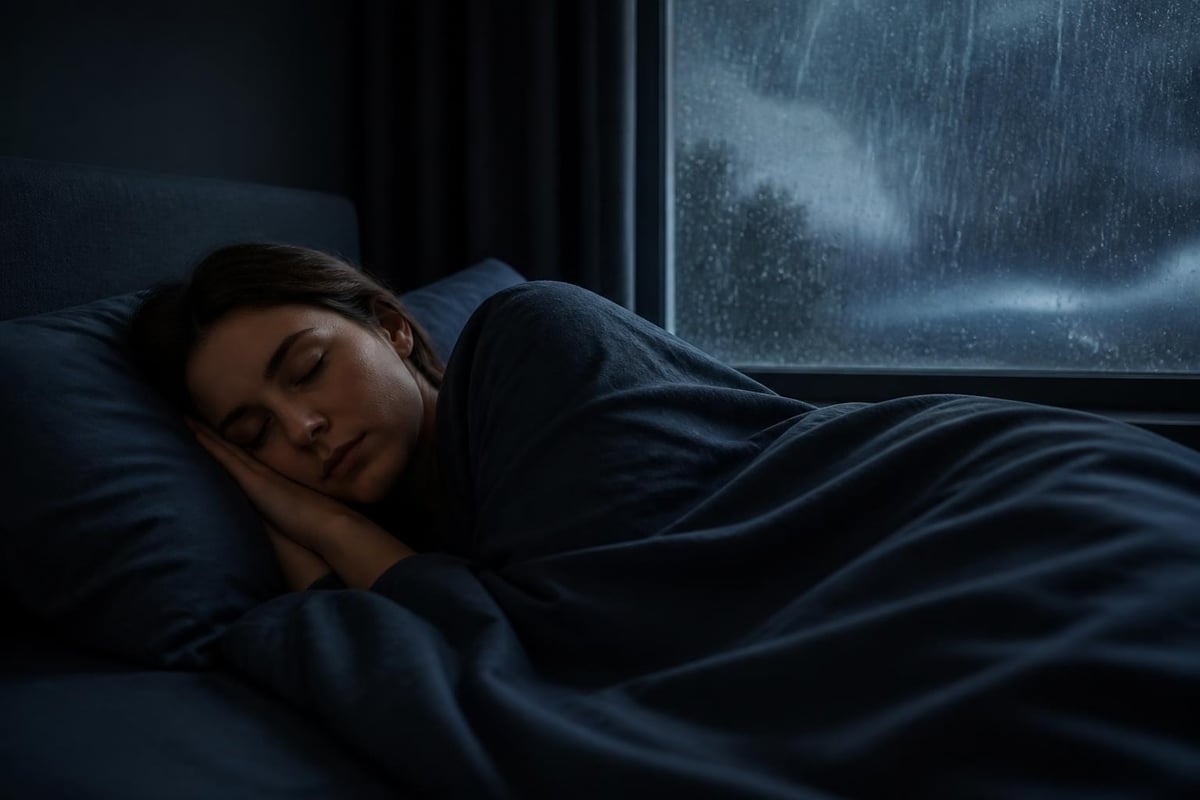
The steady drumming of rainfall against windows has lulled countless people into peaceful slumber throughout human history. Today, science confirms what our ancestors intuitively understood: heavy rain sounds for sleeping offer measurable benefits for rest quality and mental recovery. These natural soundscapes provide more than simple background noise-they engage specific neurological pathways that promote relaxation, mask disruptive environmental sounds, and create optimal acoustic conditions for sustained sleep cycles.
The Neuroscience Behind Rain Sound Therapy
When you listen to heavy rain sounds for sleeping, your brain processes these acoustic patterns differently than it handles sudden or irregular noises. Research demonstrates that nature sounds, particularly rainfall, activate the parasympathetic nervous system, which governs rest-and-digest responses throughout your body.
A 2017 functional magnetic resonance imaging study revealed that nature sounds promote relaxation by shifting attention outward rather than inward, reducing the self-referential thinking patterns associated with anxiety and insomnia. This neurological shift creates ideal mental conditions for sleep onset.
Pink Noise Characteristics
Heavy rain sounds for sleeping fall into the pink noise category, a specific type of sound that contains all frequencies but emphasizes lower frequencies more than higher ones. Unlike white noise, which distributes energy equally across all frequencies, pink noise creates a deeper, more balanced acoustic experience.
The scientific benefits of pink noise include:
- Enhanced slow-wave sleep duration
- Improved memory consolidation during rest
- Reduced nighttime awakenings
- Better overall sleep architecture stability
Research shows that rain sounds improve sleep quality by masking disruptive environmental noises while maintaining a consistent auditory environment that doesn't trigger alertness responses.
Selecting Optimal Rain Sound Profiles
Not all rain recordings provide equal benefits for sleep enhancement. The specific characteristics of heavy rain sounds for sleeping determine their effectiveness in promoting rest and maintaining sleep cycles throughout the night.
Frequency Range Considerations
The most effective rain soundscapes emphasize mid-to-low frequencies between 100 Hz and 2,000 Hz. This range provides sufficient auditory masking while avoiding the higher frequencies that can trigger alertness or startle responses during light sleep phases.
Key acoustic features for optimal sleep support:
- Steady rainfall patterns without sudden volume changes
- Minimal high-frequency elements like thunder or wind gusts
- Consistent spectral distribution across the target frequency range
- Absence of distinct water droplet sounds that create temporal patterns
- Smooth transitions throughout the recording duration
Guidance on selecting optimal rain sound types emphasizes the importance of steady, mid-to-low-frequency textures over dramatic storm recordings with variable intensity.
Duration and Loop Quality
For overnight use, heavy rain sounds for sleeping should either extend for your entire sleep period or feature seamless loops that prevent audible transitions. Most adults sleep between six and nine hours, making 8-10 hour recordings ideal for uninterrupted coverage.
| Recording Duration | Best Use Case | Consideration |
|---|---|---|
| 1-3 hours | Naps, meditation | May end before sleep completion |
| 4-6 hours | Short sleep periods | Adequate for reduced sleep schedules |
| 8-10 hours | Full night's sleep | Covers standard sleep duration |
| Continuous loop | Any duration | Requires imperceptible loop points |
Professional recordings ensure loop points align with the natural rhythm and spectral content of the rain pattern, preventing the subtle discontinuities that can disrupt sleep maintenance.
Auditory Masking and Environmental Noise
One primary mechanism through which heavy rain sounds for sleeping improve rest quality involves auditory masking-the phenomenon where one sound makes another sound imperceptible or less noticeable. This principle explains why rain sounds effectively neutralize disruptive environmental noise.
Urban environments present particular challenges for sleep quality. Traffic noise, neighbor activity, and mechanical systems create unpredictable acoustic interruptions that fragment sleep cycles and prevent deep rest phases.
Heavy rain sounds for sleeping address these challenges by:
- Creating a consistent acoustic baseline that masks irregular environmental sounds
- Reducing the perceived loudness of sudden noises by raising ambient sound levels
- Establishing predictable auditory patterns that the brain learns to filter
- Providing a non-alerting acoustic focus that diverts attention from disruptive sounds
Comparative Effectiveness Across Noise Types
Research comparing rain sounds to other noise types reveals that rainfall recordings offer unique advantages over pure white noise or synthetic sound generation. The natural variation within rain patterns prevents the monotony that some individuals find disturbing in mechanically generated noise.
Volume Optimization for Sleep Enhancement
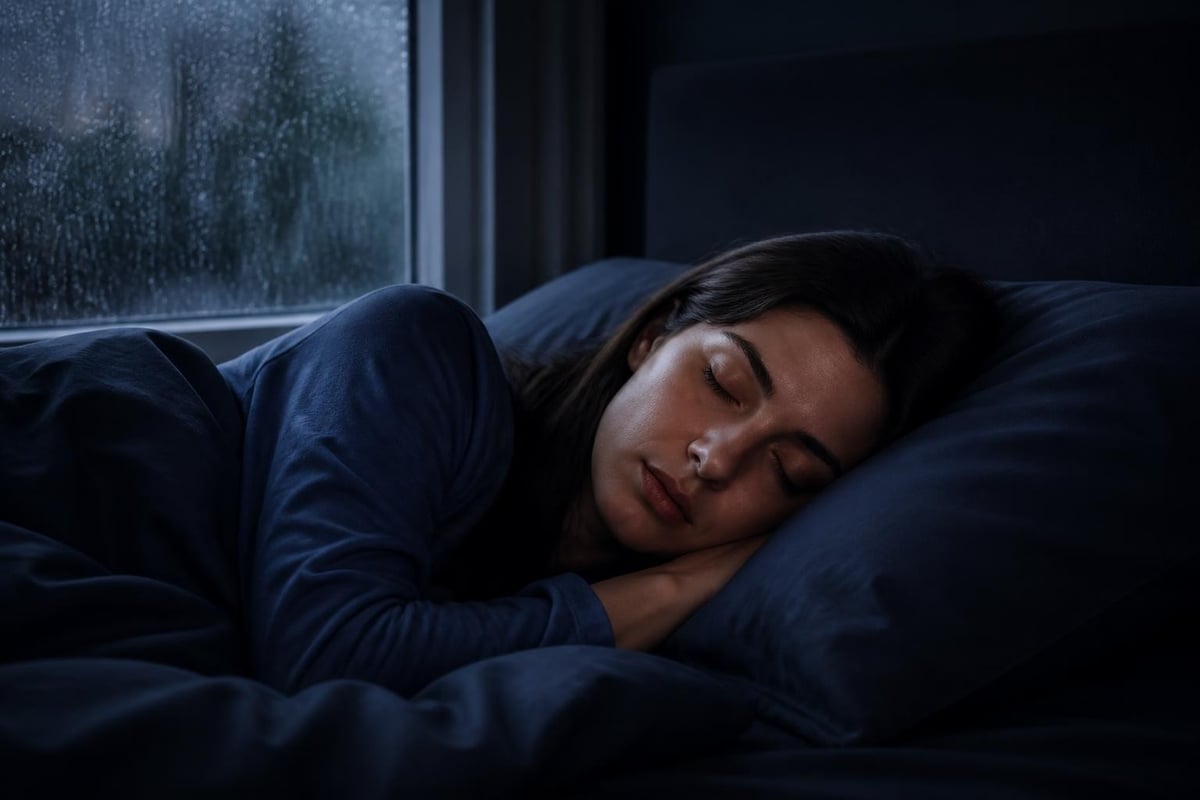
The effectiveness of heavy rain sounds for sleeping depends significantly on playback volume. Too quiet, and the sounds fail to mask environmental noise; too loud, and they become disruptive themselves or pose hearing health risks during extended exposure.
Decibel Guidelines
Sleep medicine specialists recommend setting ambient sound therapy between 40 and 50 decibels for optimal results. This range approximates the volume of moderate rainfall as heard from inside a building-audible and masking but not dominating the acoustic environment.
Volume calibration steps:
- Begin playback at a low volume barely audible from your sleeping position
- Gradually increase volume until environmental sounds become less noticeable
- Reduce slightly if the rain sounds feel intrusive or demand attention
- Ensure playback doesn't prevent you from hearing important alerts like alarms
- Test volume levels during the first few nights and adjust based on results
Consistency matters as much as absolute volume. Maintaining safe volume levels throughout the night prevents the adaptation that can occur when the brain becomes accustomed to unchanging stimuli.
Spatial Positioning
Speaker or device placement influences how heavy rain sounds for sleeping interact with your sleep environment. Positioning affects both the acoustic masking effectiveness and the naturalness of the soundscape.
| Position | Advantages | Drawbacks |
|---|---|---|
| Bedside table | Easy volume adjustment, consistent delivery | May feel directional or artificial |
| Across room | More diffuse, natural sound field | Reduced masking at sleeping position |
| Multiple sources | Immersive acoustic environment | Complex setup, synchronization required |
| Headphones/earbuds | Maximum isolation, personalized | Comfort concerns, safety considerations |
Most users achieve optimal results with a single speaker positioned 4-8 feet from the sleeping area, creating sufficient acoustic coverage without directional bias that reminds the listener of the artificial sound source.
Sleep Architecture and REM Considerations
Understanding how heavy rain sounds for sleeping interact with different sleep stages helps optimize their use for comprehensive rest quality. Sleep progresses through distinct phases, each with unique characteristics and vulnerabilities to acoustic disruption.
Deep Sleep Enhancement
Slow-wave sleep, the deepest and most restorative sleep phase, benefits particularly from the consistent acoustic environment that rain sounds provide. During this stage, the brain exhibits reduced responsiveness to external stimuli, but sudden loud sounds can still trigger partial arousals that fragment sleep quality.
Rain sounds support deep sleep cycles by maintaining stable acoustic conditions that prevent the environmental variations most likely to disrupt slow-wave sleep. The pink noise characteristics of rainfall specifically enhance the delta wave patterns associated with this restorative sleep phase.
REM Sleep Dynamics
Rapid eye movement sleep presents different acoustic considerations. During REM periods, the brain becomes more active and potentially more responsive to sound content. Heavy rain sounds for sleeping remain beneficial during REM by providing consistent masking without introducing narrative elements or distinct patterns that might influence dream content or trigger cognitive engagement.
Research on ambient sound therapy during REM sleep suggests that natural sounds like rainfall maintain sleep continuity more effectively than mechanical white noise or music with melodic structure. The stochastic nature of rain-predictable in character but variable in detail-aligns with optimal REM sleep acoustic conditions.
Specialized Applications and Conditions
Heavy rain sounds for sleeping offer particular benefits for specific populations and conditions beyond general sleep enhancement. Understanding these specialized applications helps individuals match sound therapy approaches to their unique needs.
Tinnitus Management
Individuals experiencing tinnitus-persistent ringing, buzzing, or hissing in the ears-often find heavy rain sounds for sleeping especially valuable. Rain sounds effectively mask tinnitus by providing continuous broadband noise across the mid-to-high frequency spectrum where tinnitus symptoms typically manifest.
The masking mechanism differs from simple volume competition. Rain sounds engage auditory attention in ways that reduce the perceptual salience of tinnitus, making the phantom sounds less noticeable even when they remain technically present. This approach supports sleep onset by removing the frustration and hypervigilance that tinnitus often creates.
Anxiety and Hyperarousal
Sleep difficulties frequently stem from anxiety, racing thoughts, or physiological hyperarousal rather than environmental noise alone. Heavy rain sounds for sleeping address these internal disruptions through neurological mechanisms distinct from simple auditory masking.
The rhythmic yet non-repetitive patterns in rainfall recordings provide an external acoustic focus that redirects attention away from anxious thought patterns. This redirection doesn't require conscious effort-the brain naturally engages with the sound texture, creating a form of passive meditation that facilitates the mental quieting necessary for sleep onset.
Anxiety-specific benefits include:
- Reduced rumination and circular thinking
- Lowered physiological arousal markers
- Decreased cortisol levels associated with stress
- Enhanced parasympathetic nervous system activity
- Improved sleep onset latency in anxious individuals
Integration with Sleep Hygiene Practices
Maximum benefits from heavy rain sounds for sleeping emerge when sound therapy integrates with comprehensive sleep hygiene practices. Acoustic optimization represents one component of a multi-faceted approach to rest quality enhancement.
Temporal Consistency
Establishing regular patterns around rain sound use reinforces their effectiveness through classical conditioning. When you consistently employ heavy rain sounds for sleeping during your standard sleep period, your brain begins associating these acoustic cues with rest preparation, strengthening the sleep onset response over time.
- Initiate playback 15-30 minutes before intended sleep time to establish the association
- Maintain consistent volume levels across nights for predictable conditioning
- Use the same or similar rain recordings to strengthen acoustic recognition
- Avoid daytime use of sleep-specific sounds to preserve their exclusive sleep association
- Gradually introduce sounds if you're new to sleep audio therapy
Environmental Optimization
Heavy rain sounds for sleeping work most effectively within properly optimized sleep environments. Sound therapy cannot compensate for fundamental environmental problems like excessive light, inappropriate temperature, or uncomfortable bedding.
| Environmental Factor | Optimal Range | Rain Sound Interaction |
|---|---|---|
| Room temperature | 60-67°F (15-19°C) | Neutral-no interference |
| Darkness level | Complete or near-complete | Synergistic-both support melatonin |
| Humidity | 30-50% | Neutral-no interference |
| Mattress comfort | Individual preference | Neutral-no interference |
| Ambient sound | 30-40 dB baseline | Enhanced by rain masking |
The synergistic relationship between acoustic optimization and other sleep hygiene factors produces results superior to any single intervention alone.
Practical Implementation Strategies
Translating knowledge about heavy rain sounds for sleeping into consistent practice requires addressing common implementation challenges and establishing sustainable routines that support long-term use.
Technology Selection
Modern implementation of rain sound therapy spans multiple technology platforms, each offering distinct advantages and limitations for sleep application.
Smartphone applications provide convenience and portability but raise concerns about electromagnetic radiation exposure near the sleeping area and blue light emission if the screen requires interaction near bedtime. Dedicated audio players eliminate these concerns while sacrificing the variety and customization that app-based solutions offer.
Smart speakers deliver superior audio quality and hands-free operation but may introduce privacy considerations and require stable network connectivity. Extended rain sound recordings available on streaming platforms offer free access but typically include advertisements unless subscription services remove them.
Customization and Variation
While consistency benefits conditioning, some individuals prefer variation in their heavy rain sounds for sleeping to prevent habituation or maintain engagement. Strategic variation preserves effectiveness while accommodating preference diversity.
Rotating between different rain recordings-heavy downpours, steady rainfall, rain on various surfaces-provides acoustic variety without abandoning the core therapeutic mechanism. This approach maintains the pink noise benefits and masking effectiveness while preventing the monotony some users experience with identical nightly soundscapes.
Progressive Adaptation
Individuals new to sleep sound therapy may require an adaptation period before experiencing full benefits from heavy rain sounds for sleeping. Initial nights might feel unfamiliar or slightly disruptive as the brain adjusts to the new acoustic environment.
Adaptation timeline:
- Nights 1-3: Novelty may temporarily delay sleep onset
- Nights 4-7: Familiarity develops, benefits begin emerging
- Nights 8-14: Conditioning strengthens, masking effectiveness peaks
- Nights 15+: Full integration, maximum therapeutic benefit
Patience during the adaptation phase prevents premature abandonment of an approach that would ultimately prove beneficial with continued application.
Advanced Considerations for Optimization
Experienced users of heavy rain sounds for sleeping can explore advanced optimization strategies that fine-tune acoustic therapy for maximum benefit and personalized effectiveness.
Layering and Mixing
Combining rain sounds with complementary acoustic elements creates customized soundscapes tailored to individual preferences and specific sleep challenges. Strategic layering maintains the core benefits of rainfall while addressing unique needs.
Common complementary elements include:
- Distant thunder for individuals who find periodic low-frequency rumbles soothing
- Gentle wind to add movement and spatial dimension
- Light nature sounds like nocturnal insects for enhanced natural ambiance
- Subtle harmonic drones to reinforce specific frequency ranges
Effective mixing preserves rain sounds as the dominant element, ensuring that complementary additions enhance rather than compete with the primary therapeutic mechanism.
Binaural and Spatial Audio
Emerging technologies in spatial audio processing offer new dimensions for heavy rain sounds for sleeping. Binaural recording techniques capture rainfall with directional and distance cues that create three-dimensional acoustic experiences through standard headphones or earbuds.
These spatial characteristics may enhance the naturalness and immersiveness of rain soundscapes, potentially strengthening their relaxation benefits and masking effectiveness. However, headphone use during sleep introduces comfort and safety considerations that require individual assessment.
Personalized Frequency Emphasis
Advanced users can employ equalization to emphasize specific frequency ranges within heavy rain sounds for sleeping based on their unique hearing profiles and environmental masking needs. Boosting frequencies between 200-800 Hz enhances masking of common household sounds, while emphasizing the 1,000-3,000 Hz range more effectively masks higher-frequency disturbances like voices or mechanical equipment.
This personalization requires audio playback systems with equalizer functions and basic understanding of frequency relationships, but the optimization potential justifies the learning investment for committed users seeking maximum benefit.
Heavy rain sounds for sleeping harness pink noise characteristics, auditory masking principles, and neurological relaxation pathways to create scientifically supported conditions for enhanced rest quality. Whether you're addressing environmental noise challenges, managing tinnitus symptoms, or seeking natural anxiety reduction, strategic implementation of rainfall soundscapes offers measurable sleep improvements backed by research evidence. Freshhh.app combines these science-backed soundscapes with practical micro-habits and evidence-based techniques that train your mind for deeper focus and lasting calm, creating a comprehensive approach to mental clarity that extends beyond passive listening into active skill development.