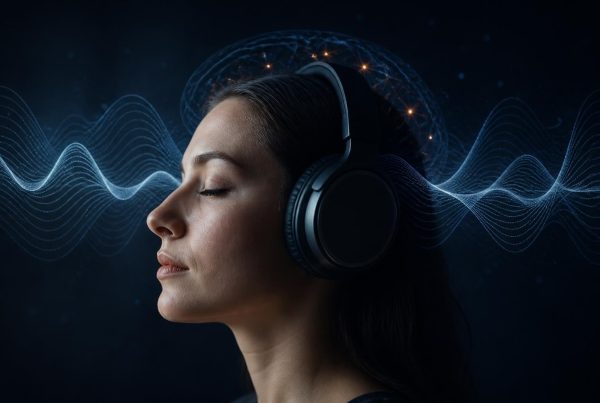
Mental noise has become an unavoidable companion in modern life, filling our minds with an endless stream of thoughts, worries, and distractions that make concentration feel impossible. This constant internal chatter isn't just annoying-it actively interferes with our ability to process information, make decisions, and maintain emotional balance. Understanding what drives this cognitive interference and discovering effective strategies to manage it, particularly through sound-based interventions, represents a critical step toward reclaiming mental clarity and productivity.
Understanding the Nature of Mental Noise
Mental noise refers to the background interference of thoughts, emotions, and sensory inputs that compete for attention within our cognitive system. Unlike productive thinking or deliberate reflection, this form of cognitive static operates without intention, creating a barrier between you and the task at hand.
The psychology of mental noise reveals several distinct patterns. Intrusive thoughts about unfinished tasks, emotional reactions to past events, and anticipatory anxiety about future situations all contribute to the overwhelming sensation of a cluttered mind. Research indicates that most people experience thousands of these unbidden thoughts daily, many of which serve no constructive purpose.
The Cognitive Cost of Constant Distraction
The impact of mental noise extends far beyond simple annoyance. When your brain constantly processes irrelevant internal dialogue, it depletes cognitive resources needed for focused work, creative problem-solving, and emotional regulation.
Key effects include:
- Reduced working memory capacity
- Slower processing speeds for complex tasks
- Increased error rates in decision-making
- Heightened stress response activation
- Diminished ability to enter flow states
Studies examining neuroticism and mental noise demonstrate that individuals with higher baseline anxiety experience significantly more cognitive interference, creating a self-reinforcing cycle where mental noise generates additional stress, which in turn produces more noise.

The Neuroscience of Auditory Intervention
Sound affects brain function through multiple pathways, making it a uniquely powerful tool for managing cognitive interference. Unlike visual stimuli, which require active attention, auditory input processes continuously and influences neural activity even when you're focused elsewhere.
Research on noise within the nervous system shows that our brains constantly generate random neural activity. Structured sound interventions can help organize this chaos by providing predictable patterns that entrain brain waves toward specific states conducive to focus or relaxation.
How Acoustic Environments Shape Mental States
The relationship between external sound and internal mental noise follows counterintuitive principles. Complete silence, which many assume would eliminate distraction, can actually amplify awareness of internal cognitive chatter. Studies on how silence changes our brains reveal that brief periods of quiet can promote neural regeneration, but extended silence may increase rumination in individuals prone to anxiety.
Conversely, strategically designed soundscapes create an acoustic environment that occupies just enough auditory processing bandwidth to mask distracting mental content without demanding active attention. This phenomenon, known as perceptual masking, allows the prefrontal cortex to allocate resources toward intentional tasks rather than managing intrusive thoughts.
| Sound Type | Effect on Mental Noise | Best Use Case |
|---|---|---|
| White noise | Masks variable distractions | Open office environments |
| Binaural beats | Entrains specific brain wave states | Deep focus sessions |
| Nature sounds | Reduces stress-related interference | Anxiety management |
| Ambient music | Supports sustained attention | Creative work |
Practical Sound Therapy Approaches
Implementing sound-based strategies for managing mental noise requires understanding both the acoustic properties involved and your individual response patterns. Not all soundscapes work equally well for everyone, and effectiveness often depends on the specific type of cognitive interference you're experiencing.
Frequency-Based Interventions
Different sound frequencies interact with brain activity in distinct ways. Low-frequency tones (below 250 Hz) tend to promote relaxation and reduce arousal-based mental noise, while mid-range frequencies (250-2000 Hz) support sustained attention without inducing drowsiness.
Research-backed frequency applications:
- 40 Hz binaural beats for enhancing gamma wave activity associated with focused concentration
- 8-12 Hz alpha range stimulation for reducing anxiety-driven cognitive interference
- 4-8 Hz theta frequencies for creative problem-solving and reducing analytical overthinking
- Pink noise patterns for improving sleep quality and reducing nighttime rumination
The key to effective implementation lies in matching the acoustic intervention to your specific mental state. When experiencing high-arousal mental noise characterized by racing thoughts and anxiety, lower-frequency interventions prove most effective. For attention-deficit patterns where thoughts wander without emotional charge, higher-frequency stimulation helps maintain engagement.
Creating Optimal Acoustic Environments
Environmental sound design extends beyond simply playing background audio. The spatial characteristics of sound, its volume relative to ambient noise, and its temporal structure all influence effectiveness in reducing mental noise.
Understanding how communication breaks down under stress provides insights into why certain acoustic approaches work better during high-pressure situations. When cognitive load increases, simpler sound patterns with clear structure prove more beneficial than complex musical arrangements.

Building a Sustainable Sound-Based Practice
Transforming sound therapy from an occasional tool into a consistent practice for managing mental noise requires systematic implementation. The most effective approaches combine acute interventions for immediate relief with longer-term habit formation that reduces baseline cognitive interference.
Micro-Habits for Mental Clarity
Rather than relying solely on extended meditation sessions or prolonged sound exposure, research supports incorporating brief acoustic interventions throughout your day. These micro-practices train your nervous system to shift more rapidly between states of activation and calm.
Five-minute implementation strategies:
- Morning acoustic priming: Begin each day with 5 minutes of structured sound exposure to establish baseline calm
- Transition soundscapes: Use specific audio cues when shifting between different types of work
- Cognitive reset intervals: Schedule brief sound therapy breaks every 90 minutes during focused work
- Pre-sleep acoustic wind-down: Consistent 10-minute evening routine to reduce rumination
The compounding effect of these small interventions often exceeds the impact of less frequent but longer sessions. Your brain begins associating specific sound patterns with particular mental states, creating conditioned responses that activate more quickly with repeated practice.
Measuring Progress and Adjusting Approaches
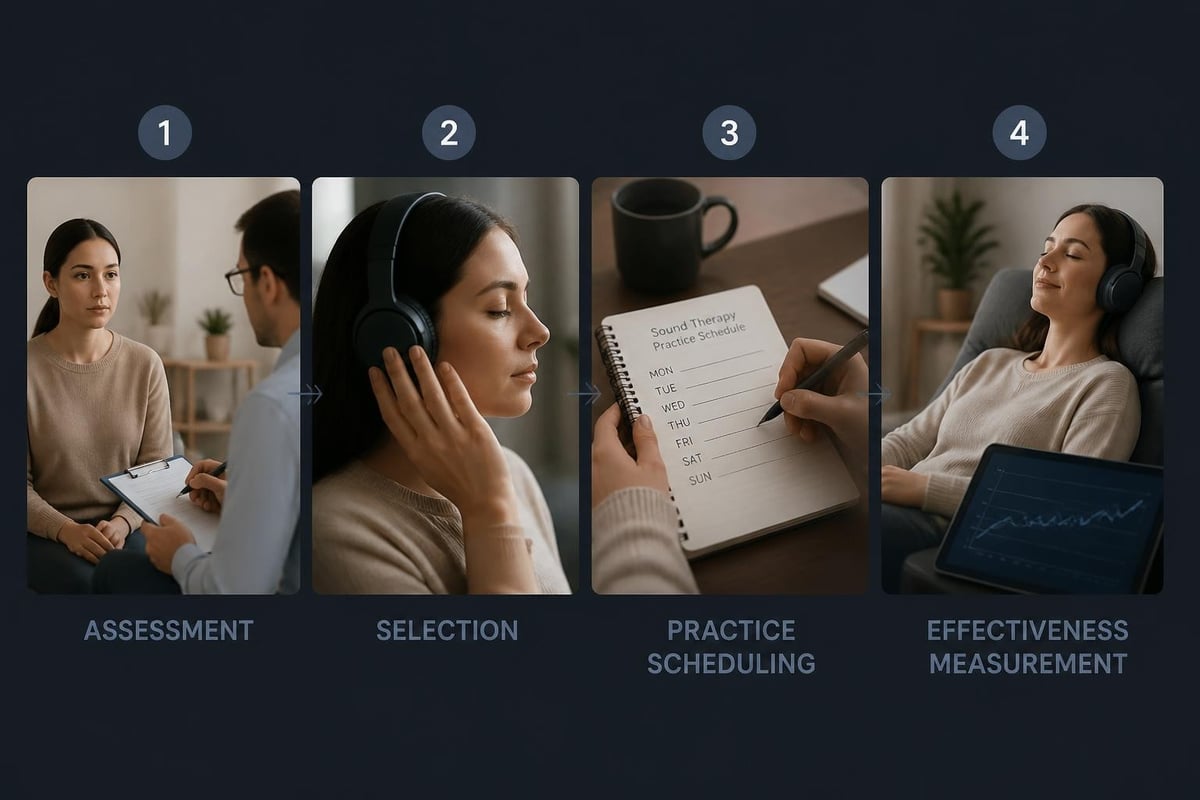
Unlike some wellness interventions with vague outcomes, the effectiveness of sound therapy for mental noise can be assessed through concrete metrics. Tracking your response patterns helps identify which acoustic approaches deliver the most benefit for your specific cognitive profile.
| Assessment Method | What It Measures | Frequency |
|---|---|---|
| Focus duration tracking | Time maintaining attention before distraction | Daily |
| Subjective noise rating | Self-reported mental clarity (1-10 scale) | Morning and evening |
| Task completion rate | Productivity during sound intervention periods | Weekly |
| Stress response indicators | Heart rate variability or perceived stress | As needed |
This data-driven approach prevents the common pitfall of continuing ineffective practices out of habit while providing clear feedback on what works for your unique neurological patterns.
Advanced Applications for Specific Challenges
Different types of mental noise require tailored acoustic interventions. The wandering mind that plagues someone during creative work differs fundamentally from the anxious rumination that prevents another person from sleeping, and effective sound therapy must account for these distinctions.
Addressing Rumination and Worry Cycles
When mental noise takes the form of repetitive worry or past-event analysis, the goal shifts from enhancing focus to interrupting destructive thought patterns. This type of cognitive interference often intensifies in quiet environments, making acoustic intervention particularly valuable.
The question of whether mental noise represents a flaw or feature of human cognition becomes especially relevant here. While some background processing serves adaptive functions, rumination typically represents maladaptive pattern activation that sound therapy can help disrupt.
For rumination-focused interventions, complexity matters. Simple repetitive sounds may allow worried thoughts to continue in parallel, while moderately complex acoustic patterns require enough processing bandwidth to genuinely interrupt the cycle. Nature soundscapes combining multiple elements-waves, wind, birds-often prove particularly effective because they provide variation without demanding active attention.
Managing Sensory Sensitivity
Some individuals experience mental noise that stems partially from heightened sensitivity to environmental sounds. Understanding misophonia and sound sensitivity reveals how certain acoustic triggers can generate cascading cognitive and emotional responses that compound mental interference.
For these situations, sound therapy serves a dual function: masking problematic environmental noise while providing a controllable acoustic environment that reduces hypervigilance. The predictability of therapeutic soundscapes allows the nervous system to relax its constant monitoring for potential auditory threats.
Integration with Complementary Practices
While sound therapy offers powerful standalone benefits for managing mental noise, its effectiveness multiplies when combined with other evidence-based approaches. The acoustic environment sets a foundation upon which additional practices build more effectively.
Synergistic Combinations
Breath work plus soundscapes: Structured breathing exercises become easier to maintain when paired with rhythmic audio cues that pace inhalation and exhalation cycles. The external sound pattern provides an anchor that reduces the cognitive effort required to maintain breath awareness.
Movement and music: Physical activity paired with carefully selected music reduces mental noise through multiple mechanisms-the exercise itself dissipates stress hormones while the music occupies auditory processing channels and enhances motivation.
Journaling with ambient sound: Writing to process thoughts and emotions works more effectively in a supportive acoustic environment that reduces external distractions without creating absolute silence that might feel oppressive.
These combinations leverage the fact that cognitive distraction and measurement noise often require multi-modal interventions for optimal management. Sound addresses the auditory channel while complementary practices engage other aspects of the cognitive system.
Personalization Through Experimentation
The most sophisticated understanding of sound therapy's potential comes from systematic personal experimentation. What works for reducing mental noise varies based on individual neurology, life circumstances, and the specific nature of cognitive interference you experience.
Begin with evidence-based starting points-alpha-frequency binaural beats for focus, nature sounds for stress reduction-but track your responses and adjust accordingly. Some people find that sounds they initially found calming become irritating with prolonged exposure, while others discover unexpected benefits from unconventional acoustic approaches.
The resources available through Freshhh.app provide structure for this experimentation process, combining scientifically designed soundscapes with practical frameworks for building sustainable mental training habits. Rather than treating sound as passive background audio, this approach recognizes the active role properly designed acoustic environments play in reshaping cognitive patterns.
Overcoming Common Implementation Challenges
Even with clear understanding of how sound therapy reduces mental noise, translating knowledge into consistent practice presents obstacles. Recognizing these barriers and developing specific strategies to address them determines long-term success.
Consistency Without Dependency
A frequent concern involves becoming psychologically dependent on sound interventions, unable to focus without acoustic support. This represents a legitimate consideration that requires balanced implementation.
The solution lies in viewing sound therapy as training wheels rather than a permanent crutch. Initial heavy reliance gradually decreases as your nervous system learns new baseline states. Most people find that after several months of consistent practice, they require sound support less frequently while maintaining the improved focus and reduced mental noise they've developed.
Progressive independence strategies:
- Start with continuous sound support during all focused work
- Introduce brief silent intervals within sound-supported sessions
- Gradually extend silent periods while maintaining performance
- Reserve sound therapy for particularly challenging cognitive demands
- Maintain occasional practice to reinforce neural patterns
Environmental and Social Constraints
Workplace environments, shared living spaces, and social situations don't always accommodate headphone use or controlled acoustic environments. These constraints require creative adaptation rather than abandoning sound-based approaches entirely.
Brief pre-work sound therapy sessions can establish mental states that persist beyond the immediate listening period. Even 10 minutes of focused acoustic intervention before entering a challenging environment reduces mental noise for the subsequent hours. Additionally, scheduled sound breaks-stepping away for five-minute reset sessions-provide intermittent support without requiring constant audio access.
Managing mental noise represents one of the most impactful ways to improve both productivity and wellbeing in our increasingly distracted world. Sound therapy offers a scientifically validated, practical approach that works with your brain's natural processing systems rather than fighting against them. Freshhh.app brings together research-backed soundscapes and structured micro-habits to help you build lasting skills for mental clarity, transforming how you experience focus and calm in daily life.