Sleep quality determines cognitive performance, emotional regulation, and physical health outcomes, yet millions struggle with rest in an increasingly noisy world. Nature noise for sleep has emerged as a scientifically supported intervention that addresses both acoustic disturbances and psychological factors that impede rest. Unlike simple background music or white noise generators, carefully selected natural soundscapes interact with our auditory processing systems in ways that promote parasympathetic nervous system activation and support the brain's transition through sleep stages.
The Science Behind Nature Noise for Sleep
Research published in Scientific Reports demonstrates that forest soundscapes improve mood and psychological restoration, creating the mental conditions necessary for sleep onset. The acoustic properties of natural sounds differ fundamentally from urban noise pollution or synthetic audio patterns.
Natural soundscapes exhibit three key characteristics that make them effective for sleep support:
- Spectral complexity: Natural sounds contain multiple frequency layers that engage auditory attention without triggering alertness responses
- Temporal variability: The irregular but predictable patterns in nature noise prevent habituation while avoiding startle responses
- Acoustic masking: Gentle natural sounds effectively cover intermittent disturbances without introducing harsh contrasts
How Natural Sounds Affect Sleep Architecture
The brain processes auditory information continuously during sleep, though conscious awareness diminishes. Nature noise for sleep works by providing consistent acoustic input that stabilizes the sleep environment without crossing arousal thresholds.
Studies examining electrophysiological responses show that specific natural sounds produce measurable changes in stress markers and emotional states. A 2026 investigation found that birdsong, insect sounds, and rain each generate distinct EEG patterns among listeners, with implications for how different nature categories support relaxation and mental recovery.

The World Health Organization's guidance on environmental noise emphasizes that nocturnal noise exposure significantly impacts sleep quality and health outcomes, making acoustic management a critical component of sleep hygiene.
Selecting Effective Nature Noise for Sleep
Not all natural sounds produce equivalent sleep benefits. The effectiveness of nature noise for sleep depends on matching acoustic characteristics to individual sensitivity profiles and environmental challenges.
| Sound Category | Frequency Range | Best For | Potential Drawbacks |
|---|---|---|---|
| Ocean waves | 20-500 Hz | Masking traffic, deep relaxation | May trigger bathroom needs |
| Rainfall | 250-2000 Hz | General sleep support, anxiety reduction | Can feel repetitive to some |
| Forest streams | 200-4000 Hz | Mental restoration, thought quieting | Higher frequencies may alert light sleepers |
| Wind in trees | 100-1500 Hz | Breathing rhythm entrainment | Inconsistent volume may disturb |
| Nocturnal insects | 2000-8000 Hz | Familiar summer ambiance | Higher pitch unsuitable for some |
Volume and Intensity Considerations
Research quantifying the effects of natural sounds at different sound pressure levels reveals critical thresholds. Spring water sounds demonstrate restorative effects at moderate volumes, but exceed therapeutic ranges when played too loudly, shifting from beneficial to potentially disruptive.
Optimal volume for nature noise for sleep typically ranges between 40-50 decibels, roughly equivalent to a quiet library or gentle conversation. This level provides sufficient masking for typical urban disturbances (air conditioning, distant traffic, neighbor activity) without creating its own interference.
Key volume principles:
- Just-audible masking: Nature sounds should be perceptible but not prominent in conscious awareness
- Consistency over peaks: Avoid soundtracks with sudden volume increases that may trigger micro-arousals
- Personal calibration: Individual hearing sensitivity varies, requiring personalized adjustment
- Environmental matching: Louder ambient noise requires higher masking volumes, but maintaining the lowest effective level preserves sleep architecture
Integrating Nature Noise into Sleep Routines
Effective use of nature noise for sleep extends beyond simply pressing play at bedtime. Strategic integration with sleep hygiene practices and circadian rhythm management amplifies benefits.
Pre-Sleep Transition Protocol
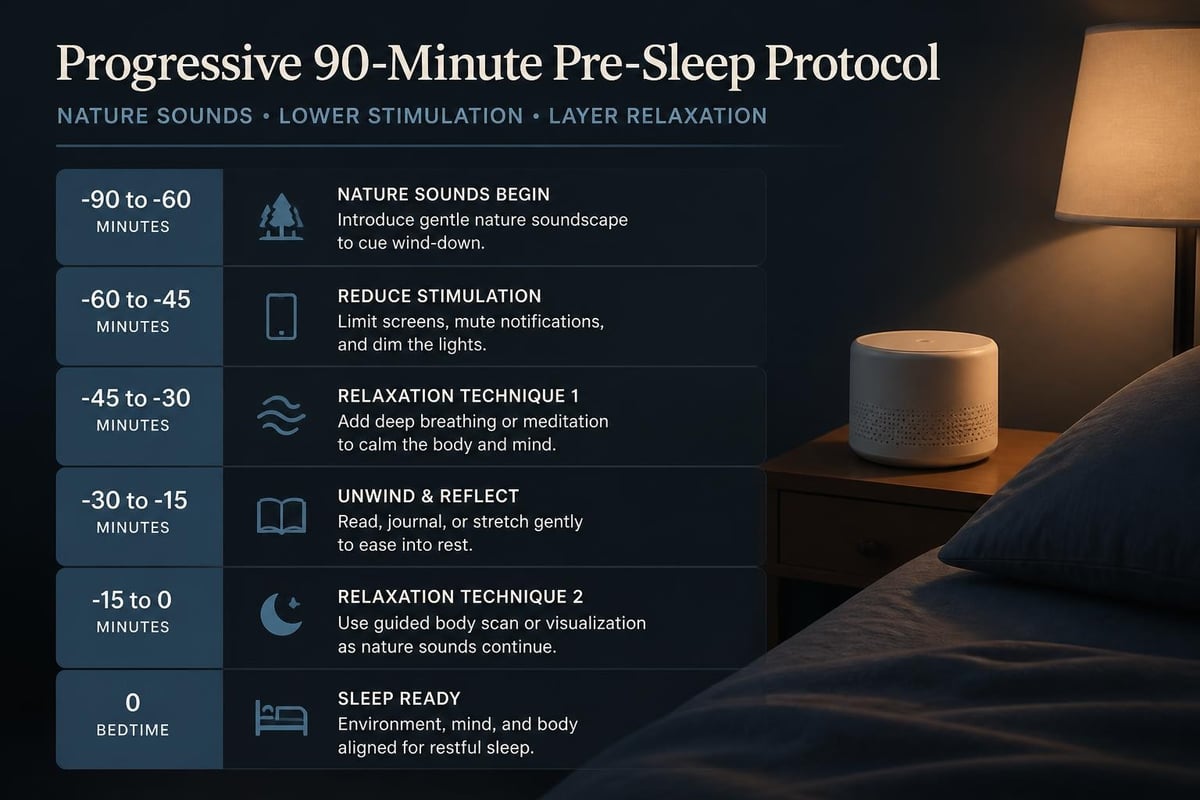
The 60 minutes before sleep represent a critical window for nervous system downregulation. Introducing nature soundscapes during this transition period creates acoustic continuity that supports gradual relaxation.
Structured wind-down sequence:
- 90 minutes before bed: Reduce screen exposure and introduce low-volume nature sounds
- 60 minutes before bed: Dim lighting while maintaining nature soundscape presence
- 30 minutes before bed: Begin abbreviated relaxation practices (breathing exercises, gentle stretching) with nature audio
- Bedtime: Maintain consistent soundscape through sleep onset and initial cycles
This progressive approach allows the auditory system to acclimate to the sleep environment while associating specific nature sounds with rest states. Over repeated nights, these associations strengthen, potentially accelerating sleep onset through conditioned relaxation responses.
Sound Selection by Sleep Challenge
Different sleep difficulties respond to distinct acoustic interventions. Matching nature noise for sleep to specific obstacles increases effectiveness.
| Sleep Challenge | Recommended Nature Sound | Mechanism |
|---|---|---|
| Racing thoughts | Forest streams, rainfall | Provides external focus point for attention redirection |
| Anxiety/hyperarousal | Ocean waves, gentle wind | Slow, rhythmic patterns support breathing rate reduction |
| Environmental noise | Rain, waterfall combinations | Broadband masking covers variable urban disturbances |
| Frequent wakings | Continuous cricket/night sounds | Maintains acoustic consistency across sleep cycles |
| Early morning awakening | Dawn chorus (lower volume) | Normalizes natural wake patterns without harsh alarms |
The platform Freshhh.app develops soundscapes specifically for these applications, working with acoustic researchers to optimize frequency distributions and temporal patterns for different cognitive states.
Combining Nature Sounds with Micro-Habits
Nature noise for sleep achieves maximum effectiveness when paired with evidence-based behavioral practices. Sound serves as one component within a comprehensive sleep optimization framework.
Breathing Synchronization
Many natural sounds exhibit rhythmic patterns that can guide respiratory rate toward sleep-conducive ranges. Ocean waves typically cycle every 7-12 seconds, aligning closely with the 4-6 breath per minute rate associated with parasympathetic activation.
Breath-pacing technique:
- Select rhythmic nature noise (waves, gentle rain patterns)
- Match inhalation to sound buildup or approach
- Match exhalation to sound recession or impact
- Allow natural breathing to entrain to soundscape rhythm over 5-10 minutes
- Gradually release conscious control as relaxation deepens
This practice leverages the auditory system's natural tendency toward synchronization, creating physiological coherence between acoustic environment and autonomic nervous system activity.
Progressive Acoustic Association
Building consistent sleep associations requires deliberate pairing of nature noise for sleep with specific contexts and states. This conditioning process strengthens over weeks of practice.
Association-building steps:
- Use identical or highly similar nature soundscapes nightly
- Introduce sounds only in sleep contexts (avoid using same sounds for work or daytime activities)
- Pair soundscape with consistent bed/wake times to reinforce circadian patterns
- Maintain sound environment consistency even during travel using portable solutions
- Gradually reduce volume over months as associations strengthen (for eventual independence if desired)
Research on environmental cues and sleep demonstrates that consistency across multiple sensory channels (acoustic, thermal, lighting) produces stronger conditioning effects than isolated interventions.
Technical Implementation Considerations
The delivery method for nature noise for sleep significantly impacts effectiveness. Audio quality, playback consistency, and environmental factors all influence outcomes.
Playback Systems and Audio Quality
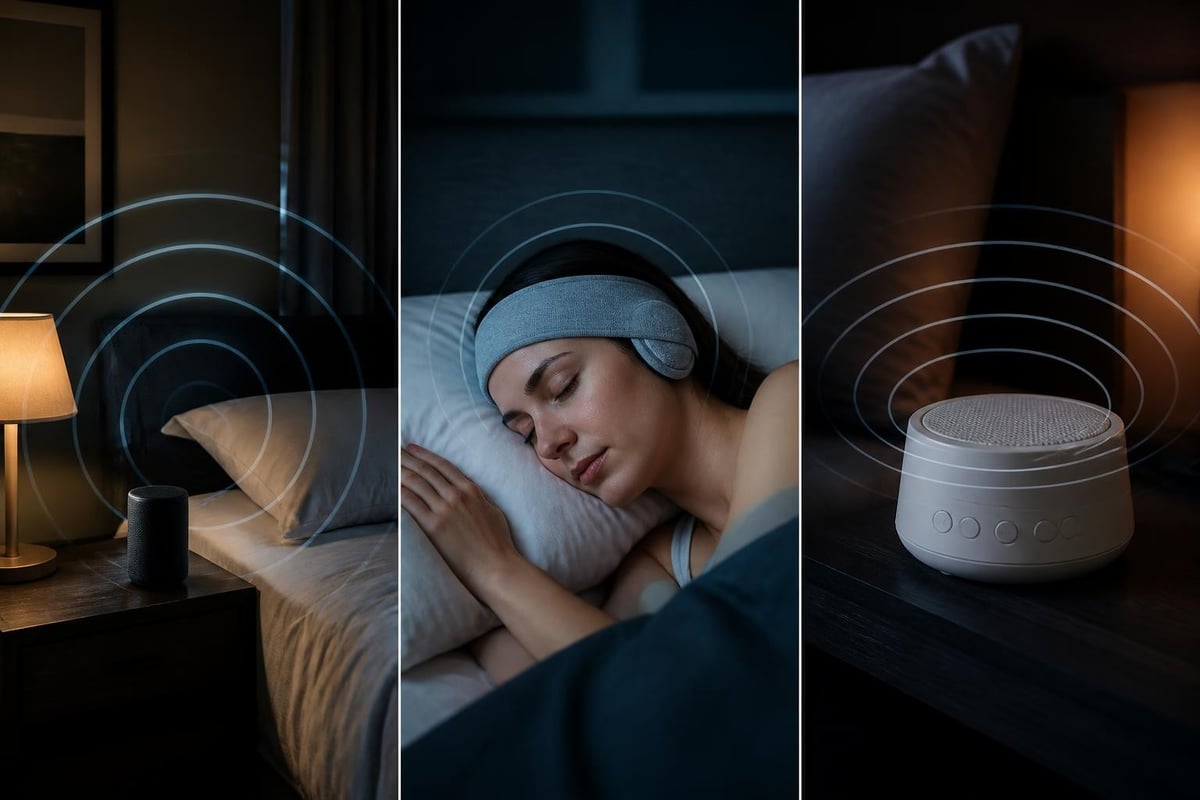
Speaker vs. headphone considerations:
- Room speakers: Create ambient environment, allow natural sleeping positions, don't introduce foreign objects to bed
- Sleep headphones: Provide clearer masking in noisy environments, may feel constraining, require comfort-optimized designs
- Pillow speakers: Offer compromise solution, localized sound without wearables, limited volume and quality
- White noise machines: Dedicated devices ensure consistent playback, lack smartphone notifications/interruptions
High-quality audio reproduction matters particularly for nature soundscapes with complex spectral content. Compressed audio files or low-quality speakers may eliminate the subtle frequency variations that contribute to the restorative qualities of natural sounds.
Continuous vs. Timed Playback
Whether nature noise for sleep should continue all night or stop after sleep onset remains debated among sleep specialists.
All-night playback advantages:
- Maintains consistent acoustic masking through complete sleep cycles
- Prevents disturbance from environmental noise during vulnerable light sleep stages
- Avoids potential micro-arousal when sound ceases
Timed playback advantages:
- Reduces potential dependency on external sounds for sleep maintenance
- Allows natural quiet during deep sleep phases when arousal thresholds are highest
- Conserves device battery and reduces electromagnetic exposure for concerned individuals
Individual experimentation typically reveals personal preferences. Some sleepers benefit from 60-90 minute playback (covering sleep onset and first cycle), while others prefer continuous soundscapes throughout the night.
Addressing Common Challenges and Adjustments
Even optimal nature noise for sleep may require troubleshooting as individual needs and environments vary.
Habituation and Variety
The auditory system adapts to consistent stimuli over time. While some habituation supports the goal of creating a non-arousing background, excessive familiarity may reduce engagement and effectiveness.
Strategies to maintain effectiveness:
- Rotate among 3-5 nature soundscapes weekly rather than using identical tracks nightly
- Choose variations within sound categories (different rainfall patterns, various forest locations)
- Adjust volume slightly across nights to prevent complete predictability
- Seasonally update soundscape selections to match natural environmental changes
This approach preserves the consistency needed for sleep associations while introducing sufficient novelty to sustain auditory interest and prevent complete habituation.
Managing Partner Preferences
Shared sleeping spaces introduce complexity when one partner benefits from nature noise for sleep while the other prefers silence or different sounds.
| Scenario | Solution Approach |
|---|---|
| One prefers sound, one silence | Sleep headphones for sound-preferring partner; high-quality, comfortable models minimize disruption |
| Different sound preferences | Alternate nights with different soundscapes; often partners adapt to compromise sounds over time |
| Volume disagreements | Start at lower volume acceptable to both; gradually adjust as tolerance builds |
| One partner has hearing sensitivity | Pillow speakers or directional speakers focus sound toward one side of bed |
Communication and gradual adjustment typically resolve most shared-space challenges. The partner initially resistant to nature sounds often experiences indirect benefits from the other's improved sleep quality and reduced nighttime restlessness.
Building a Sustainable Sound Sleep Practice
Long-term effectiveness of nature noise for sleep requires integration into broader wellness practices rather than treatment as an isolated solution.
Complementary Sleep Hygiene Factors
Sound optimization amplifies when combined with fundamental sleep health practices:
- Consistent scheduling: Regular bed and wake times stabilize circadian rhythms, making nature sounds more effective
- Temperature regulation: Cool sleeping environment (65-68°F) supports natural sleep processes that nature noise facilitates
- Light management: Darkness in evening hours works synergistically with calming soundscapes for melatonin production
- Stimulant timing: Avoiding caffeine 8+ hours before bed prevents interference with soundscape-supported relaxation
- Physical activity: Regular exercise enhances sleep pressure, making acoustic optimization more impactful
The science-backed approach available through Freshhh.app addresses these multiple factors simultaneously, recognizing that sound therapy achieves maximum benefit within comprehensive wellness frameworks.
Measuring and Adjusting for Results
Objective assessment helps optimize nature noise for sleep implementation over time.
Tracking metrics:
- Sleep onset latency: Time from lights-out to sleep (target reduction over weeks)
- Perceived wake frequency: Estimated number of nighttime awakenings (should decrease)
- Morning restoration: Subjective energy and clarity upon waking (target improvement)
- Daytime alertness: Attention and focus during peak hours (indirect sleep quality indicator)
- Stress responsiveness: Resilience to daily challenges (reflects cumulative sleep quality)
Simple sleep journaling captures these metrics without requiring expensive devices. Recording observations for 2-3 weeks establishes baseline, then tracking changes after introducing or modifying nature soundscapes reveals effectiveness.
Adjustments based on data might include changing sound categories, modifying volume, altering playback timing, or refining complementary sleep practices. This iterative approach personalizes nature noise for sleep to individual physiology and circumstances.
Natural soundscapes offer a scientifically grounded, accessible intervention for the widespread challenge of inadequate sleep in modern environments. By understanding acoustic principles, matching sounds to individual needs, and integrating audio with behavioral practices, most people can significantly improve rest quality. Freshhh.app provides a comprehensive platform combining research-backed soundscapes with practical micro-habits and expert guidance, helping you develop sustainable practices for deeper rest and daytime clarity. Start building your personalized sound sleep practice today.