Sleep quality remains one of the most pressing health challenges in modern life. Millions of people struggle with sleep onset, frequent nighttime awakenings, and insufficient deep sleep. While pharmaceutical interventions exist, many individuals seek non-invasive, natural approaches to improving their rest. Ocean noises for sleep have emerged as a popular soundscape solution, combining the calming properties of rhythmic wave patterns with the practical benefits of acoustic masking. Understanding the science behind these soundscapes can help you make informed decisions about integrating them into your sleep hygiene routine.
The Science Behind Ocean Wave Soundscapes
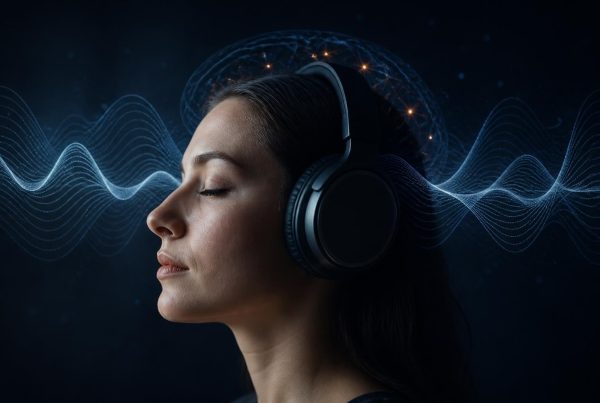
Ocean sounds occupy a unique position in the acoustic spectrum. Unlike white noise, which distributes energy evenly across all frequencies, ocean waves create a more dynamic pattern with periodic rhythmic elements. These rhythmic fluctuations mirror natural biorhythms, potentially synchronizing with slower brainwave states associated with relaxation and sleep.
Research demonstrates that natural soundscapes, including ocean recordings, influence both psychological and physiological responses. A comprehensive systematic review analyzing soundscapes found that natural ocean sounds consistently promote tranquility and reduce stress indicators across diverse populations. The gentle ebb and flow of waves creates what acoustic researchers call "predictable unpredictability"-a pattern regular enough to be non-startling yet varied enough to remain engaging to the auditory system.
Acoustic Masking and Environmental Noise
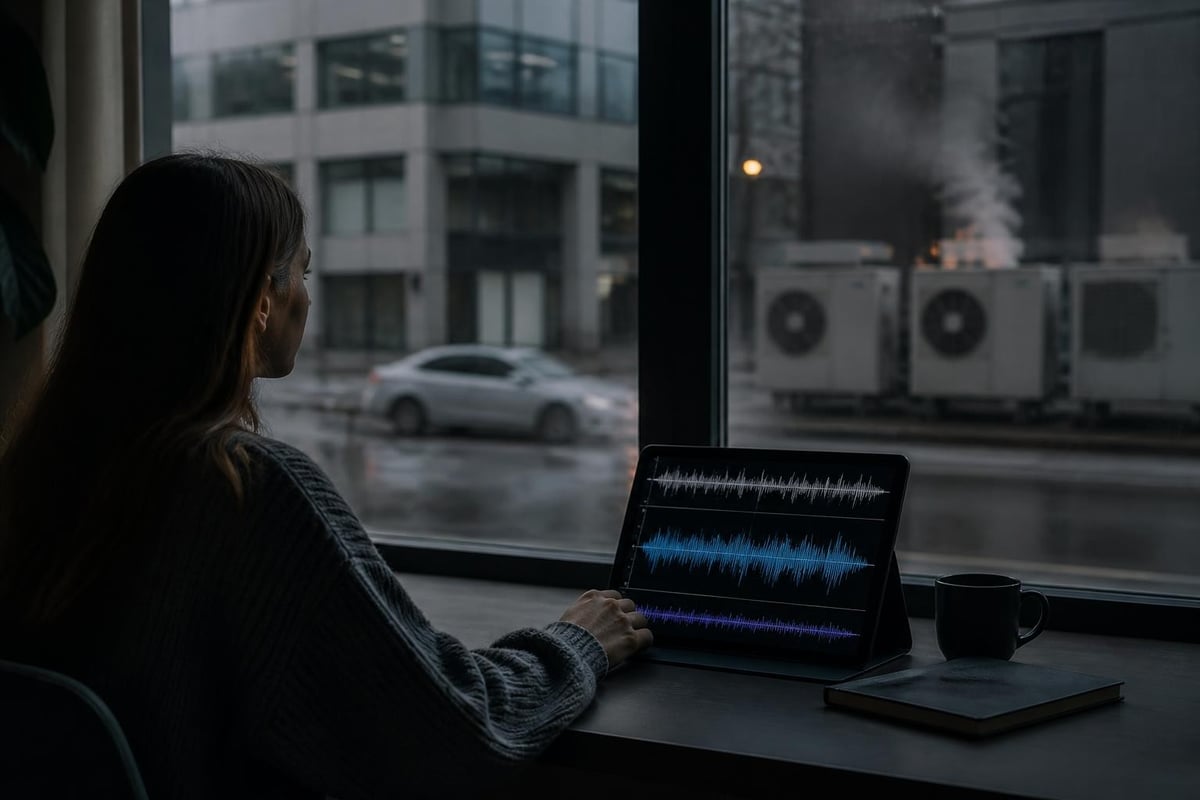
One primary mechanism through which ocean noises for sleep prove effective is acoustic masking. Urban and suburban environments expose sleepers to unpredictable sounds: traffic, neighbors, HVAC systems, and intermittent disturbances. These irregular noises trigger alerting responses in the brain, fragmenting sleep architecture.
Ocean soundscapes provide continuous acoustic coverage that masks these disruptive environmental sounds. The broadband nature of crashing waves covers a wide frequency range, effectively drowning out many common household and environmental disturbances. This masking doesn't eliminate the sounds but renders them less noticeable and less likely to trigger arousal responses.
Key benefits of acoustic masking include:
- Reduced awareness of unpredictable environmental disturbances
- Consistent auditory environment throughout the night
- Lower likelihood of arousal from sudden sounds
- Enhanced perception of bedroom as a quiet space
Clinical evidence supports these mechanisms. A study examining ocean sounds versus earplugs in ICU patients found that ocean soundscapes improved subjective sleep quality in one of the most acoustically challenging sleep environments imaginable. If ocean sounds can enhance rest in intensive care settings, their potential in typical home environments becomes clear.
Clinical Evidence for Ocean Sounds and Sleep Quality
The medical literature contains several controlled trials examining ocean soundscapes specifically. These studies move beyond anecdotal evidence to provide measurable outcomes in clinical populations.
Hospital and Recovery Settings
Medical recovery environments present ideal testing grounds for sleep interventions because patients often experience significant sleep disruption. Research with post-surgical patients compared ocean sounds against silence, revealing that patients exposed to ocean soundscapes experienced higher sleep depth, fewer awakenings, and better subjective sleep quality ratings.
These findings prove particularly relevant because hospitalized patients face multiple sleep disruptors: pain, anxiety, medical equipment noise, and staff activity. That ocean noises for sleep still demonstrated measurable benefits in such challenging conditions suggests robust effects.
More recent evidence extends these findings. A 2025 study with burn patients showed that 20-30 minutes of natural sounds, including ocean waves, before sleep decreased anxiety tied to pain and significantly improved sleep quality. The pre-sleep listening period appears particularly important, creating a transitional phase between wakefulness and rest.
| Study Population | Intervention | Key Findings | Year |
|---|---|---|---|
| Post-surgical patients | Ocean sounds vs. silence | Higher sleep depth, fewer awakenings | 1992 |
| ICU patients | Ocean sounds vs. earplugs | Improved subjective sleep quality | 2020 |
| Burn patients | Ocean/rain/river sounds (20-30 min) | Reduced anxiety, better sleep quality | 2025 |
Sound Machine Interventions Broadly
While specific ocean sound studies provide targeted evidence, broader research on sound machine interventions helps contextualize these findings. A systematic review of sound machine use in hospitalized adults synthesized randomized controlled trials, predominantly examining white noise but including natural soundscapes. The review found improved sleep efficiency with good tolerability across interventions.
This broader evidence base suggests that continuous, masking sounds generally support sleep quality in challenging environments. Ocean soundscapes represent one implementation of this principle, potentially offering advantages over pure white noise through their more natural, rhythmic qualities.
Neurological Mechanisms and Brainwave Modulation
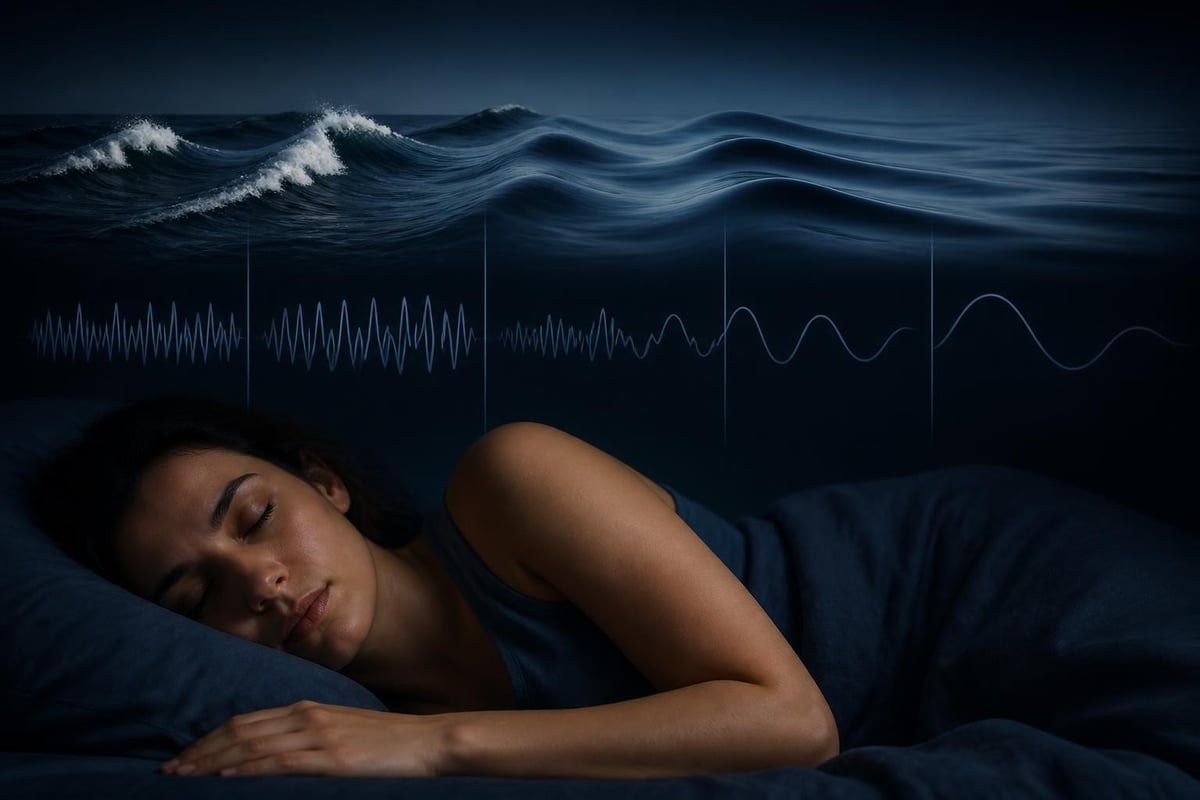
Beyond simple acoustic masking, ocean sounds may influence sleep through direct effects on brain activity. Sleep comprises distinct stages characterized by different brainwave patterns: rapid beta waves during wakefulness, slower alpha and theta waves during light sleep, and very slow delta waves during deep sleep.
Sleep Spindles and Auditory Stimulation
Specific auditory stimuli can modulate these brainwave patterns. Research examining pleasant sounds including ocean-wave-like stimuli found effects on sleep spindles and various sleep parameters. Sleep spindles-brief bursts of brain activity during non-REM sleep-play crucial roles in memory consolidation and sleep stability.
The rhythmic nature of ocean waves may entrain neural oscillations, encouraging the brain to synchronize with slower frequencies conducive to sleep. This entrainment differs from acoustic masking; it represents active modulation of brain activity rather than passive sound blocking.
Frequency Considerations
Understanding frequency components helps explain why ocean noises for sleep work effectively. Low-frequency sounds, particularly those below 250 Hz, dominate ocean wave recordings. These frequencies align with delta and theta brainwave ranges (0.5-8 Hz when considering binaural beat principles).
Binaural beats and accompanying natural sounds like ocean waves can align with deep sleep frequencies. While the ocean sounds themselves don't create binaural beats, their low-frequency emphasis and rhythmic patterns may support similar relaxation states.
Frequency characteristics of ocean sounds:
- Dominant energy in low frequencies (20-250 Hz)
- Periodic rhythmic patterns (wave intervals typically 8-12 seconds)
- Gradual amplitude variations creating natural dynamics
- Minimal high-frequency content reducing alerting responses
Practical Implementation Strategies
Integrating ocean soundscapes into your sleep routine requires more than simply pressing play. Strategic implementation maximizes benefits while avoiding common pitfalls.
Volume and Timing Considerations
Volume calibration proves critical. Ocean noises for sleep should mask environmental disturbances without becoming disruptive themselves. A general guideline suggests setting volume just loud enough to obscure typical household sounds-usually around 50-60 decibels, roughly equivalent to light rainfall or quiet conversation.
Timing strategies vary based on individual needs. Some people benefit from starting ocean sounds 20-30 minutes before intended sleep time, creating a transitional ritual. Others prefer sounds throughout the entire night for consistent masking. Experimentation helps identify your optimal approach.
Sound Quality and Recording Selection
Not all ocean recordings deliver equivalent results. Quality varies significantly across available options, affecting both enjoyment and effectiveness.
| Quality Factor | High-Quality Recording | Low-Quality Recording |
|---|---|---|
| Frequency range | Full spectrum (20 Hz – 20 kHz) | Limited, compressed |
| Loop length | 30+ minutes, seamless | Short (2-5 min), noticeable |
| Background noise | Clean, ocean-only | Equipment hum, wind noise |
| Dynamic range | Natural variation preserved | Over-compressed, flat |
Long loop lengths matter significantly. Short loops become mentally predictable, potentially causing awareness and disruption. Premium recordings capture extended periods, creating essentially non-repeating soundscapes during typical sleep durations.
Combining with Sleep Hygiene Practices
Ocean soundscapes work best as one component of comprehensive sleep hygiene. Isolated interventions rarely produce optimal results; synergistic combinations prove more effective.
Complementary sleep hygiene practices:
- Consistent sleep and wake times, even on weekends
- Bedroom temperature optimization (60-67°F recommended)
- Light exposure management (darkness for sleep, bright light upon waking)
- Caffeine restriction in afternoon and evening hours
- Screen time reduction in the hour before bed
Integrating ocean sounds into this broader framework creates a multi-faceted approach addressing various sleep disruptors simultaneously. The soundscape handles acoustic disturbances while other practices address circadian rhythm, temperature, and chemical factors.
Individual Variation and Response Patterns
While research demonstrates population-level benefits, individual responses to ocean noises for sleep vary considerably. Understanding this variation helps set realistic expectations and encourages personalized optimization.
Who Benefits Most
Certain populations appear particularly responsive to ocean soundscapes. Light sleepers who frequently wake to environmental disturbances often report substantial improvements. Individuals with anxiety-related sleep difficulties may find the predictable, natural quality of ocean sounds particularly soothing compared to mechanical white noise.
Conversely, some individuals prefer complete silence or find any continuous sound disruptive. Auditory processing differences, past associations with ocean sounds, and personal preferences all influence effectiveness. There's no universal "best" soundscape-what matters is finding what works for your nervous system.
Adaptation and Habituation
Long-term use raises questions about habituation. Does the brain eventually ignore ocean sounds, reducing their masking effectiveness? Current evidence suggests minimal habituation to masking sounds when they remain consistent but not overly loud.
However, psychological dependency represents a valid consideration. If ocean sounds become so integral to your sleep routine that their absence causes difficulty, you've created a potential vulnerability. Balancing consistent use with occasional sound-free nights maintains flexibility while preserving benefits.
Critical Perspectives and Evidence Limitations
Scientific literacy requires acknowledging not just supportive evidence but also limitations and critiques. While research supports ocean soundscapes for sleep improvement, important caveats exist.
The Evidence Gap
Most controlled studies examine hospitalized or clinical populations under specific conditions. Generalization to healthy adults in typical home environments requires caution. Critical analysis of ocean sound evidence notes that while ocean recordings may mask disruptive noise and provide subjective comfort, strong data demonstrating reliable reductions in sleep onset latency or increases in deep sleep percentages remain limited in non-clinical populations.
This doesn't invalidate ocean sounds as a sleep tool-it simply means the evidence base, while growing, hasn't yet established all claimed benefits with gold-standard rigor. Subjective sleep quality improvements, consistently reported across studies, carry meaningful value even if objective polysomnography metrics show smaller effects.
Environmental Context Matters
Environmental health perspectives on sleep and noise emphasize that natural sounds versus anthropogenic noise exposure affects sleep health through multiple pathways. Ocean sounds might prove most beneficial for individuals facing chronic noise pollution rather than those already in quiet environments.
Contextual factors influencing effectiveness:
- Baseline environmental noise levels in sleeping area
- Individual noise sensitivity and arousal thresholds
- Pre-existing sleep disorders versus situational sleep difficulties
- Stress and anxiety levels independent of acoustic environment
Advanced Applications and Sound Therapy Integration
Ocean noises for sleep represent an entry point into broader sound therapy approaches. More sophisticated applications combine multiple acoustic elements for enhanced effects.
Layered Soundscapes
Rather than ocean sounds alone, layered approaches might integrate low-frequency ocean waves with subtle binaural beat frequencies targeting delta-wave states. These combinations attempt to leverage both masking and entrainment mechanisms simultaneously.
Premium platforms developed with acoustic researchers often provide such layered options. These aren't simple recordings but designed soundscapes optimized for specific mental states-sleep, focus, or stress reduction. The distinction matters: passive listening versus active acoustic intervention tailored to neurological responses.
Training Beyond Listening
The most effective approach extends beyond passive sound exposure to active skill development. Learning to consciously relax in response to specific auditory cues, practicing attention control, and developing meta-awareness around your mental state transforms soundscapes from background noise into training tools.
This progression-from simple ocean sounds to sophisticated, interactive sound therapy integrated with cognitive techniques-represents the frontier of sleep optimization. It acknowledges that sustainable sleep improvement requires not just environmental manipulation but nervous system training.
Personalization and Experimentation Framework
Given individual variation, systematic experimentation helps identify your optimal implementation. Rather than randomly trying different approaches, structured testing yields clearer insights.
Testing Protocol
Begin with a baseline week tracking sleep quality without ocean sounds. Record subjective ratings (sleep onset time, number of awakenings, morning restfulness) and any objective metrics available (sleep tracking devices, though recognize their limitations). This baseline provides comparison data.
Introduce ocean sounds for one week using consistent parameters: same volume, same recording, same timing. Track identical metrics. If improvements appear, continue for two additional weeks to distinguish placebo effects from sustained benefits.
Variables to systematically adjust:
- Recording type (gentle waves, moderate surf, heavy ocean)
- Volume level (quiet background versus prominent presence)
- Timing (all night, sleep onset only, or second-half of night)
- Integration with other sleep hygiene changes
This methodical approach generates personalized insights more valuable than generalized recommendations. Your nervous system provides the ultimate feedback; structured testing helps you interpret that feedback accurately.
Integration with Focus and Calm Practices
While ocean soundscapes support sleep, the underlying principles-acoustic environment optimization, attention training, nervous system regulation-apply equally to waking states. Building daytime practices that strengthen these capacities enhances nighttime benefits.
Daytime focus sessions using different soundscapes train your ability to sustain attention despite acoustic distractions. Stress reduction practices incorporating sound therapy build your capacity to consciously shift nervous system states. These skills compound: better daytime stress management improves sleep, while better sleep enhances daytime cognitive performance.
This holistic perspective recognizes ocean noises for sleep as one tool within a broader system for mental clarity and nervous system health. The soundscape supports sleep, but developing the underlying capacities-attention control, stress regulation, meta-awareness-creates resilience extending far beyond nighttime hours.
Ocean soundscapes offer a research-supported, non-invasive approach to improving sleep quality through acoustic masking and potential brainwave modulation. While individual responses vary, strategic implementation combined with comprehensive sleep hygiene practices creates optimal conditions for restorative rest. If you're ready to move beyond passive listening to actively training your nervous system for better sleep and focus, Freshhh.app combines science-backed soundscapes developed with acoustic researchers alongside practical micro-habits and techniques that build lasting mental clarity and stress resilience.