The rhythmic crash of waves against the shore has lulled humans to sleep for millennia, but only recently has science revealed why ocean sounds for sleep work so effectively. In 2026, acoustic research and neuroscience have converged to explain how these natural soundscapes interact with our nervous system, creating optimal conditions for restorative rest. Understanding the mechanisms behind ocean acoustics can transform your approach to sleep quality, moving beyond passive listening to active sound therapy that trains your mind for better rest patterns.
The Neuroscience Behind Ocean Sounds for Sleep
Ocean soundscapes activate specific neurological pathways that prepare your body for deep sleep. The science behind why ocean sounds trigger neurological responses that promote rest lies in their unique acoustic properties and how our brains have evolved to interpret them.
Frequency Patterns and Brainwave Entrainment
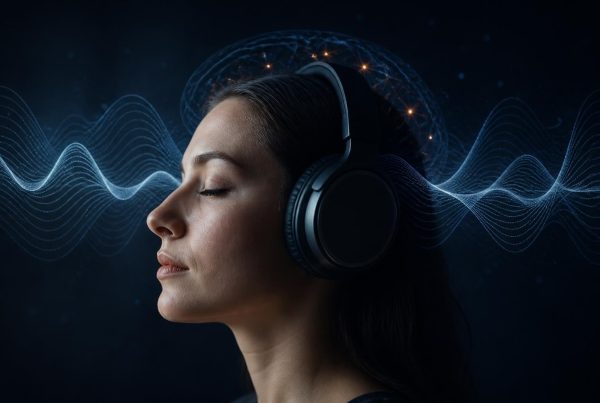
Ocean waves produce sounds within the frequency range of 20 to 20,000 Hz, with most energy concentrated in lower frequencies between 50 and 500 Hz. This range naturally aligns with the alpha (8-13 Hz) and theta (4-8 Hz) brainwave states associated with relaxation and light sleep.
Key frequency benefits include:
- Masking of disruptive environmental noises through broad-spectrum sound coverage
- Gradual brainwave entrainment from alert beta states to relaxed alpha rhythms
- Activation of the parasympathetic nervous system for reduced physiological arousal
- Reduction in cortisol levels through sustained exposure to predictable acoustic patterns
The predictability of wave patterns matters significantly. Unlike sudden environmental sounds that trigger stress responses, ocean waves follow rhythmic cycles that your auditory cortex learns to anticipate, reducing cognitive alertness and promoting mental calm.
Acoustic Masking and Sleep Protection
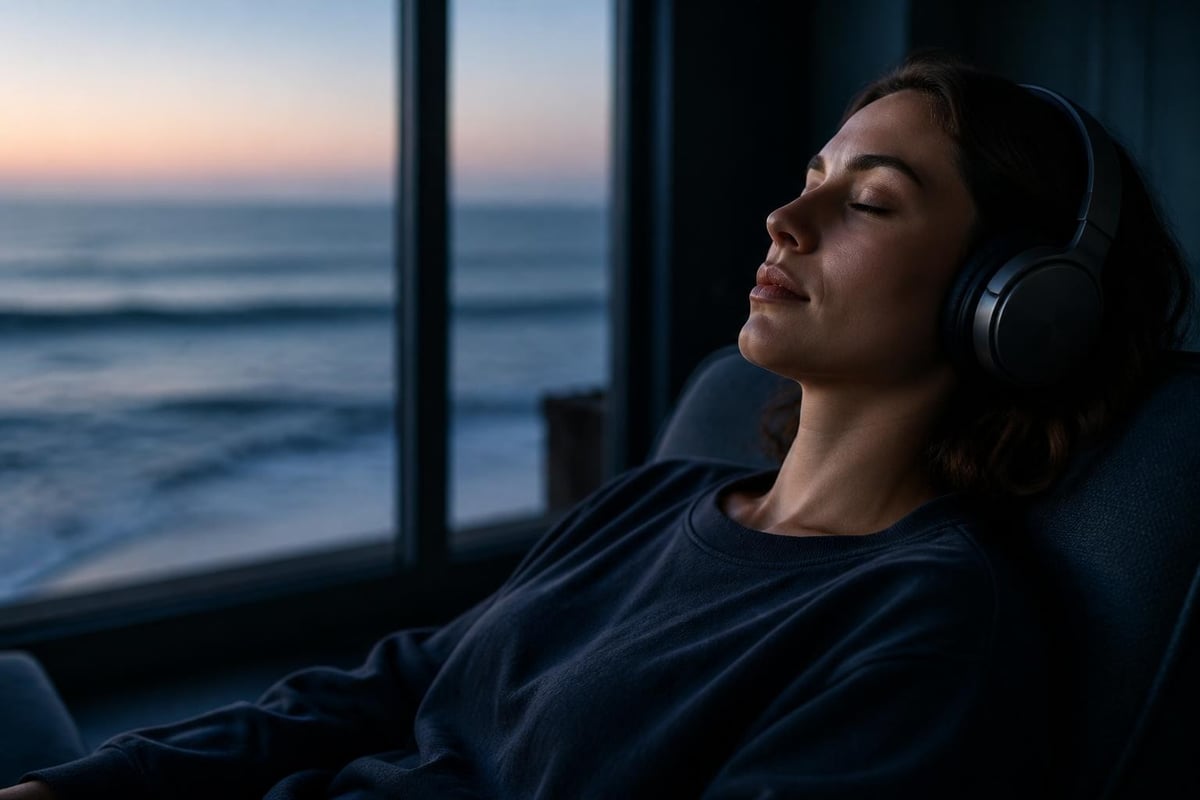
Ocean sounds for sleep function as sophisticated acoustic masking tools. The consistent volume and frequency distribution of wave sounds create a protective auditory environment that shields your sleeping brain from potentially disruptive stimuli.
Research demonstrates that sounds between 40 and 60 decibels provide optimal masking without causing arousal. Ocean recordings typically fall within this range, making them ideal for maintaining sleep continuity throughout the night. The gentle variation in wave intensity prevents habituation while maintaining the masking effect.
Practical Implementation Strategies for Better Sleep
Moving from understanding to application requires specific strategies that maximize the benefits of ocean sounds for sleep. Your approach should consider timing, volume calibration, and integration with existing sleep hygiene practices.
Optimal Timing and Duration
Begin playing ocean sounds 30 to 45 minutes before your target sleep time. This pre-sleep window allows your nervous system to gradually downregulate, preparing your body for the transition to unconsciousness.
Implementation timeline:
- Hour before bed: Complete stimulating activities and begin dimming lights
- 45 minutes before: Start ocean soundscape at low volume
- 30 minutes before: Engage in calming activities with sounds continuing
- 15 minutes before: Begin sleep preparation routine (brushing teeth, changing clothes)
- Bedtime: Enter bed with sounds playing at optimized volume
Continue playing sounds throughout the night or use a timer set for 6 to 8 hours. Continuous playback helps maintain sleep architecture by preventing mid-night awakenings from environmental noise disruptions.
Volume Calibration Techniques
Setting appropriate volume levels determines effectiveness. Ocean sounds for sleep should be audible but not commanding attention. The ideal volume sits just above the threshold of ambient room noise.
| Volume Level | Decibels | Application | Result |
|---|---|---|---|
| Too Quiet | Below 30 dB | Insufficient masking | Environmental sounds disrupt sleep |
| Optimal Range | 40-55 dB | Effective masking | Peaceful, protected sleep environment |
| Too Loud | Above 65 dB | Overstimulating | Potential sleep disruption and hearing risk |
Test your volume by setting the soundscape, then leaving the room and returning. If the ocean sounds immediately draw your attention upon re-entry, reduce the volume. The goal is creating an enveloping acoustic environment rather than a focal point for attention.
Advanced Acoustic Considerations
Modern sound therapy extends beyond simple playback. Understanding the nuances of ocean sound characteristics allows you to select or customize recordings that match your specific sleep challenges and preferences.
Wave Pattern Variations and Sleep Stages
Different ocean conditions produce distinct acoustic signatures that affect sleep differently. Gentle lapping waves differ significantly from powerful surf crashes, and your choice should align with your sleep goals.
Gentle shore waves feature:
- Frequency range: 100-800 Hz
- Rhythm: 8-12 waves per minute
- Best for: Initial sleep onset and light sleepers
- Characteristics: Soft, predictable, minimal dynamic range
Moderate surf includes:
- Frequency range: 50-1200 Hz
- Rhythm: 6-10 waves per minute
- Best for: Mid-night sleep maintenance
- Characteristics: Fuller spectrum, natural variation, stronger masking
Heavy ocean surf provides:
- Frequency range: 20-2000 Hz
- Rhythm: 4-8 waves per minute
- Best for: Severe noise environments
- Characteristics: Maximum masking power, deeper frequencies

Combining Ocean Sounds with Other Sleep Elements
Ocean sounds for sleep work synergistically with other evidence-based sleep practices. Integration amplifies benefits beyond what any single intervention provides alone.
Consider pairing ocean soundscapes with:
- Temperature regulation: Cool room temperatures (60-67°F) combined with ocean sounds enhance sleep onset
- Breathing exercises: Match breath rhythm to wave patterns during the pre-sleep period
- Progressive muscle relaxation: Use wave crashes as cues for tension release cycles
- Consistent sleep schedule: Ocean sounds become a conditioned sleep cue when used regularly
The conditioning effect strengthens over time. Your brain learns to associate ocean sounds with sleep, creating a Pavlovian response that accelerates sleep onset with consistent use.
Personalization and Individual Response Patterns
Not everyone responds identically to ocean sounds for sleep. Understanding your personal response pattern allows for optimization based on your unique neurology and sleep challenges.
Identifying Your Acoustic Preferences
Track your sleep quality across different ocean sound variations for two to three weeks. Document which recordings correlate with your best sleep metrics.
Assessment framework:
| Factor | Variables to Test | Measurement Method |
|---|---|---|
| Wave Type | Gentle/moderate/heavy surf | Subjective sleep quality rating (1-10) |
| Recording Quality | Binaural/stereo/mono | Time to sleep onset |
| Additional Elements | Pure waves/with underwater sounds/with distant thunder | Number of night awakenings |
| Playback Duration | All night/6 hours/timer at sleep onset | Morning restedness rating |
Some individuals respond better to recordings that include underwater acoustic elements or additional natural sounds combined with traditional wave patterns. The inclusion of these elements adds complexity that some minds find more engaging during the sleep transition.
Adapting to Seasonal and Circumstantial Changes
Your optimal ocean sound configuration may shift based on external factors. Seasonal variations in ambient noise levels, stress periods, and travel all influence which ocean soundscape works best.
During high-stress periods, many people benefit from more complex ocean recordings with greater dynamic range. The increased acoustic variation provides more material for an active mind to process, paradoxically creating distraction from ruminating thoughts.
Conversely, during calm periods, simpler wave patterns often suffice. Your brain requires less acoustic support when stress levels are low, making gentle shore waves more appropriate than heavy surf.
Technology and Delivery Methods
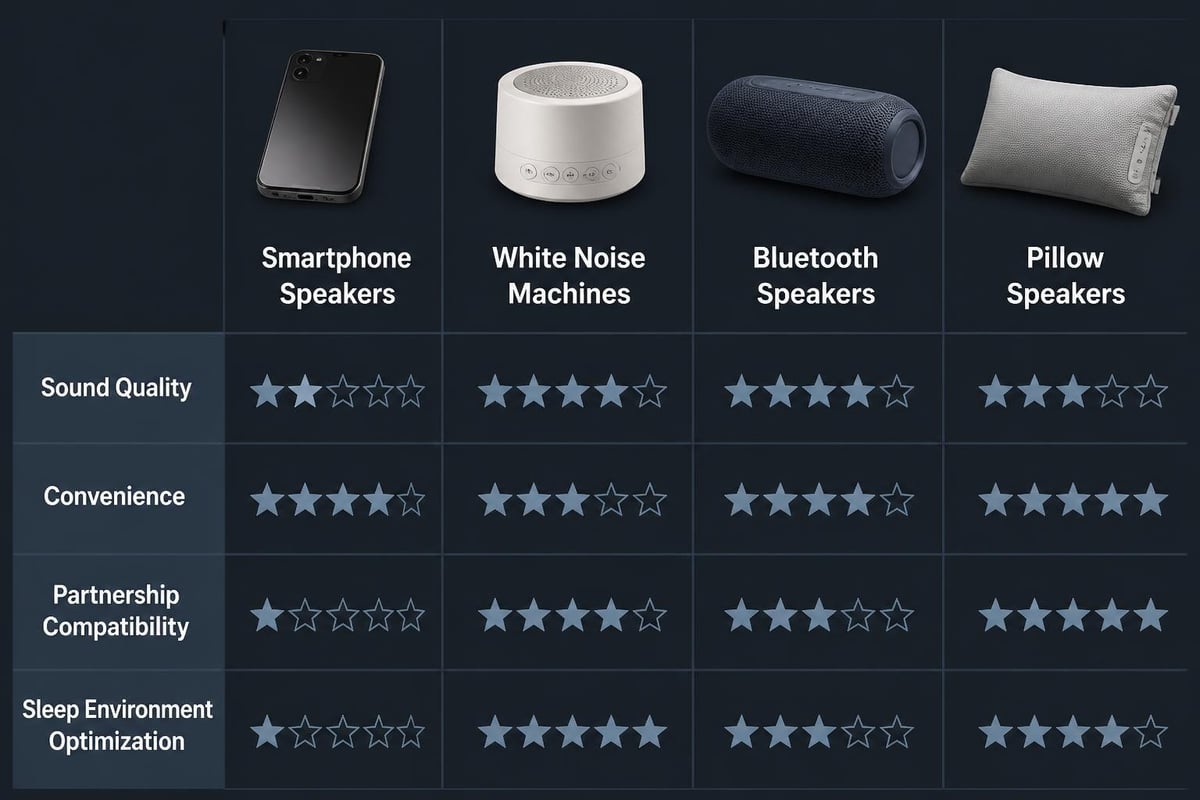
The method you use to deliver ocean sounds for sleep significantly impacts their effectiveness. Each technology option offers distinct advantages and limitations worth considering.
Playback Device Comparison
Smartphone speakers:
- Advantages: Convenient, no additional equipment needed
- Disadvantages: Limited frequency response, battery drain, potential blue light exposure
- Best for: Occasional use, travel situations
Dedicated white noise machines:
- Advantages: Optimized sound quality, no screen temptation
- Disadvantages: Limited sound variety, additional device to maintain
- Best for: Bedroom-only use, minimalist approach
Bluetooth speakers:
- Advantages: Superior sound quality, wireless convenience
- Disadvantages: Charging requirements, connectivity issues
- Best for: Balanced quality and flexibility
Pillow speakers or headband headphones:
- Advantages: No partner disturbance, immersive experience
- Disadvantages: Comfort challenges, hygiene considerations
- Best for: Shared sleeping spaces, maximum immersion
The ideal delivery method balances sound quality, convenience, and your specific sleeping environment. Pillow speakers excel for couples where only one partner benefits from ocean sounds for sleep, while room speakers work better when both partners enjoy the soundscape.
Streaming Quality and File Formats
Audio quality matters more than many realize. Compressed audio files lose subtle frequency information that contributes to the therapeutic effect of ocean sounds for sleep.
Prioritize recordings that meet these specifications:
- Minimum 256 kbps bitrate for compressed formats
- Lossless formats (FLAC, WAV) when storage permits
- Sample rate of 44.1 kHz or higher
- Stereo or binaural recording for spatial depth
Lower quality recordings may lack the full frequency spectrum that provides effective acoustic masking. The compression artifacts in heavily compressed files can actually become slightly irritating to some listeners, undermining the calming effect.
Building Sustainable Sleep Sound Habits
Long-term success with ocean sounds for sleep requires systematic habit formation rather than sporadic use. Creating sustainable routines ensures continued benefits and prevents dependency while maintaining effectiveness.
Gradual Integration Approach
Introduce ocean sounds systematically over several weeks rather than making an abrupt change to your sleep environment. This gradual approach allows your nervous system to adapt and prevents overcorrection.
Week-by-week progression:
- Week 1-2: Use ocean sounds only during pre-sleep wind-down period
- Week 3-4: Extend playback through first sleep cycle (90-120 minutes)
- Week 5-6: Implement all-night playback on alternating nights
- Week 7+: Establish consistent nightly pattern based on results
This progression builds positive associations while giving you time to optimize volume, duration, and sound selection based on actual sleep outcomes rather than assumptions.
Preventing Acoustic Dependency
While ocean sounds for sleep offer significant benefits, maintaining sleep flexibility prevents absolute dependency on any single sleep aid. Strategic variation ensures you can sleep in diverse environments when necessary.
Implement these dependency prevention strategies:
- Schedule one night per week without ocean sounds
- Vary the specific recordings you use to prevent single-track habituation
- Practice sleeping in silence occasionally during low-stress periods
- Develop multiple sleep onset techniques beyond sound therapy alone
The goal is using ocean sounds as a powerful tool within a broader sleep hygiene toolkit rather than creating an inflexible requirement that limits your sleeping versatility.
Evidence-Based Selection Criteria
Choosing effective ocean sound recordings requires evaluation beyond personal preference. Research-informed selection criteria help identify soundscapes most likely to deliver measurable sleep benefits.
Recording Authenticity and Processing
Natural ocean recordings generally outperform synthesized approximations. The complex acoustic signatures of authentic ocean environments contain subtle elements that artificial generation struggles to replicate accurately.
Authentic recordings feature:
- Natural variation in wave timing and intensity
- Background environmental sounds (distant birds, wind)
- Organic frequency distribution without artificial enhancement
- Spatial information from stereo or binaural recording techniques
Some processed recordings incorporate binaural beats or other frequency modulations designed to enhance sleep-inducing properties. While these modifications show promise in certain applications, individual responses vary significantly. Test both natural and enhanced recordings to determine your optimal choice.
Duration and Loop Quality
For all-night use, ocean sounds for sleep recordings should either provide extended continuous audio or feature seamless loops that avoid jarring transitions.
Minimum duration recommendations:
- Sleep onset focus: 30-60 minutes
- Single sleep cycle: 90-120 minutes
- Full night coverage: 6-10 hours
Poor loop points create brief silence or abrupt volume changes that can trigger micro-awakenings. High-quality loops should be imperceptible, with the endpoint and beginning blending naturally. Listen specifically for loop transitions before committing to a recording for regular use.
Troubleshooting Common Challenges
Even optimal ocean sound implementation sometimes encounters obstacles. Understanding common challenges and their solutions prevents frustration and maintains consistent sleep quality improvement.
Partner Compatibility Issues
When sharing a bed with someone who doesn't enjoy ocean sounds for sleep, creative solutions maintain harmony while preserving your sleep quality.
Resolution strategies:
| Challenge | Solution | Implementation |
|---|---|---|
| Partner finds sounds disruptive | Pillow speakers or sleep headband | Position speaker to minimize partner exposure |
| Different volume preferences | Dual playback systems | Each partner controls their own device |
| Conflicting sound preferences | Scheduled rotation | Alternate nights between preferences |
| Partner sleeps fine without sounds | Gradual exposure trial | Test whether partner actually benefits from sounds |
Many partners initially resistant to ocean sounds discover unexpected benefits after trial periods. The sleep improvements you experience may also indirectly benefit your partner through reduced tossing, turning, and disruption.
Adaptation Period Challenges
Some people experience initial difficulty adapting to ocean sounds for sleep, particularly if they're accustomed to absolute silence. This adaptation period typically resolves within one to two weeks with consistent use.
During adaptation, you might notice:
- Increased awareness of sounds initially preventing relaxation
- Unusual dreams or altered dream recall
- Brief period of reduced sleep quality before improvement
- Heightened sensitivity to volume levels
Persist through this adjustment phase by starting with very low volumes and gradually increasing to optimal levels. Your auditory system needs time to recategorize these sounds from foreground stimuli to background environment.
Integrating Ocean Sounds Into Comprehensive Sleep Strategy
Ocean sounds for sleep deliver maximum benefit when integrated into a holistic approach to sleep optimization. Isolated interventions rarely match the effectiveness of comprehensive strategies addressing multiple sleep factors simultaneously.
Complementary Sleep Hygiene Practices
Combine ocean soundscapes with these evidence-based sleep practices:
- Light management: Reduce blue light exposure 2-3 hours before bed
- Caffeine timing: Cease caffeine consumption 8-10 hours before sleep
- Physical activity: Exercise regularly but complete workouts 4+ hours before bed
- Meal timing: Finish substantial meals 3-4 hours before sleep
- Bedroom optimization: Maintain cool temperatures and complete darkness
Ocean sounds address the acoustic dimension of your sleep environment. Optimizing other dimensions creates synergistic effects that surpass individual intervention impact.
Stress Management Integration
Since stress significantly impairs sleep quality, pairing ocean sounds for sleep with daily stress reduction practices amplifies their effectiveness. The sounds become more powerful when your baseline stress levels decrease through daytime interventions.
Consider these complementary practices:
- Morning meditation or mindfulness sessions
- Regular physical exercise for stress hormone regulation
- Journaling before bed to process daily concerns
- Progressive muscle relaxation coordinated with wave rhythms
- Breath work exercises using ocean sounds as pacing guides
Creating mental associations between daytime stress management and nighttime ocean sounds strengthens the conditioning effect. Your brain learns that ocean sounds signal a transition from active problem-solving to passive rest.
Measuring Your Results and Adjusting Approach
Systematic tracking transforms ocean sounds for sleep from hopeful intervention to data-driven sleep optimization. Objective measurement reveals what's working and guides refinement of your approach.
Sleep Metrics Worth Tracking
Focus on metrics that reflect actual sleep quality rather than vanity numbers:
Subjective measures:
- Morning energy levels (1-10 scale)
- Perceived sleep quality (1-10 scale)
- Daytime alertness and focus
- Mood stability throughout the day
Objective measures:
- Time required to fall asleep (sleep onset latency)
- Number of remembered awakenings
- Total sleep duration
- Wake time consistency
Track these metrics for at least two weeks before introducing ocean sounds, then continue tracking during implementation. This before-and-after comparison provides clear evidence of impact and justifies continued use or modification.
Iterative Optimization Process
Treat your ocean sounds for sleep practice as an ongoing experiment requiring periodic adjustment. What works optimally in January may need modification by June as seasons change, stress levels fluctuate, and your sleep needs evolve.
Quarterly review process:
- Analyze three months of sleep data for patterns and trends
- Identify periods of exceptional sleep quality and associated factors
- Note any emerging challenges or reduced effectiveness
- Test one variable change (recording type, volume, timing)
- Measure impact over 2-3 weeks before additional changes
This systematic approach prevents random changes that obscure cause-and-effect relationships. Single variable testing reveals which modifications genuinely improve your sleep versus coincidental fluctuations.
Ocean sounds for sleep offer a scientifically validated pathway to improved rest quality, but effectiveness depends on thoughtful implementation aligned with your unique neurology and sleep environment. By understanding the acoustic principles, personalizing your approach, and integrating sounds within comprehensive sleep hygiene practices, you can harness their full potential for restorative rest. If you're ready to move beyond passive listening and actively train your mind for better focus and rest, explore how Freshhh.app combines research-backed soundscapes with practical micro-habits and evidence-based techniques for transforming both your sleep quality and daytime mental clarity.