The gentle patter of raindrops on a rooftop has lulled countless people to sleep throughout human history. Today, millions turn to recorded rain sounds for sleeping, transforming a natural phenomenon into a deliberate sleep optimization strategy. This widespread practice isn't just nostalgia or preference-it's rooted in acoustic science, neurological responses, and our evolutionary relationship with environmental sounds. Understanding why rain sounds work so effectively can help you leverage them properly as part of a comprehensive approach to better rest and mental clarity.
The Acoustic Science Behind Rain Sounds
Rain creates a unique audio profile that acoustic researchers classify as pink noise, a sound frequency pattern where lower frequencies carry more energy than higher ones. Unlike white noise, which distributes energy evenly across all frequencies, pink noise resembles natural patterns found throughout the environment, making it inherently more soothing to human ears.
The frequency spectrum of rainfall typically ranges between 20 Hz and 20,000 Hz, but most energy concentrates in the lower to mid-range frequencies. This distribution creates several beneficial effects:
- Sound masking: Rain covers sudden noises (traffic, voices, creaking) that trigger arousal responses
- Consistent baseline: The steady pattern prevents the silence-to-sound jolts that disrupt sleep
- Frequency balance: Lower frequencies promote relaxation while avoiding the harshness of pure white noise
How Rain Patterns Interact With Sleep Stages
Your brain cycles through different sleep stages throughout the night, each with varying sensitivity to environmental disruption. Rain sounds for sleeping provide continuous acoustic coverage that protects these vulnerable transitions.
During light sleep (stages N1 and N2), your auditory cortex remains relatively active and responsive to environmental changes. Sudden noises can easily pull you back toward wakefulness. A consistent rain soundscape creates a predictable audio environment, reducing the contrast that makes intrusive sounds jarring.
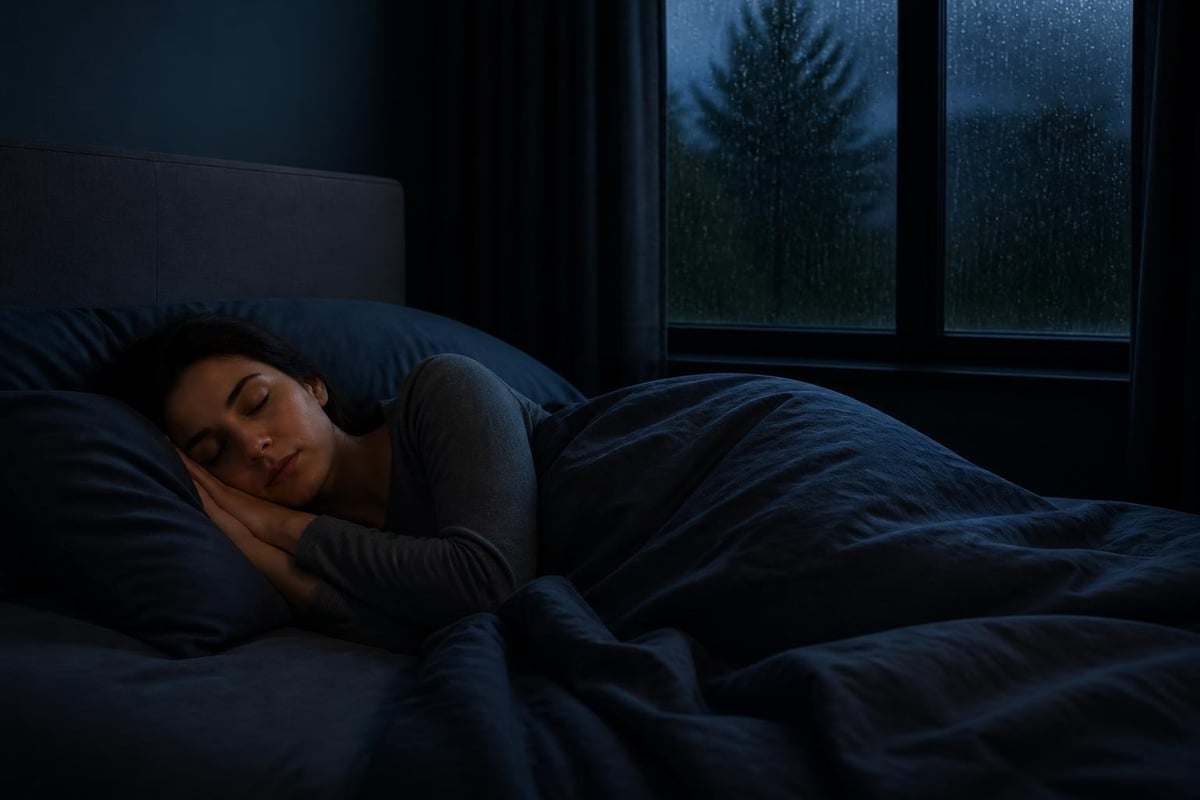
Research on environmental noise exposure demonstrates that unpredictable sound events significantly increase sleep disturbance risk, particularly from traffic and aircraft. Rain sounds effectively counteract this by maintaining steady acoustic pressure that your brain can categorize as non-threatening background information.
Why Your Brain Responds Positively to Rain Audio
Beyond simple masking, rain triggers neurological and emotional responses shaped by evolutionary patterns. Your ancestors relied on weather cues for survival, and rain often signaled safety-a time when predators sheltered and hunting paused.
This evolutionary programming creates several modern benefits when using rain sounds for sleeping:
Parasympathetic Nervous System Activation
Rain audio helps shift your autonomic nervous system from sympathetic (fight-or-flight) to parasympathetic (rest-and-digest) dominance. The predictable, non-threatening pattern signals safety to your amygdala, reducing cortisol production and allowing melatonin cycles to function optimally.
The rhythmic nature of rainfall also encourages respiratory entrainment, where breathing patterns unconsciously synchronize with repetitive environmental rhythms. This naturally slows respiration rate, a key physiological marker of relaxation.
Attention Distribution and Mental Quiet
Rain provides just enough acoustic complexity to occupy wandering attention without demanding active processing. This "auditory anchor" prevents your mind from fixating on stressful thoughts or internal dialogue that commonly interferes with sleep onset.
| Cognitive Benefit | Mechanism | Sleep Impact |
|---|---|---|
| Reduced rumination | Attention occupied by gentle pattern | Faster sleep onset |
| Lowered vigilance | Safety signal decreases threat monitoring | Fewer micro-awakenings |
| Minimized startle response | Consistent masking of sudden sounds | More stable sleep architecture |
Choosing Effective Rain Soundscapes
Not all rain recordings deliver equal benefits. The specific characteristics of your chosen soundscape significantly affect its effectiveness for sleep support.
Recording Quality and Frequency Range
High-quality rain sounds for sleeping should capture the full frequency spectrum without artificial filtering or compression artifacts. Poor recordings often clip low frequencies or introduce digital noise that undermines the natural pink noise profile.
Look for recordings that specify:
- Sample rate: Minimum 44.1 kHz for full audible spectrum
- Bit depth: At least 16-bit to avoid quantization noise
- Recording method: Field recordings from actual rain events
- Duration: Long enough to avoid obvious loops (minimum 30 minutes)
Rain Type and Intensity Variations
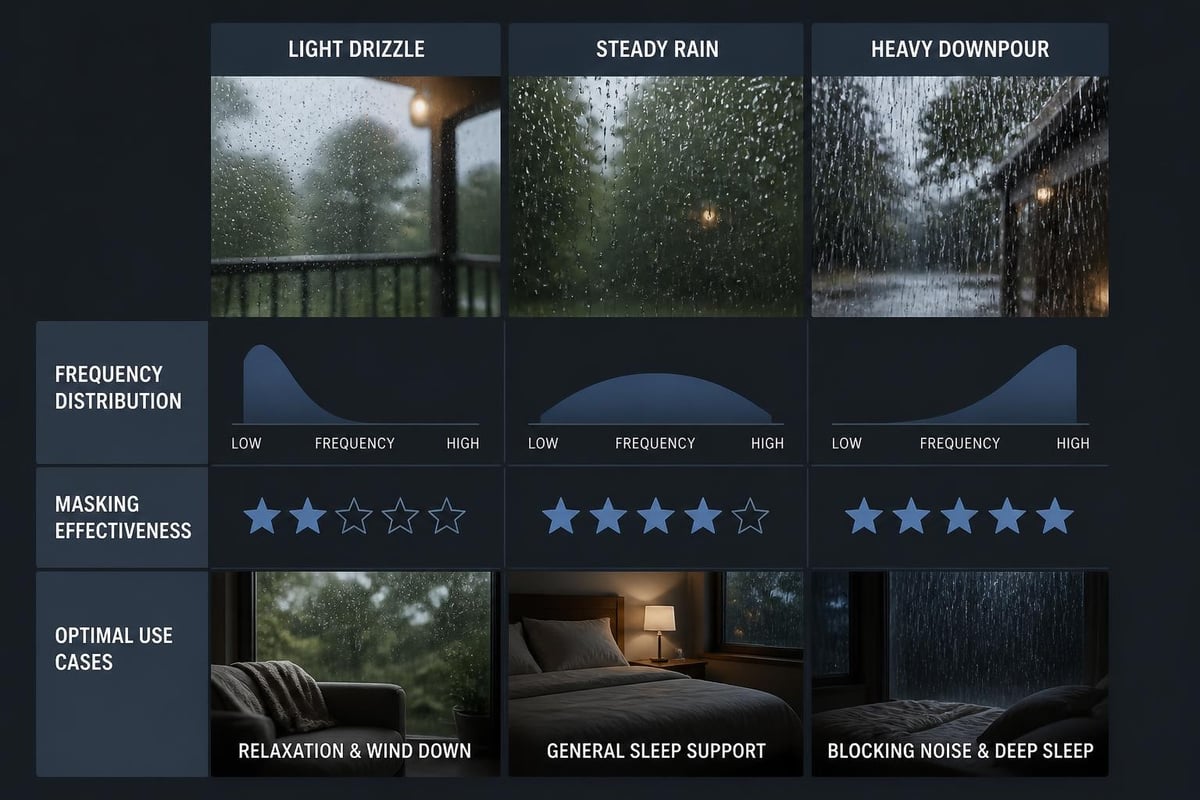
Different rain intensities create distinct acoustic profiles suited to different preferences and sleep needs.
Light rain (drizzle): Softer, higher-frequency dominated, ideal for those sensitive to volume or who prefer subtle background sound. Works well for afternoon naps or situations where complete sound masking isn't necessary.
Medium steady rain: The most versatile option, balancing coverage across frequencies while maintaining gentle, non-intrusive character. Effective for most urban and suburban environments.
Heavy rain: Provides maximum masking for loud environments but may be too stimulating for some listeners. Best for particularly noisy settings or individuals who require substantial acoustic coverage.
Rain with thunder: Introduces periodic intensity variations that some find soothing but others disruptive. The unpredictability of thunder can trigger arousal responses in sensitive sleepers.
Integration With Sleep Hygiene Practices
Rain sounds for sleeping work most effectively as part of comprehensive sleep optimization rather than as an isolated intervention. Harvard Health research on sound and sleep emphasizes that audio interventions complement, but don't replace, fundamental sleep hygiene.
Volume Calibration for Safety and Effectiveness
Proper volume matters both for efficacy and long-term auditory health. The goal is masking without overwhelming, which typically falls between 45-60 decibels (dB)-roughly equivalent to moderate rainfall heard from inside.
Playing rain sounds too loudly can:
- Damage hearing with prolonged nightly exposure
- Create dependency where silence becomes uncomfortable
- Interfere with awareness of important sounds (alarms, emergencies)
Testing volume levels involves checking whether you can comfortably hold a conversation over the sound. If you need to raise your voice, the volume exceeds safe sleep levels. Research on continuous noise exposure particularly in developing individuals highlights the importance of moderate volume levels for long-term health.
Timing and Consistency Strategies
Your brain responds to consistent cues, making regular use of rain sounds for sleeping more effective than sporadic application. Consider these approaches:
Sleep onset only: Play rain for 30-60 minutes as you fall asleep, using a timer to fade out once you've reached deeper sleep stages. This approach works well if you sleep in a quiet environment or prefer natural silence once asleep.
Full-night coverage: Maintain rain sounds throughout your sleep period for consistent masking. Ideal for noisy environments or if you experience frequent nighttime awakenings.
Adaptive approach: Start with full-night use, gradually reducing duration as your sleep patterns stabilize. This prevents dependency while providing initial support.
Combining Rain Sounds With Mental Training
While audio creates the right acoustic environment, pairing soundscapes with deliberate mental practices amplifies their effectiveness. Platforms like Freshhh.app’s focus help resources demonstrate how combining quality soundscapes with evidence-based cognitive techniques creates superior results.
Pre-Sleep Mental Preparation Techniques
The 15-30 minutes before attempting sleep significantly influence how quickly you transition to unconsciousness. Rain sounds for sleeping become more effective when combined with:
- Progressive muscle relaxation: Systematically tensing and releasing muscle groups while listening
- Breath-focused awareness: Using rain rhythm as a pacing guide for extended exhalations
- Visualization practices: Imagining yourself in a safe, rain-sheltered environment
- Cognitive offloading: Briefly noting tomorrow's tasks to release mental holding patterns
These micro-habits transform passive listening into active sleep preparation, engaging your prefrontal cortex in relaxation signaling rather than leaving sleep onset entirely to chance.
Building Resilient Sleep Patterns
Over-reliance on any single sleep aid can create fragility where its absence causes difficulty. The most sustainable approach combines environmental support (like rain sounds) with strengthened intrinsic sleep regulation.
Research highlighted in recent neuroscience coverage suggests that pink noise may enhance memory consolidation and cognitive performance, meaning rain sounds potentially offer benefits beyond simple sleep facilitation. However, these benefits emerge most reliably when audio supports rather than replaces healthy sleep architecture.
Practical Implementation Considerations
Successfully incorporating rain sounds for sleeping requires attention to technical setup and environmental factors that maximize effectiveness while preventing common pitfalls.
Delivery Method Selection
The device and method you use to play rain sounds affects both audio quality and practical sustainability.
| Delivery Method | Advantages | Disadvantages |
|---|---|---|
| Dedicated sound machine | No blue light, simple operation, optimized speakers | Limited sound variety, additional device |
| Smartphone apps | Extensive options, regular updates, portability | Screen light exposure, notification interruptions |
| Smart speakers | Voice control, quality audio, integration with routines | Privacy concerns, always-on connectivity |
| White noise machines | Purpose-built, reliable, no connectivity required | Often synthetic rather than natural recordings |
Whichever method you choose, ensure it allows airplane mode or do-not-disturb settings to prevent notifications from undermining your acoustic environment.
Room Acoustics and Speaker Placement
Sound behaves differently depending on room characteristics and speaker position. Hard surfaces reflect audio, potentially creating echoes or resonances that distort rain sounds' natural character.
Optimal placement typically involves positioning the sound source:
- At ear level when lying down: Ensures even distribution without excessive volume
- Away from hard corners: Reduces bass buildup and resonance peaks
- Not directly beside your head: Prevents intensity imbalance and potential hearing stress
If your room has particularly reflective surfaces (hardwood, bare walls), adding soft materials (curtains, rugs, upholstered furniture) improves acoustic quality and prevents harsh reverberations.
Beyond Sleep: Cognitive Applications
While primarily discussed for sleep, rain sounds for sleeping principles extend to other mental states requiring reduced arousal and enhanced focus. The same acoustic properties that facilitate sleep onset also support certain cognitive tasks.
Study and Deep Work Applications
Rain soundscapes create effective audio environments for concentration-demanding tasks, particularly those requiring sustained attention without creative divergence. The consistent masking prevents environmental distractions while avoiding the engagement that lyrical music or talk radio creates.
Platforms specializing in brain optimization through sound therapy often feature rain variations calibrated for wakeful focus rather than sleep induction-slightly higher in volume, with more frequency variation to maintain alertness while preserving distraction resistance.
Meditation and Stress Reduction
The same parasympathetic activation that aids sleep also supports mindfulness practices and stress recovery. Rain sounds provide an external focal point for attention-training exercises, giving wandering minds something concrete yet non-demanding to return to.
When used for meditation, rain sounds work particularly well for:
- Body scan practices
- Breath awareness training
- Open monitoring meditation
- Stress recovery sessions
The key difference from sleep application involves maintaining alert relaxation rather than promoting drowsiness, typically achieved through slightly elevated volume and upright posture.
Individual Variation and Personalization
Despite rain sounds' general effectiveness, individual responses vary based on personal history, sensory preferences, and specific sleep challenges. Successful implementation requires acknowledging and adapting to these differences.
When Rain Sounds May Not Help
Some individuals find rain sounds ineffective or even counterproductive for sleep. Common reasons include:
Negative associations: Past trauma related to storms or rain events can trigger anxiety rather than relaxation. In these cases, alternative pink noise sources (fans, ocean waves) may work better.
Hyperacusis or auditory sensitivity: Certain neurological conditions create heightened sound sensitivity where any continuous noise becomes irritating rather than soothing.
Preference for silence: Some people genuinely sleep better in complete quiet, where introducing any sound creates awareness and attention that prevents deep rest.
Experimentation Framework
Finding your optimal rain sounds for sleeping approach requires systematic testing rather than assuming any single configuration works universally.
Try this structured experimentation process:
- Baseline measurement: Track sleep quality for one week without rain sounds
- Single-variable testing: Change only one element (type, volume, duration) per week
- Subjective and objective data: Note both how you feel and measurable metrics (time to sleep, nighttime awakenings)
- Pattern identification: After 4-6 weeks, identify which configurations correlate with best outcomes
- Refinement: Fine-tune based on patterns, then reassess periodically
Tools offering deep study support and focus enhancement often incorporate this systematic approach, helping users identify optimal acoustic environments through guided experimentation rather than guesswork.
Long-Term Sustainability and Adaptation
As with any intervention, your response to rain sounds for sleeping may change over time, requiring periodic reassessment and adjustment to maintain effectiveness.
Preventing Dependency and Habituation
Extended use of identical soundscapes can lead to habituation, where your brain becomes so accustomed to the pattern that it loses masking effectiveness. Additionally, strong dependency can create difficulty sleeping in situations where rain sounds aren't available.
Strategies to maintain long-term effectiveness include:
- Rotation: Alternate between different rain types and intensities weekly
- Periodic breaks: Take occasional nights off to preserve sensitivity and flexibility
- Volume variation: Gradually lower volume over time as your baseline sleep quality improves
- Skill development: Simultaneously build other sleep-supporting habits that reduce reliance on audio alone
Integration With Life Changes
Sleep needs and challenges evolve across life stages and circumstances. Rain sounds that work perfectly during one period may require adjustment during others.
Pregnancy, parenting, shift work, travel, and aging all alter sleep architecture and environmental factors. Regularly reassessing your approach ensures your rain sounds for sleeping strategy adapts rather than becoming rigid and less effective.
Rain sounds for sleeping offer a scientifically grounded approach to improving rest quality through acoustic masking, frequency optimization, and neurological relaxation cues. When combined with deliberate mental training and evidence-based sleep practices, they become part of a comprehensive system for cognitive restoration and performance. Freshhh.app brings together research-backed soundscapes with practical micro-habits and mental training techniques, helping you build resilient focus and sleep patterns that extend beyond passive listening into active cognitive optimization.