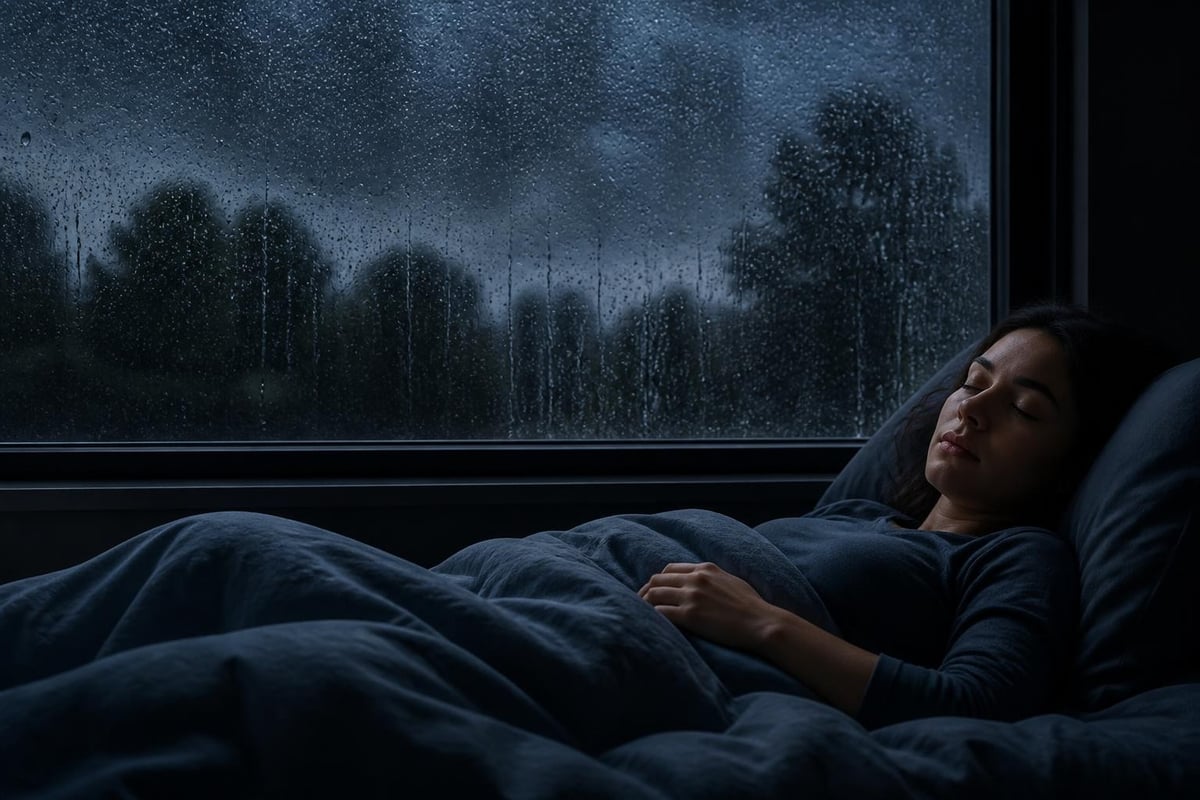
The gentle patter of raindrops against a window has lulled countless people to sleep throughout human history. Today, sleep sounds rain recordings have become one of the most popular tools for improving rest quality, backed by neuroscience research and acoustic engineering. Unlike simple background noise, rain sounds interact with our brain's natural rhythms in measurable ways, creating an auditory environment that supports both falling asleep faster and maintaining deeper sleep cycles throughout the night.
The Neuroscience Behind Rain Sounds and Sleep Quality
Rain audio works through multiple neurological pathways simultaneously. Research demonstrates that rain sounds function as pink noise, a specific acoustic frequency pattern that slows brainwave activity from the alert beta state toward the relaxed alpha and theta states necessary for sleep onset.
The human auditory cortex processes rain patterns as non-threatening, predictable environmental cues. This predictability allows the brain's threat-detection systems to disengage, reducing cortisol levels and activating parasympathetic responses. Unlike sudden noises that trigger startle reflexes, rain maintains a consistent amplitude with gentle variations that the brain categorizes as safe.
How Rain Frequencies Affect Brain States
Different rain intensities produce distinct frequency profiles that influence sleep architecture:
- Light drizzle (40-50 dB): Promotes initial relaxation and meditation states
- Moderate rainfall (50-60 dB): Optimal for sleep onset and Stage 1-2 sleep
- Heavy downpour (60-70 dB): Masks environmental disruptions while maintaining sleep continuity
- Thunder combinations (70-80 dB intermittent): Can support deeper Stage 3 sleep in some individuals
The acoustic properties of sleep sounds rain create what researchers call "auditory masking." This phenomenon prevents the brain from processing disruptive environmental noises by maintaining a consistent sonic baseline. Studies show that continuous broadband noise, like rain, reduces the number of nighttime awakenings by 30-40% compared to silence in urban environments.
Rain Sound Categories and Their Sleep Applications
Understanding different rain sound profiles helps you select the optimal audio environment for your specific sleep challenges. Each category addresses distinct sleep disruptions through unique acoustic characteristics.
Natural Rain Recordings Versus Synthesized Sounds
| Rain Type | Frequency Range | Best For | Potential Drawbacks |
|---|---|---|---|
| Natural Forest Rain | 200-8000 Hz | Anxiety reduction, nature connection | Variable intensity may disrupt light sleepers |
| Ocean Rain | 100-6000 Hz | Deep sleep maintenance | May include wave sounds that some find activating |
| Urban Rain | 300-7000 Hz | City noise masking | Lacks lower frequencies for depth |
| Synthesized Pink Noise | 20-20000 Hz | Consistent masking, predictable patterns | Less organic feel, reduced emotional response |
The science behind rain sounds reveals that natural recordings contain micro-variations in timing and amplitude that synthetic versions often miss. These subtle inconsistencies actually enhance the brain's relaxation response by preventing habituation, the process where the nervous system stops responding to perfectly repetitive stimuli.
Evolutionary psychology offers insight into why rain proves so effective. Our ancestors sought shelter during rainfall, creating strong neural associations between rain sounds and safety. This inherited response pattern means modern brains automatically interpret rain as a signal to rest and recover, bypassing conscious thought processes.
Implementing Rain Sounds for Maximum Sleep Benefit
Strategic implementation transforms sleep sounds rain from background noise into a powerful sleep optimization tool. Research-backed techniques ensure you extract maximum benefit while avoiding common pitfalls that reduce effectiveness.
Volume Calibration and Timing Protocols
Optimal volume sits between 40-60 decibels, roughly equivalent to rainfall heard through a closed window. Too quiet fails to mask disruptive sounds, while excessive volume can trigger stress responses. Test volume by ensuring rain sounds are audible but don't require focused listening to hear individual droplets.
Timing matters significantly. Starting rain sounds 30-45 minutes before bed allows your nervous system to begin downregulating before you attempt sleep. This pre-sleep exposure activates the parasympathetic nervous system, shifting your body toward rest mode while you complete bedtime routines.
Implementation steps for beginners:
- Begin playback during final waking activities (reading, stretching, hygiene)
- Maintain consistent volume across nights to establish pattern recognition
- Use timer functions to fade audio after 60-90 minutes once sleep onset occurs
- Experiment with different rain intensities across one-week trial periods
- Track sleep quality metrics to identify your optimal rain sound profile
Some individuals experience difficulty with continuous all-night playback. The brain may become dependent on the stimulus, creating challenges when sleeping without it. Gradual fade-out after sleep onset prevents this dependency while maintaining initial sleep benefits.
Combining Rain Sounds with Sleep Hygiene Practices
Sleep sounds rain achieves maximum effectiveness when integrated into comprehensive sleep hygiene protocols. Audio alone cannot overcome poor sleep environments or disruptive habits, but serves as a powerful multiplier for existing good practices.
Environmental and Behavioral Synergies
Temperature regulation works synergistically with rain audio. Cool bedroom temperatures (65-68°F) combined with rain sounds create multi-sensory cues that reinforce sleep readiness. The auditory suggestion of cool rain complements physical cooling, enhancing the natural temperature drop necessary for sleep onset.
Light exposure management pairs critically with sound optimization. Blue light from screens suppresses melatonin production, counteracting rain sound benefits. Dim lighting during the 30-minute pre-sleep rain exposure period allows both auditory and hormonal sleep signals to align.
Micro-habits that amplify rain sound effectiveness:
- Practice consistent bedtime timing within 30-minute windows
- Complete caffeine consumption at least 8 hours before sleep
- Use rain sounds during daytime relaxation to build positive associations
- Pair rain audio with specific breathing patterns (4-7-8 technique)
- Maintain dedicated sleep-only activities in bedroom spaces
Research comparing rain sounds to other noise types shows superior results when users develop intentional listening practices. Rather than passive background sound, active relaxation during initial exposure strengthens neural pathways between rain patterns and rest states.
Advanced Applications and Personalization Strategies
Sophisticated users customize rain sound experiences to address specific sleep architecture goals. Understanding your unique sleep challenges allows targeted audio selection that addresses root causes rather than masking symptoms.
Layered Soundscapes for Complex Sleep Issues
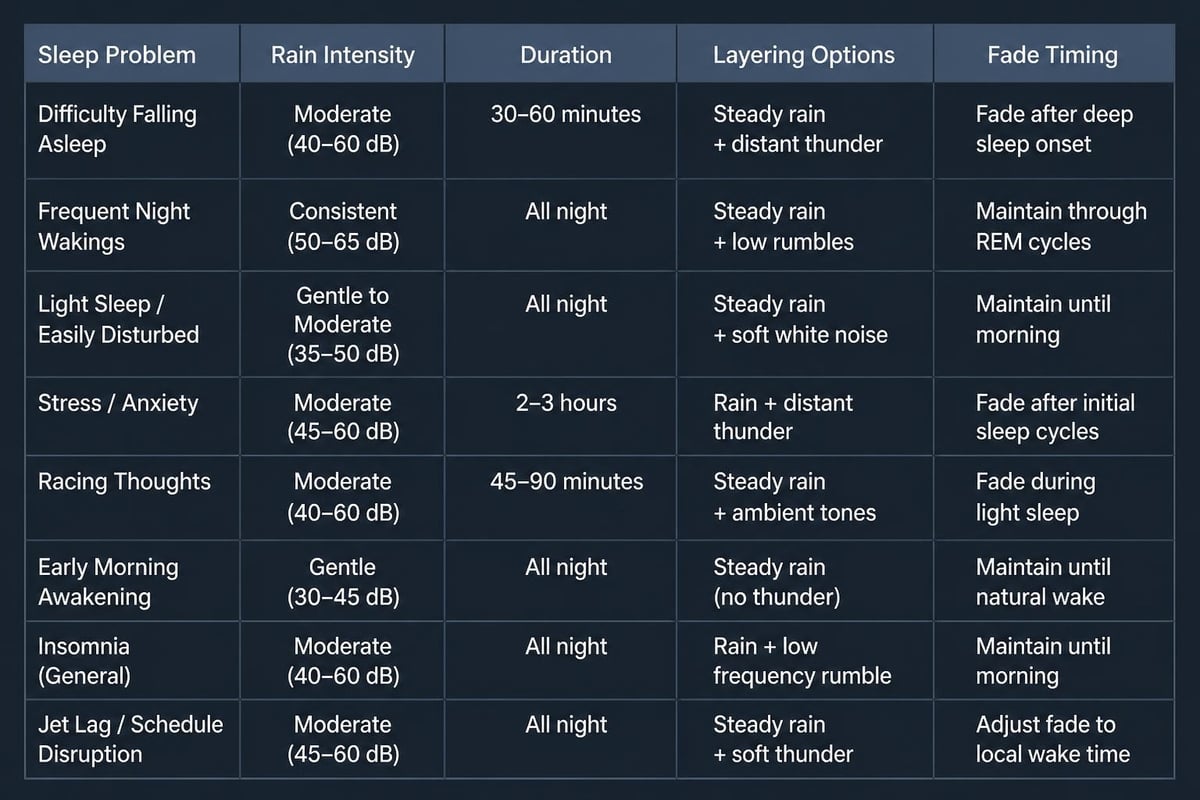
Single-source rain sounds provide baseline benefits, but layered compositions address multiple sleep disruptors simultaneously. Combining gentle rain with low-frequency thunder (occurring every 2-3 minutes) helps individuals with racing thoughts by providing occasional focal points that redirect rumination.
| Sleep Challenge | Recommended Rain Profile | Supporting Elements | Expected Timeline |
|---|---|---|---|
| Difficulty Falling Asleep | Light-to-moderate increasing intensity | Delta wave undertones | 2-3 weeks for pattern establishment |
| Frequent Awakenings | Consistent moderate rainfall | Minimal variation, steady rhythm | 1-2 weeks for noise masking benefits |
| Early Morning Waking | Heavy rain with dawn fade-out | Gradual volume reduction at target wake time | 3-4 weeks for circadian alignment |
| Anxiety-Related Insomnia | Forest rain with distance variation | Binaural elements, spatial audio | 4-6 weeks for nervous system retraining |
Comprehensive guides on rain sound usage emphasize the importance of experimentation periods. Individual neurological differences mean optimal rain profiles vary significantly between users. Track subjective sleep quality, morning alertness, and daytime energy levels across different rain configurations.
Scientific Evidence and Clinical Applications
Clinical sleep research increasingly validates rain sound interventions as legitimate therapeutic tools. Multiple controlled studies demonstrate measurable improvements in both objective and subjective sleep metrics among diverse populations.
Research Findings on Sleep Architecture
Polysomnography studies reveal that sleep sounds rain increase time spent in slow-wave sleep (Stages 3-4) by an average of 15-20% compared to silent conditions. This deeper sleep phase proves critical for physical restoration, immune function, and memory consolidation. The effectiveness of rain sounds in promoting sleep stems partly from their ability to reduce cortical arousals, the brief brain activations that fragment sleep continuity without causing full awakening.
Populations experiencing particular benefit include:
- Urban residents exposed to traffic noise (38% improvement in sleep onset latency)
- Shift workers adapting to daytime sleep (27% reduction in total wake time)
- Individuals with mild-to-moderate anxiety disorders (33% decrease in pre-sleep rumination)
- Older adults experiencing age-related sleep fragmentation (22% increase in sleep efficiency)
The link between rain sounds and improved concentration extends beyond nighttime applications. Daytime exposure during focused work periods trains the brain to associate rain patterns with reduced distractibility, creating versatile neurological responses applicable across contexts.
Potential Limitations and Contraindications
Despite widespread benefits, sleep sounds rain doesn't universally improve rest quality. Understanding limitations prevents frustration and guides users toward appropriate alternatives when necessary.
When Rain Sounds May Not Help
Certain individuals experience negative responses to continuous audio during sleep. Those with hyperacusis (sound sensitivity) may find even gentle rain sounds activating rather than calming. Auditory processing disorders can make pattern recognition difficult, preventing the brain from categorizing rain as predictable background noise.
Situations requiring alternative approaches:
- Diagnosed sleep disorders (sleep apnea, restless leg syndrome) requiring medical intervention
- PTSD triggers associated with storms or weather events
- Tinnitus that worsens with external sound masking
- Partners with conflicting sound preferences sharing sleep spaces
- Reliance on rain sounds preventing natural sleep skill development
Research on rain sound sleep masking notes that effectiveness decreases if used to compensate for correctable environmental issues. Addressing actual noise sources (inadequate windows, disruptive neighbors) produces superior long-term results compared to permanent masking strategies.
Integration with Broader Wellness Practices
Sleep sounds rain function optimally within holistic approaches to mental and physical health. Audio interventions complement rather than replace foundational wellness practices that support restorative sleep.
Building Comprehensive Sleep Support Systems
Morning light exposure creates hormonal rhythms that rain sounds leverage at night. Bright light (10,000 lux) within 30 minutes of waking establishes strong circadian signals, making evening relaxation cues more effective. The contrast between daytime alertness and nighttime calm becomes more pronounced when both ends of the cycle receive appropriate stimuli.
Physical activity timing influences rain sound responsiveness. Exercise completed 4-6 hours before bed elevates core temperature, which then drops during the pre-sleep period, coinciding with rain sound exposure. This temperature decline combined with auditory relaxation cues creates powerful sleep onset signals.
Nutritional factors affect how effectively your nervous system responds to calming audio. Magnesium deficiency reduces GABA receptor sensitivity, limiting the relaxation response to rain sounds. Adequate mineral status, stable blood sugar, and limited evening alcohol consumption all enhance audio intervention effectiveness.
Weekly integration template:
- Monday-Friday: 30-minute morning light exposure, evening rain sounds starting 45 minutes pre-bed
- Tuesday/Thursday: Moderate exercise 5-6 hours before sleep, extended rain sound session
- Wednesday: Mid-week stress assessment, adjust rain intensity based on anxiety levels
- Weekend: Consistent sleep timing despite schedule flexibility, experimental rain profiles
- Daily: Magnesium supplementation (300-400mg), caffeine cutoff 8+ hours pre-sleep
The synergistic relationship between multiple wellness inputs creates resilient sleep patterns less vulnerable to occasional disruptions. Rain sounds become one element in a robust system rather than a single point of failure.
Technological Considerations and Sound Quality
Audio fidelity significantly impacts rain sound effectiveness. Low-quality recordings introduce artifacts that activate rather than calm the nervous system, undermining therapeutic benefits.
Essential Audio Quality Parameters
| Quality Factor | Minimum Specification | Impact on Sleep | Detection Method |
|---|---|---|---|
| Bit Rate | 256 kbps (streaming), 320 kbps (downloaded) | Prevents digital artifacts that interrupt flow | Listen for "underwater" quality or compression warbling |
| Frequency Response | 40 Hz – 16 kHz | Ensures full rain spectrum from deep rumbles to high droplets | Bass test: should feel low thunder; treble test: crisp individual drops |
| Loop Length | 30+ minutes minimum | Prevents pattern recognition of repeat points | Listen for 10 minutes to detect obvious loops |
| Dynamic Range | 40+ dB difference between quietest and loudest | Maintains natural variation preventing monotony | Volume should subtly shift without dramatic jumps |
Playback device selection matters equally. Smartphone speakers lack bass response necessary for full rain spectrum, missing frequencies below 200 Hz that contribute to relaxation responses. Dedicated Bluetooth speakers with subwoofer elements or quality headphones deliver superior results.
Headphone use requires careful consideration. While providing excellent sound quality and partner-friendly privacy, prolonged headphone wear during sleep poses physical discomfort and potential ear health issues. Pillow speakers or bedside speakers positioned 3-5 feet from the head offer optimal compromise between quality and comfort.
Sleep sounds rain represent a scientifically validated tool for enhancing rest quality when implemented strategically within comprehensive sleep hygiene practices. The acoustic properties of rain, combined with evolutionary psychological factors, create powerful neurological responses that support faster sleep onset and improved sleep architecture.
Freshhh.app takes rain sound therapy beyond passive listening by integrating research-backed soundscapes with practical micro-habits and cognitive training techniques. Rather than simply masking symptoms, Freshhh.app helps you build lasting skills for mental clarity and stress reduction, combining carefully designed rain sounds developed with acoustic researchers alongside actionable strategies for training your mind toward deeper focus and genuine calm.