Sound therapy has evolved dramatically in 2026, bridging ancient wisdom with cutting-edge neuroscience. Among the most powerful traditional instruments used for healing and mental clarity, the gong stands out as a transformative tool that creates immersive soundscapes capable of shifting consciousness, reducing anxiety, and promoting deep relaxation. The resonant tones produced by a sound healing gong generate complex overtones and frequencies that interact with the human nervous system in measurable ways, offering benefits that modern research continues to validate. What once required attending specialized retreats or finding certified practitioners can now be experienced through advanced audio technology that brings authentic gong therapy directly to your headphones, making this ancient practice accessible whenever your mind needs reset and renewal.
The Science Behind Gong Sound Therapy
The therapeutic effects of gong sounds stem from their unique acoustic properties. Unlike single-tone instruments, a sound healing gong produces a rich spectrum of frequencies simultaneously, creating what acousticians call "spectral richness." These layered vibrations engage multiple auditory pathways in the brain, triggering measurable physiological responses.
Research has shown that gong meditation can significantly reduce trait anxiety through regular practice. The low-frequency vibrations characteristic of gong therapy interact with the body's natural rhythms, influencing heart rate variability, breathing patterns, and brainwave activity. When you listen to gong sounds, your brain begins to synchronize with the dominant frequencies, a phenomenon known as entrainment.
How Vibrational Frequencies Affect the Mind
The human body responds to sound not just through hearing, but through cellular vibration. A sound healing gong produces frequencies ranging from below 20 Hz to several thousand Hz, encompassing infrasound that you feel rather than consciously hear. These vibrations travel through bone and tissue, creating a full-body experience that traditional music cannot replicate.
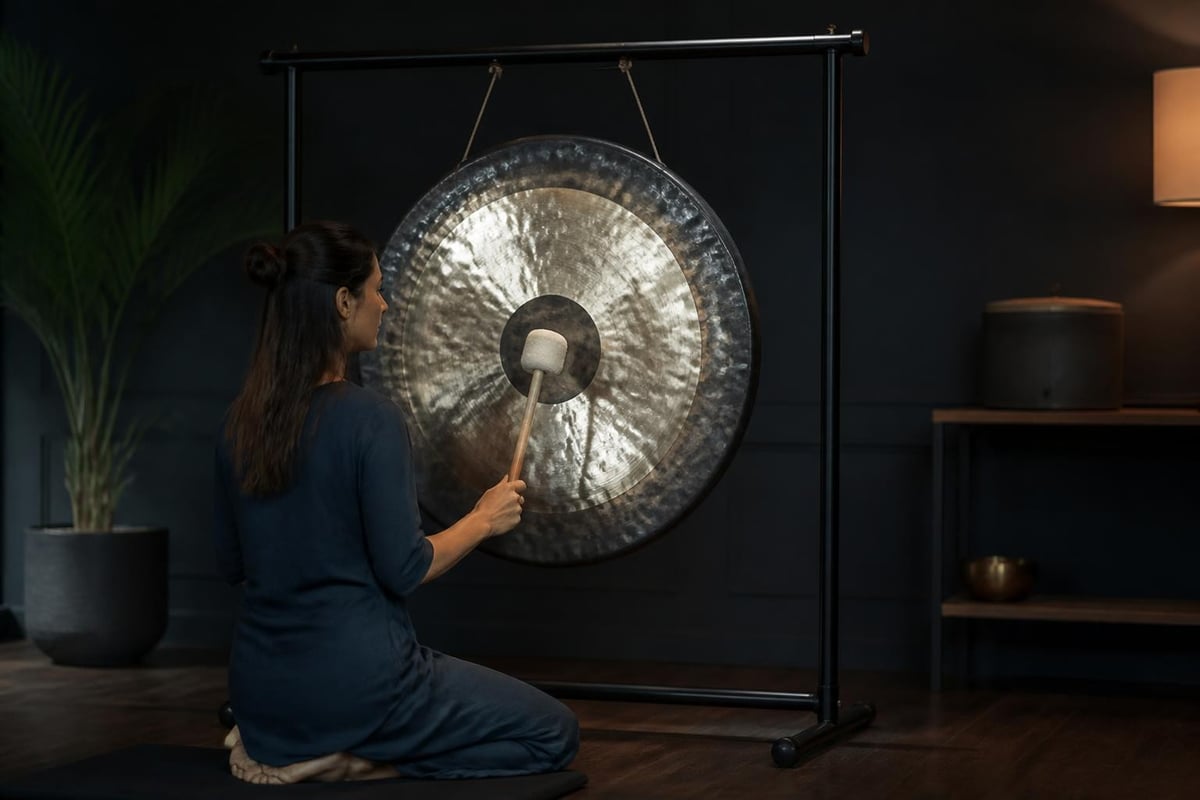
Studies on the psychophysiological effects of low-frequency sounds have demonstrated that gong-like vibrations can alter autonomic nervous system function. Participants exposed to these sounds show decreased cortisol levels, reduced blood pressure, and increased parasympathetic nervous system activation. The body interprets these frequencies as signals to shift from fight-or-flight mode into rest-and-digest states.
Key physiological responses to gong therapy include:
- Slower heart rate and deeper breathing patterns
- Increased production of alpha and theta brainwaves
- Enhanced parasympathetic nervous system activation
- Reduced muscle tension throughout the body
- Improved vagal tone supporting emotional regulation
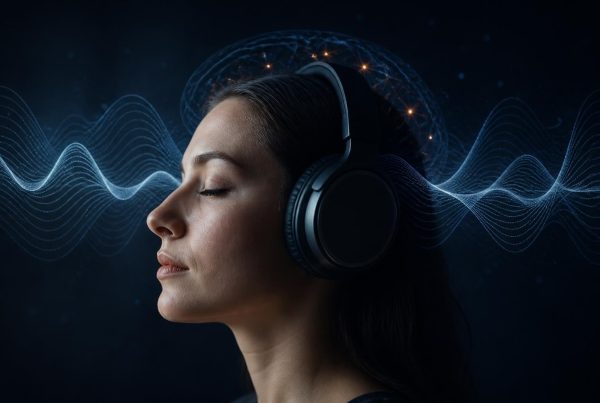
Modern sound therapy platforms have leveraged this research to create digitally optimized gong recordings. By applying 8D audio processing techniques, these recordings simulate the spatial experience of being surrounded by gong vibrations, creating an immersive environment that enhances the therapeutic effect. The 8D technology places sounds in three-dimensional space around the listener, mimicking how sound waves would naturally travel in a traditional gong bath setting.
Historical Roots and Traditional Applications
The history of gongs in sound healing spans thousands of years, originating in ancient Asian cultures where they served both ceremonial and therapeutic purposes. Bronze gongs were crafted in China as early as 4000 BCE, valued for their ability to create transcendent sonic experiences during meditation and spiritual rituals.
Traditional practitioners understood intuitively what science now confirms: the complex harmonic structure of gong sounds facilitates altered states of consciousness. Monks and healers used these instruments to clear mental clutter, prepare the mind for deep meditation, and support emotional processing. The gong's sound was believed to reset the body's energetic patterns, washing away stagnant energy and promoting flow.
Modern Adaptation of Ancient Practice
In 2026, sound healing gong therapy has been refined through collaboration between traditional practitioners and acoustic researchers. Digital recordings capture the nuanced overtones and subtle frequency shifts that make gong therapy effective, while advanced playback technology ensures these sounds reach listeners with maximum fidelity and spatial accuracy.
The integration of 8D sound effects represents a significant advancement in accessibility. Rather than requiring physical presence in a room with a large gong, individuals can experience similarly immersive sessions through quality headphones. The spatial audio processing creates the sensation of sound moving around and through the listener, activating the same neural pathways engaged during in-person sessions.
| Traditional Gong Therapy | Digital Gong Therapy with 8D Audio |
|---|---|
| Requires specialized practitioner | Accessible on-demand anywhere |
| Limited by geographic location | Available globally through apps |
| Session times fixed by practitioner | Customizable duration for personal needs |
| Physical vibrations through air | Spatial audio creates immersive field |
| Higher cost per session | Subscription-based affordability |
Practical Applications for Focus and Stress Relief
The versatility of sound healing gong sessions makes them valuable for multiple mental health and performance goals. Understanding how to integrate gong therapy into daily routines maximizes its benefits for concentration, stress management, and emotional balance.
Using Gong Sounds for Deep Focus
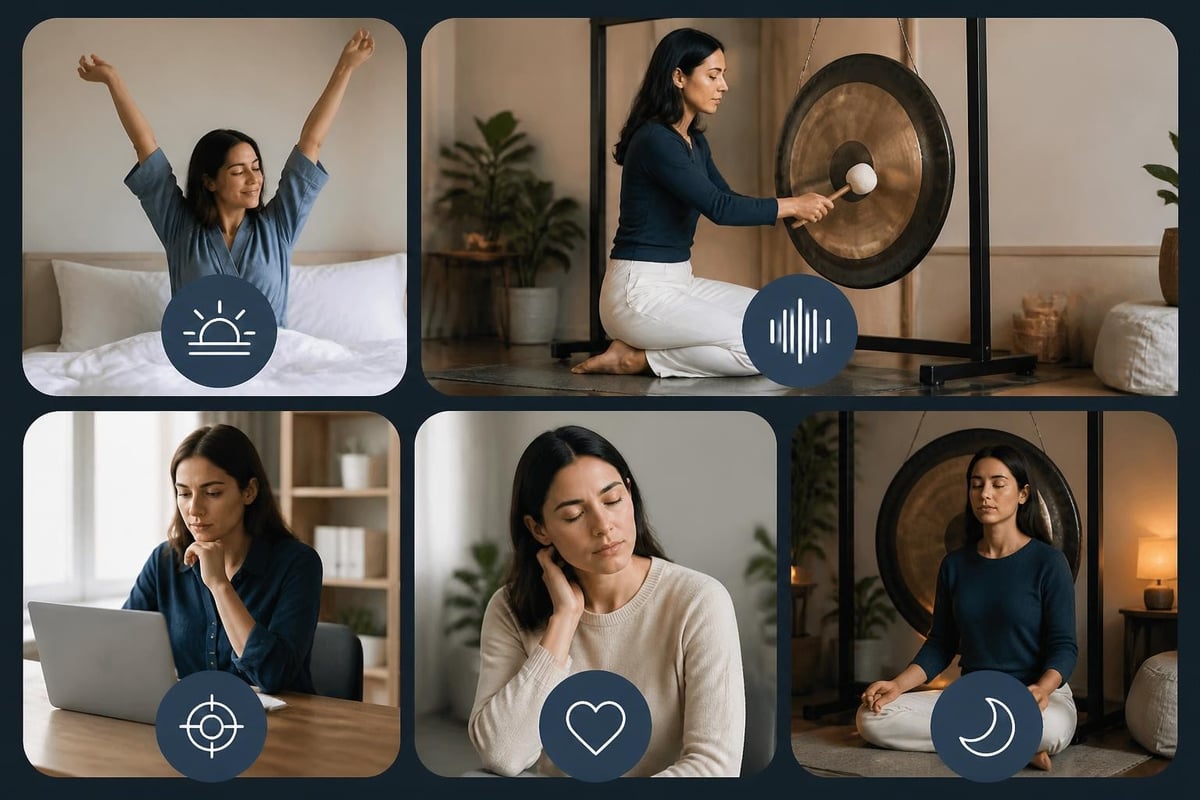
Contrary to popular belief, gong sounds can support focused work when used strategically. Short exposure to gong frequencies before concentration-intensive tasks helps clear mental clutter and establish a calm baseline state. The practice works by saturating the auditory system with rich, complex sound, which then makes the transition to silence or minimal background audio feel more profound.
Recommended protocol for pre-focus gong sessions:
- Listen to 5-7 minutes of sound healing gong audio
- Use quality headphones to capture full frequency range
- Sit comfortably with eyes closed during the session
- Allow 2-3 minutes of silence after the gong sounds fade
- Transition directly into focused work while mental clarity peaks
This approach leverages the gong's ability to induce alpha and theta brainwave states, which promote creative problem-solving and reduce anxiety about challenging tasks. The residual calm following a brief gong session creates ideal conditions for entering flow states during work.
Stress Reduction Through Regular Practice
Research-backed benefits of sound-based practices consistently demonstrate that regular gong exposure reduces perceived stress levels more effectively than music listening alone. The mechanism involves the gong's ability to interrupt rumination patterns that fuel anxiety and worry.
When stress hormones elevate throughout the day, a 10-15 minute sound healing gong session serves as a circuit breaker for the nervous system. The immersive nature of gong sounds demands present-moment attention, making it difficult for the mind to simultaneously engage in anxious thinking. This forced presence creates space for the body's natural relaxation response to activate.
Modern applications like Freshhh.app combine gong soundscapes with evidence-based micro-habits that reinforce stress management skills. Rather than relying solely on passive listening, these integrated approaches train users to recognize stress signals early and respond with targeted interventions, including strategic gong therapy sessions.
Maximizing Benefits with 8D Audio Technology
The introduction of 8D sound processing has transformed how sound healing gong therapy delivers its therapeutic effects. Traditional stereo recordings capture gong sounds in two channels, but 8D audio adds spatial movement that engages additional cognitive and emotional processing centers in the brain.
When gong sounds appear to move around your head in three-dimensional space, the brain must track and process these positional changes. This engagement creates fuller neural activation compared to static stereo playback. The effect mimics being physically surrounded by gongs in a resonant space, where sound waves bounce off walls and approach from multiple angles.
Technical Advantages of Spatial Audio for Gong Therapy
8D processing applies several transformations to recorded gong sounds that enhance their therapeutic impact:
Binaural encoding creates subtle timing and volume differences between left and right channels, allowing the brain to perceive directional cues and distance. When combined with the naturally complex harmonics of a sound healing gong, this encoding produces exceptionally immersive experiences.
Head-related transfer function (HRTF) filtering shapes the frequency content based on how sounds would naturally reach your ears from different positions. High frequencies from sounds "above" you get filtered differently than those "beside" you, matching real-world acoustic physics.
Reverberation modeling adds the sense of space and environment, crucial for recreating the resonant quality of traditional gong baths held in temples or specially designed acoustic chambers.
These technical enhancements don't just create novelty; they serve therapeutic purposes. The spatial movement of sounds helps maintain engagement during longer sessions, preventing habituation that can reduce effectiveness. As gong tones sweep through your auditory field, different neural populations activate in sequence, creating broader cortical involvement than static sounds achieve.
Integration with Mind-Training Techniques
The most significant advancement in sound healing gong applications involves pairing the sounds with structured mental training. Sound healing benefits multiply when users learn to actively engage with the experience rather than passively consuming audio.
Effective integration starts with intention-setting before each gong session. Rather than simply pressing play, take 30 seconds to identify what you need from the practice. Are you seeking to release tension? Prepare for demanding mental work? Process difficult emotions? The answer shapes how you listen and what you notice during the session.
Breath Coordination During Gong Listening
Synchronizing breathing patterns with gong sounds creates a powerful synergy between two nervous system regulators. As the gong tone swells, extend your inhale. As it fades, slowly exhale. This coordination trains voluntary control over autonomic functions, a skill that transfers to stress management in daily situations.
Advanced practitioners layer additional techniques during sound healing gong sessions:
- Body scanning: Systematically directing attention through different body regions while gong sounds play, noticing where tension releases
- Visualization: Imagining the sound waves washing through mental and emotional blockages, carrying away accumulated stress
- Affirmation repetition: Silently repeating chosen phrases timed to the gong's natural rhythm, embedding positive intentions
These active approaches transform gong therapy from relaxation technique into comprehensive mental training. The combination addresses both immediate stress relief and long-term resilience building.
Accessibility and Practical Implementation
One of the most transformative aspects of modern sound healing gong therapy is its accessibility in 2026. Geographic and financial barriers that once limited access to gong baths have largely dissolved through technology. Quality gong recordings with sophisticated 8D processing are available through subscription services that cost less than a single in-person session.
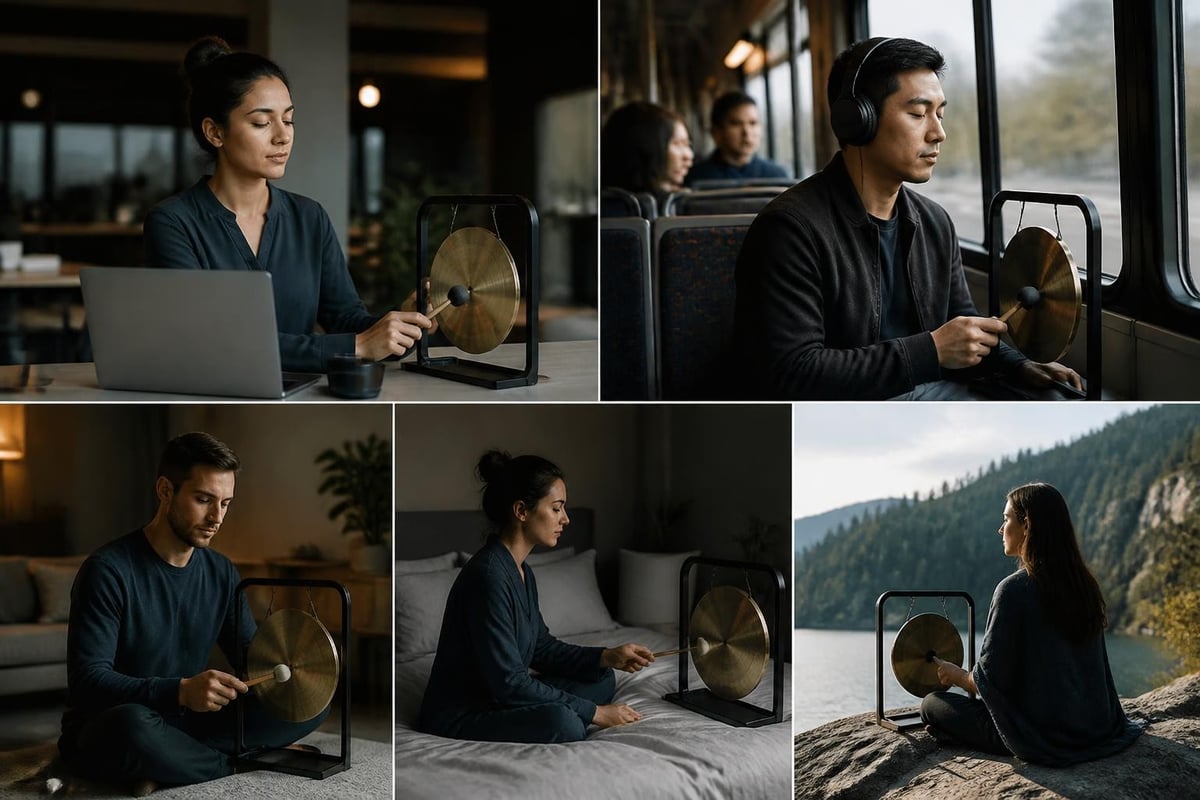
Gong bath benefits traditionally required finding qualified practitioners, traveling to specialized centers, and scheduling around limited class times. Digital platforms eliminate these friction points, allowing anyone with headphones and a smartphone to access therapeutic gong sounds during lunch breaks, commutes, or before bed.
| Access Factor | Traditional Approach | Digital Platform Approach |
|---|---|---|
| Cost per month | $80-200 for 2-4 sessions | $10-20 unlimited access |
| Location requirement | Within driving distance of practitioner | Anywhere with internet |
| Scheduling flexibility | Fixed class times | On-demand 24/7 |
| Session customization | Limited to practitioner offerings | Variable lengths and intensities |
| Learning curve | Minimal guidance provided | Integrated tutorials and habit-building |
This accessibility matters particularly for individuals managing chronic stress or attention challenges. Consistency drives therapeutic outcomes with sound healing gong practice, and the ability to incorporate sessions daily rather than weekly accelerates benefits.
Building a Sustainable Practice
Starting with realistic expectations ensures long-term adherence to sound healing gong therapy. Begin with short 5-minute sessions three times weekly rather than attempting 30-minute daily practices immediately. As your nervous system becomes familiar with the practice, gradually extend duration and frequency.
Progressive implementation timeline:
- Week 1-2: Three 5-minute sessions focusing on basic relaxation
- Week 3-4: Four 7-minute sessions adding breath coordination
- Week 5-6: Five 10-minute sessions incorporating intention-setting
- Week 7-8: Daily 10-15 minute sessions with varied applications (focus prep, stress relief, sleep support)
Track subjective responses in a simple journal or app notes. Record energy levels, stress intensity, and focus quality before and after sessions. These data points help identify which session types and durations serve your specific needs most effectively.
Pairing gong therapy with complementary practices amplifies results. Morning gong sessions followed by brief journaling create powerful clarity for the day ahead. Evening sessions before reading or light stretching establish effective wind-down routines that improve sleep quality.
Scientific Validation and Ongoing Research
The empirical foundation supporting sound healing gong therapy continues expanding as researchers investigate specific mechanisms and applications. While traditional use relied on centuries of observational wisdom, modern studies employ rigorous methodologies to quantify effects and identify optimal protocols.
Recent investigations have focused on dose-response relationships. How much gong exposure produces measurable changes in biomarkers like cortisol and heart rate variability? Preliminary findings suggest that even brief exposures create detectable shifts, with benefits plateauing around 15-20 minutes for acute stress relief applications.
Neuroimaging studies reveal that sound healing gong sessions activate multiple brain regions simultaneously. The auditory cortex processes the complex frequencies, while the limbic system responds to the emotional qualities of the sound. The prefrontal cortex, responsible for executive function, shows reduced activation during gong listening, corresponding to the quieting of analytical thinking that facilitates meditation states.
Measured outcomes from gong therapy research include:
- 23-31% reduction in self-reported anxiety scores after eight-week protocols
- Significant increases in parasympathetic nervous system markers
- Improved sleep latency and duration in insomnia populations
- Enhanced concentration performance on attention-demanding tasks following sessions
- Decreased inflammatory markers in stressed populations
These findings validate both traditional applications and novel uses. The versatility of sound healing gong therapy for both activation (focus preparation) and deactivation (stress relief) makes it uniquely valuable for modern mental health needs.
Optimizing Your Gong Therapy Environment
While digital gong therapy offers location flexibility, certain environmental factors enhance effectiveness. The goal is creating conditions that support full immersion in the sonic experience without requiring elaborate setups.
Essential elements for effective sessions:
- Quality headphones: Over-ear designs with good low-frequency response capture the full gong spectrum and 8D effects
- Quiet space: Minimize external noise that competes with gong sounds or disrupts concentration
- Comfortable position: Seated or reclined positions that you can maintain without fidgeting throughout the session
- Appropriate timing: Schedule sessions when you won't be interrupted or need to rush immediately afterward
Temperature matters more than many users realize. Slightly cool rooms help maintain alertness during focus-oriented gong sessions, while warmer temperatures support deeper relaxation for stress-relief applications. Experiment to find your optimal conditions.
Lighting also influences experience quality. Dim lighting or closed eyes during sound healing gong sessions reduce visual distraction and encourage inward attention. For focus preparation sessions, gradual brightening as the gong sounds fade can ease the transition into active work.
Some practitioners recommend specific body positions for different applications. Lying down with knees bent and feet flat maximizes relaxation response, while sitting upright with spine straight maintains alert awareness beneficial for meditation or pre-focus sessions.
Integration with Comprehensive Sound Therapy Approaches
Sound healing gong therapy achieves maximum impact when integrated into broader sound-based wellness strategies. While gong sounds provide powerful acute interventions, combining them with other therapeutic frequencies and practical mental training creates sustainable transformation.
Platforms that offer diverse soundscapes alongside gong sessions allow users to match audio to specific needs throughout the day. Morning might call for energizing frequencies, midday stress might require gong therapy for reset, and evening could benefit from gentler ambient sounds. This variability prevents habituation and addresses the full spectrum of daily mental states.
The combination of sound therapy with evidence-based micro-habits represents the cutting edge of accessible mental health support. Rather than treating sound as passive background, modern approaches teach users to actively engage with auditory experiences while building complementary skills like breath regulation, attention training, and emotional awareness.
When gong therapy becomes one tool among several in a comprehensive toolkit, users develop flexibility in addressing diverse challenges. Stressful morning? Start with gong sounds. Difficulty concentrating? Try focus-oriented soundscapes followed by silence. Racing thoughts before sleep? Gong session paired with progressive relaxation creates powerful synergy.
This integrated approach mirrors how traditional cultures used sound healing, not as isolated treatment but as component of holistic wellness practices including movement, meditation, and community connection.
Sound healing gong therapy combines millennia-old wisdom with modern neuroscience to offer accessible, effective support for focus, stress management, and mental clarity. The advent of 8D audio technology and digital platforms has democratized access to these transformative practices, removing barriers that once limited gong therapy to specialized retreats and urban wellness centers. Whether you're seeking to sharpen concentration before demanding work, reset your nervous system during stressful periods, or cultivate deeper meditation practices, incorporating gong sounds into daily routines provides measurable benefits backed by growing research. Freshhh.app brings together authentic sound healing gong experiences enhanced with 8D spatial audio and science-based mental training techniques, offering a comprehensive approach to building focus and calm that goes beyond passive listening to actively train your mind for lasting resilience.